
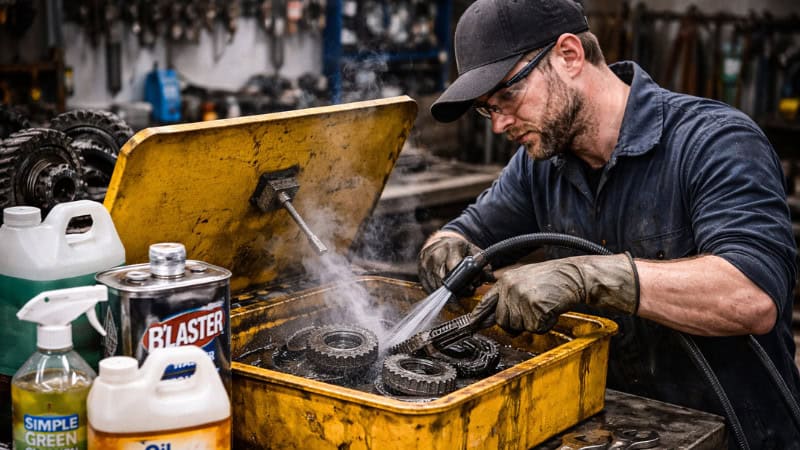
The right parts washer solvent transforms difficult cleaning jobs in both professional shops and home garages. If you’ve struggled with greasy engine blocks, sludge-caked brake parts, or old bearings, the wrong solvent just pushes messes around. The right solvent quickly breaks down oil, grease, and carbon deposits, so you can focus on the repair work. The most effective cleaners are either petroleum-based or advanced synthetics, leaving metal parts ready for reassembly or inspection. Experienced mechanics rely on dependable solvents to keep work moving, reduce rework, and prevent rust or seal damage.
How We Chose These Parts Washer Solvents
Our selections reflect actual performance in real shops—not just marketing claims. We used criteria such as:
- Cleaning muscle — oil, sludge, and grit removal
- Material compatibility — metals, plastics, rubber seals
- Safety profile — VOC levels and flash points
- Smell and fumes — low-odor wins in indoor bays
- Value per gallon — does it clean for a long time before it needs to be changed?
We considered the products that mechanics and technicians actually recommend, so this list features both heavy-duty solvents and water-based cleaners for a variety of shop needs.
Quick Comparison Table
| Product Name | Cleaner Type | Cleaning Strength | Safe on Aluminum | Odor / Fumes | Best For | Mechanic Take |
|---|---|---|---|---|---|---|
| CRC Parts Washer Solvent (5-Gallon) | Petroleum solvent |
Heavy-duty |
Yes (short soak) | Medium | Engines, transmissions, bearings | Shop workhorse |
| B’laster Parts Washer Solvent | High-flash solvent |
Heavy-duty |
Limited | Medium–High | Thick grease, engine blocks | Cuts fast |
| Safety-Kleen Solvent Degreaser | Professional solvent |
Heavy-duty |
Yes | Medium | Commercial shops | Industry standard |
| Zep Recirculating Parts Washer Detergent | Water-based detergent |
Medium |
Yes | Low | Aluminum, soft metals | Gentle & safe |
| Simple Green Industrial Cleaner | Water-based cleaner |
Medium |
Yes | Very low | Indoor shops, DIY | User-friendly |
10 Best Parts Washer Solvents & Cleaners
1. CRC Parts Washer Solvent
CRC Parts Washer Solvent is a petroleum-based cleaner formulated for use in recirculating washers. It removes grease, oil, and sludge without leaving residue when used as directed. The product maintains reliable performance on engines, transmissions, and bearings, providing efficiency and durability valued in professional settings. The odor is noticeable but manageable with proper ventilation.
2. B’laster Parts Washer Solvent
B’laster Parts Washer Solvent is an aggressive cleaner designed to remove thick, baked-on grease from neglected engine parts. Its rapid action supports productivity in busy shops, while the fumes require proper ventilation. The solvent is suited for powerful cleaning of steel and iron components, making it well-suited for tasks that demand strong degreasing.
3. Safety-Kleen Solvent Degreaser
Safety-Kleen Solvent Degreaser is designed for dealerships and fleet garages that require continuous use. It provides high filtration efficiency and reliable performance, lasting longer between changes. The higher cost is balanced by durable performance and product support, making it valuable for commercial operations.
4. Zep Recirculating Parts Washer Detergent
Zep Recirculating Parts Washer Detergent is a water-based, low-odor cleaner formulated for use on aluminum, carburetors, valve covers, and sensitive parts. It does not stain or pit soft metals and is non-flammable, increasing safety for indoor applications. Usage with agitation and proper temperature delivers optimal cleaning.
5. Simple Green Industrial Cleaner
Simple Green Industrial Cleaner offers a water-based, low-fume solution preferred for safer shop environments. It is non-flammable and compatible with most metals, plastics, and rubber. While not intended for dissolving heavy grease, it effectively manages everyday grime in indoor facilities.
6. Oil Eater Original Cleaner
Oil Eater Original Cleaner is a heavy-duty, water-based degreaser designed for use on brake dust, suspension grime, and road tar. It rinses clean without residue and serves as a strong alternative to traditional solvents for brake and chassis work.
7. Purple Power Industrial Cleaner
Purple Power Industrial Cleaner is a strong water-based degreaser that removes grease quickly but can damage aluminum if left on. Mechanics often dilute and rinse it quickly for safety.
8. Low-Odor Mineral Spirits
Low-odor mineral spirits provide an economical degreasing option for small shops and DIY projects. They offer effective cleaning but need frequent replacement and do not include advanced additives. They are most suited for short-term, low-cost applications.
9. Oil Eater Parts Washer Formula
Oil Eater Parts Washer Formula is designed for recirculating systems, providing longer life and stability for ongoing use. It combines water-based safety with the durability required for demanding washer environments.
10. Bio-Based Aqueous Cleaners
Bio-Based Aqueous Cleaners are increasingly used due to evolving environmental rules, offering effective cleaning with fewer disposal concerns. They have a lower aggression profile than traditional solvents, making them suitable for shops emphasizing environmental responsibility.
What U.S. Mechanics Look for in a Parts Washer Solvent
- Cuts heavy grease and carbon deposits
- Safe around aluminum and painted surfaces
- Works well in manual and recirculating washers
- Low vapor levels for indoor shops
- Reasonable flash point and low fire risk
- Affordable per-gallon cost
Solvent vs Water-Based Cleaner
Solvent cleaners use petroleum-based or synthetic chemicals that dissolve oil and grime fast, making them tough on heavy grease — perfect for engine blocks, transmissions, and industrial parts. Water-based cleaners use detergents and agitation to break down contaminants with lower fume risk, making them safer in indoor spaces and around softer metals. Each has a place: solvent for serious degreasing, water-based for everyday shop work.
you may like: Easy Tips on How to Clean Mechanic Hands
Common Mistakes
Many techs use solvent straight out of the pail instead of cleaning off thick gunk with brushes first, which makes the solvent load up prematurely. Others mix incompatible chemistries — water solutions with solvent blends — compromising pump seals and filters. And always check material compatibility; too harsh a solvent can etch aluminum or degrade elastomer seals, meaning costly mistakes after assembly.
Safety Tips
Run good ventilation, especially around solvent machines, because VOCs and fumes can build up in enclosed spaces. Wear PPE: chemical-resistant gloves, safety goggles, and aprons. Store solvent containers sealed and labeled, and follow hazardous waste disposal rules for used solvent. Never dump spent solvent down drains — it’s regulated waste in the U.S.
FAQ 1. What is the best parts washer solvent for heavy grease and oil?
For heavy grease, oil sludge, and baked-on carbon, petroleum-based or synthetic solvent cleaners work best. Products like CRC Parts Washer Solvent or B’laster Parts Washer Solvent dissolve oil rather than smear it around. These solvents penetrate deep into metal pores and loosen grime fast, especially on engine blocks and transmission cases. They’re ideal for professional shops that need fast turnaround and consistent cleaning performance.
FAQ 2. Are water-based parts washer cleaners as effective as solvents?
Water-based cleaners can be very effective, but they work differently from solvents. Instead of dissolving oil, they use detergents, heat, and agitation to lift grease away. They’re excellent for light to medium grime, aluminum parts, and indoor shops where fumes are a concern. However, for thick grease and heavy engine sludge, traditional solvent cleaners usually clean faster and more thoroughly.
FAQ 3. Are parts washer solvents safe for aluminum parts?
Not all solvents are aluminum-safe, so this matters. Harsh petroleum solvents can discolor or pit aluminum if used incorrectly. For aluminum parts, water-based detergents like Zep Recirculating Parts Washer Cleaner or Simple Green Industrial are safer choices. Always check the manufacturer’s compatibility chart and avoid extended soaking. Using the right cleaner protects soft metals and prevents costly damage to parts.
FAQ 4. How often should parts washer solvent be changed?
Solvent life depends on usage, filtration, and contamination levels. In busy shops, solvents may need changing every few weeks, while light-use garages can go months. Signs it’s time to change include greasy residue left on parts, reduced cleaning power, strong odors, or clogged filters. Regular skimming, filter changes, and pre-cleaning parts can significantly extend solvent life and save money.
FAQ 5. Can parts washer solvent damage rubber seals or plastic parts?
Yes, some solvents can swell, crack, or harden rubber seals and certain plastics. Aggressive petroleum solvents are the main culprits. If you’re cleaning parts with O-rings, bushings, or plastic housings, use a water-based or low-aggression cleaner. Always test on a small area first. Using the wrong solvent can cause leaks or premature failure after reassembly.
FAQ 6. What do professional mechanics use in parts washers?
Most professional mechanics still rely on petroleum-based or synthetic solvent cleaners because they clean fast and handle heavy contamination. In newer shops or enclosed spaces, many techs switch to water-based systems for safety and environmental reasons. The choice often comes down to workload, ventilation, and the type of parts being cleaned. Many shops actually use both, depending on the job.
FAQ 7. Is the parts washer solvent flammable and dangerous?
Many traditional parts washer solvents are flammable, though modern formulas usually have higher flash points for safety. Proper ventilation, closed lids, and fire-rated washers reduce risk. Water-based cleaners are non-flammable and safer in small shops. Always follow OSHA guidelines, wear gloves and eye protection, and store solvents correctly. Safety depends more on proper handling than on the solvent itself.
FAQ 8. Can DIY mechanics safely use parts washer solvents at home?
Yes, DIY mechanics can use parts washer solvents safely if they choose the right product and setup. Water-based or low-odor solvents are best for garages without industrial ventilation. Always work in a well-ventilated area, wear gloves, and keep ignition sources away. Small tabletop washers or manual tubs paired with mild cleaners are ideal for home use and weekend projects.
Final Thoughts
The best parts washer solvent for you depends on your workload, safety needs, and the types of parts you clean most often. For professionals who work with engines, transmissions, and heavy grease daily, solvent-based cleaners like CRC or B’laster offer the quickest, most consistent cleaning. For smaller shops, frequent aluminum jobs, or enclosed workspaces, water-based options such as Zep or Simple Green Industrial are safer and produce less odor. Many American shops use both: solvents for big teardown work and water-based cleaners for everyday jobs. The bottom line? Choose the cleaner that fits your work—not the other way around.
