
Car interiors today are much more fragile than in the past. By 2026, most features will use soft-touch plastics, hidden clips, and tight fits—one wrong move could crack or scratch a panel. That’s why using proper trim removal tools is more important than ever. This 10 Best Auto Trim Removal Tools for 2026 guide offers a real US mechanic’s perspective. Whether you’re removing door panels, dash trim, or installing a stereo, the right tools help you work faster, cleaner, and without damaging clips or interiors. DIYers and pros alike will avoid headaches with this list.
How We Chose These Trim Removal Tools
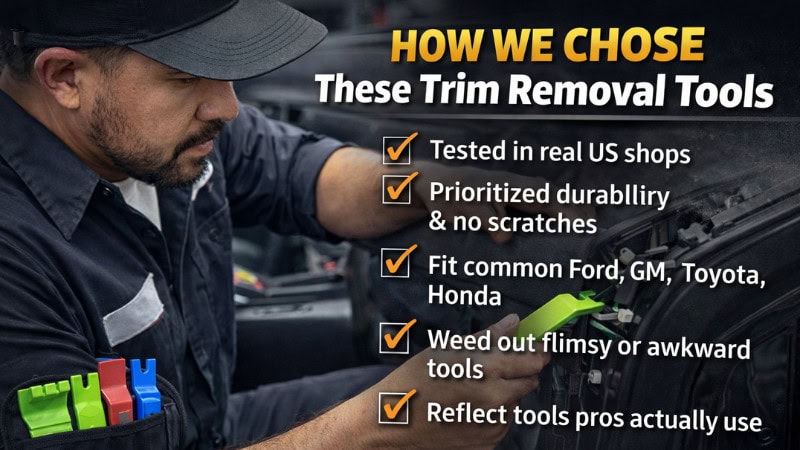
These tools are chosen for real-world shop work—not for looks. We picked tools that can handle daily use in US garages, dealerships, and mobile setups. The best trim tools use tough nylon that flexes instead of breaking, offer proper leverage for tough clips, and fit modern dashboards and doors. We confirmed each works on vehicles like Ford, Chevy, Toyota, Honda, and new EVs. Grip, tool control in tight spaces, and durability are as important as price. Tools that can’t handle repeated interior work were not included.
#1 OEMTOOLS 27022 Nylon Trim Removal Tool Set
The OEMTOOLS 27022 set is a favorite in US shops because it works. Made from strong, non-scratching nylon, these tools balance flexibility and strength for popping off panels and trim. The practical shapes help you release clips easily without forcing. Whether on an F-150 or Camry, this set holds up to regular use without bending or breaking. It’s a kit you’ll use repeatedly because it keeps interiors safe and saves time.
#2: Lisle 35260 Plastic Fastener Remover
When stubborn clips won’t budge, mechanics reach for the Lisle 35260. Its wide, forked shape distributes pressure, reducing the chance of broken clips or bent panels. This tool excels on older vehicles with hardened clips and works well on various trim held by push pins. It’s not fancy, but it offers leverage that thin pries lack. In real shop use, it saves clips—and frustration.
#3: GEARWRENCH 84006D Trim Removal Tool Set
Following up, the GEARWRENCH 84006D set proves you don’t have to spend a lot to get solid trim tools. This kit covers all the basics: flat pries, angled tools, and edges that are friendly to clips—without feeling flimsy. The nylon is stiff enough for most interior jobs, but still gentle on soft-touch panels. It’s a great pick for DIYers or mechanics who want a dependable backup set. For door panels, center consoles, and light dash work, this set does the job without extra fuss or cost.
#4: Astro Pneumatic 78318 Master Trim Tool Set
The Astro Pneumatic 78318 set is built for technicians who pull trim every single day. With multiple pry shapes, clip removers, and panel tools, it covers almost every interior situation you’ll face in a busy shop. The tools feel solid in hand, offering controlled flex without feeling brittle. This kit shines during full interior tear-downs, audio installs, and dashboard work where switching tools constantly slows you down. For professionals who want a single, comprehensive set rather than mixing brands, this is a dependable, shop-grade solution.
#5: ARES 70222 Upholstery & Trim Clip Remover
The ARES 70222 is made for door panels and upholstery clips that easily snap if handled roughly. Its forked head slips under Christmas-tree clips and applies pressure as you pry, reducing broken retainers and panel flex. The handle provides leverage without bulk, aiding repetitive door jobs. It’s great on sedans and SUVs where clips hide deep behind panels. For mechanics tired of replacing broken clips, this tool quickly proves its value.
#6: CTA Tools 1850 Metal Trim Removal Tool
There are times when plastic just doesn’t cut it, and that’s where the CTA Tools 1850 earns its spot. This slim metal pry tool is ideal for exterior moldings, badges, and stubborn trim where strength matters more than flex. Used carefully, it delivers precise leverage without excessive force. It’s not meant for soft interior panels, but for weather stripping, body-side moldings, and older trim; it works efficiently. Most pros keep this tool as a backup when nylon tools start flexing instead of popping clips free.
#7: Performance Tool W80649 Non-Marring Trim Tools
The Performance Tool W80649 set is designed for modern interiors where scratching isn’t an option. These tools are thinner and smoother than heavy-duty pries, making them ideal for luxury vehicles and EVs with delicate finishes. They slide into tight seams around infotainment screens and dash trim without digging into plastic. While they’re not meant for brute-force clip removal, they excel at finesse work. If you regularly touch newer Hondas, Lexuses, or Teslas, this set helps keep their interiors looking factory-fresh.
#8: Metra 86-9001 Radio Removal & Pry Tool Kit
Metra tools are a staple in car audio shops, and the 86-9001 kit illustrates why. The slim, flexible shapes fit tight dashboard spaces around head units and climate controls, making them ideal for removing radio bezels without stressing trim. Audio installers value how easily these tools slip behind panels without leaving marks. While not a full kit, it’s essential for stereo work. For dash-heavy jobs, it cuts time and reduces rework.
#9: Lisle 35400 Compact Trim Tool
In tight spaces, the Lisle 35400 is small, simple, and extremely useful. Its compact size makes it perfect for glove boxes, center consoles, and lower dash panels where full-size tools won’t fit. Despite its size, it offers solid leverage and good control. Mobile mechanics and techs working in cramped interiors will appreciate how easy it is to maneuver. This tool isn’t flashy, but once it’s in your box, you’ll find yourself reaching for it more often than expected.
#10: Sunex 9808 Trim & Clip Removal Master Set
The Sunex 9808 set combines trim prying tools with dedicated clip removers, making it a true all-in-one solution. It’s ideal for mechanics who want one kit that handles both interior panels and fasteners without switching tools. The variety covers dashboards, door panels, push pins, and body clips. The tools feel sturdy and balanced, suitable for repeated use in a shop environment. For techs doing full interior jobs or body-adjacent work, this set keeps everything organized and efficient.
Trim Removal Tool Comparison Table
| Tool | Best For | Material | Ideal User | Amazon Link |
|---|---|---|---|---|
| OEMTOOLS 27022 | Everyday interior trim | Nylon | Pro & DIY | Open amazon.com |
| Lisle 35260 | Stubborn push clips | Reinforced nylon | Pro mechanic | Open amazon.com |
| GEARWRENCH 84006D | Budget interior work | Nylon | DIY / Backup | Open amazon.com |
| Astro Pneumatic 78318 | Full interior tear-downs | Nylon blend | Full-time mechanic | Open amazon.com |
| ARES 70222 | Door panels & upholstery | Nylon | Door-heavy jobs | Open amazon.com |
| CTA Tools 1850 | Exterior trim & moldings | Metal | Experienced techs | Open amazon.com |
| Performance Tool W80649 | Luxury interiors | Soft nylon | Detail-focused techs | Open amazon.com |
| Metra 86-9001 | Audio & dash installs | Nylon | Audio installers | Open amazon.com |
| Lisle 35400 | Tight spaces | Nylon | Mobile mechanics | Open amazon.com |
| Sunex 9808 | Trim + clip combo | Mixed | All-around techs | Open amazon.com |
Buyer’s Guide: How to Choose the Right Auto Trim Removal Tool
Choosing the right trim tool comes down to the type of work you do most. DIY car owners and professional mechanics should use nylon tools as the default for interiors because they flex without scratching panels. Reserve metal tools for exterior trim or very stubborn moldings and use them cautiously. Forked clip removers are essential for door panels since they reduce broken retainers. Tool thickness matters too—thin pries work better around dashboards, while thicker tools handle heavier panels. If you work on newer vehicles, non-marring edges are critical. For full interior jobs, a complete set saves time. For simple repairs, a compact tool fits the needs of casual users.
Quick Mechanic Picks
- Daily shop work: OEMTOOLS 27022
- Door panels all day: ARES 70222 + Lisle 35260
- Full interior jobs: Astro Pneumatic 78318
- Audio installs: Metra 86-9001
- Exterior trim: CTA Tools 1850 (experienced hands only)
- One-kit solution: Sunex 9808
Common Mistakes Mechanics Make When Removing Trim
One of the most common mistakes is using a flathead screwdriver instead of a proper trim tool, which almost guarantees scratches or cracked panels. Another issue is prying from the wrong spot rather than locating the clip first, which can cause panels to bend or break. Rushing the installation of cold-weather interior plastics is also a problem, especially in winter, when clips snap easily. Many techs try to reuse damaged clips to save time, only to deal with loose panels later. Applying too much force instead of switching tools is another avoidable error. Clean trim removal is about control, not strength.
Pro Mechanic Tips for Trim Removal in 2026
In 2026, interiors are even more sensitive due to thinner plastics and integrated electronics. Always warm the cabin before starting work, especially in cold weather, to reduce the risk of brittle clips. Use light, controlled pressure and listen for clips releasing instead of forcing the panel. Start from the edges where manufacturers expect removal, not the center. Keep spare clips on hand and replace any that feel loose during reinstallation. For newer vehicles, disconnect the battery when working near the airbag trim. Switching to the right tool early saves time and prevents costly interior damage.
FAQs
FAQ 1: Are trim removal tools really necessary for car mechanics?
Yes, in modern vehicles, they are essential. Interiors now use fragile plastics, hidden clips, and tight tolerances. Using screwdrivers or metal pry bars often results in scratches, cracked panels, or broken clips. Trim removal tools are designed to apply controlled leverage and spread pressure evenly. For professional mechanics, they reduce comebacks, save time, and keep interiors looking factory-fresh. In 2026, working without trim tools usually means higher risk and lower-quality results.
FAQ 2: Can one trim tool set work on all vehicles?
One good trim tool set can handle most jobs, but no single set is perfect for everything. Standard nylon pry tools work for most interiors, while forked clip removers are better for door panels. Exterior moldings sometimes require metal tools. Mechanics who work on a variety of vehicles usually carry a main trim set plus one or two specialty tools. This setup covers interiors, clips, dashboards, and exterior trim without forcing the wrong tool into a job.
FAQ 3: Are nylon trim tools strong enough for professional use?
Quality nylon trim tools are absolutely strong enough for professional work. They are engineered to flex slightly rather than snap, protecting both the tool and the vehicle. Cheap nylon tools can fail, but professional-grade brands hold up to daily use. For interiors, nylon is preferred because it won’t scratch surfaces. When nylon flexes too much, that’s usually a sign the job needs a different tool, not more force.
FAQ 4: When should a mechanic use metal trim removal tools?
Metal trim tools should be used only when nylon tools cannot provide sufficient leverage. They are best for exterior moldings, badges, weather stripping, and older vehicles with hardened clips. Metal tools can easily damage modern interiors if used carelessly. Experienced mechanics use them with precision and often protect the surface with tape. In short, metal tools are effective but unforgiving, and should never be the first choice for interior trim.
FAQ 5: Do trim removal tools prevent broken clips?
They significantly reduce broken clips, but no tool can eliminate breakage completely. Trim tools are designed to pry near the clip rather than bending the panel, reducing stress on the fastener. Forked clip removers are especially effective for push pins and door clips. However, old or brittle clips may still break. Professional mechanics expect this and keep replacement clips on hand rather than forcing damaged ones back in.
FAQ 6: Are expensive trim tool sets worth it?
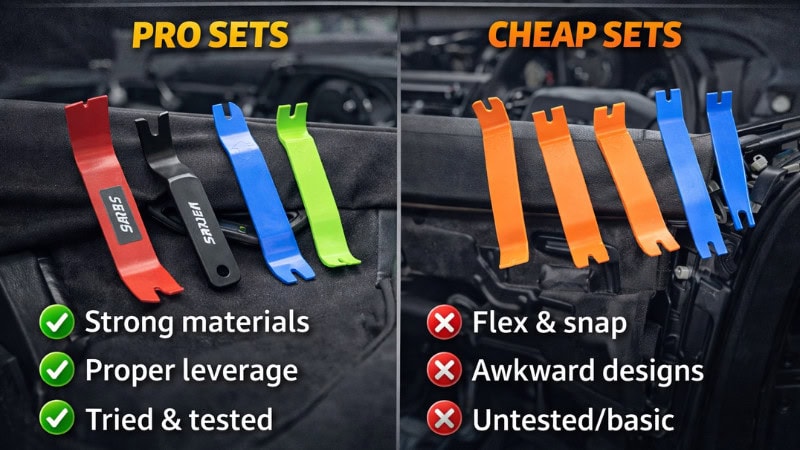
For professionals, yes. Higher-end trim tools use better materials, improved shapes, and stronger construction. This results in better control, less fatigue, and longer tool life. Cheap sets may work for occasional DIY use, but they often flex too much or snap under pressure. Mechanics who work on interiors regularly benefit from investing in reliable tools that perform consistently and don’t fail mid-job.
FAQ 7: Can trim tools scratch interior panels?
Proper trim tools are designed to be non-marring, especially nylon tools. Scratches usually happen when the wrong tool is used, excessive force is applied, or the tool slips. Dirt trapped between the tool and the panel can also cause marks. Cleaning the area first and using smooth, controlled movements helps prevent damage. When used correctly, trim removal tools are far safer than screwdrivers or improvised prybars.
FAQ 8: How many trim tools should a mechanic own in 2026?
At a minimum, a mechanic should own a basic nylon trim set and a dedicated clip remover. For frequent interior work, a full trim kit with multiple shapes is ideal. Adding one compact tool for tight spaces and one metal tool for exterior trim covers most scenarios. In 2026, interiors are complex enough that relying on one or two improvised tools is no longer practical for professional work.
Final Verdict
For most car mechanics in 2026, a quality nylon trim tool set is no longer optional—it’s a daily necessity. If you want a reliable, all-around solution, the OEMTOOLS 27022 covers most interior jobs without damaging panels. Mechanics who do frequent door work should add a dedicated clip remover, such as the Lisle 35260, to reduce broken fasteners. For full interior tear-downs, a professional master set, such as the Astro Pneumatic 78318, saves time and reduces tool switching. The key is using the right tool for the job. That approach protects interiors, improves efficiency, and keeps work looking professional.
