
In today’s automotive diagnostics, avoiding guesswork is critical—mistakes cost time and money. In my experience, automotive smoke machines are the most reliable way to quickly and accurately identify check-engine-light issues. Leaks in EVAP systems, vacuum lines, and intake systems can be almost impossible to spot visually. I’ve seen cars misdiagnosed at multiple shops, with expensive parts replaced, only for a smoke machine to reveal the true culprit—a tiny, hidden crack—in minutes. This article reviews six top-rated automotive smoke machines that U.S. professionals trust. These recommendations are based on real diagnostic outcomes, not advertising claims. Choosing the right smoke machine, whether for a large repair shop or home garage, directly raises your diagnostic accuracy and shop efficiency.
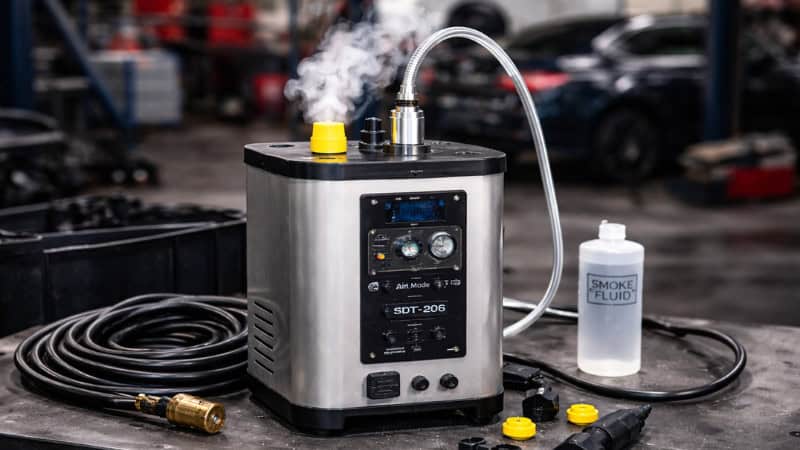
What Is an Automotive Smoke Machine?
An automotive smoke machine is a diagnostic tool that releases visible smoke into sealed vehicle systems to pinpoint leaks. These systems can include EVAP, intake, vacuum, exhaust, and sometimes even cooling systems. Smoke escapes through cracks, loose fittings, or faulty seals, making leaks instantly visible. In practical shop use, this technique consistently outperforms spray testing. For instance, I once diagnosed a Chevrolet Malibu with a recurring EVAP code that only appeared in cold weather. While spray tests revealed nothing, smoke testing exposed a split vapor line above the fuel tank. Most smoke machines use mineral oil to create thick, safe smoke and operate at low pressure, protecting sensitive components while delivering reliable results.
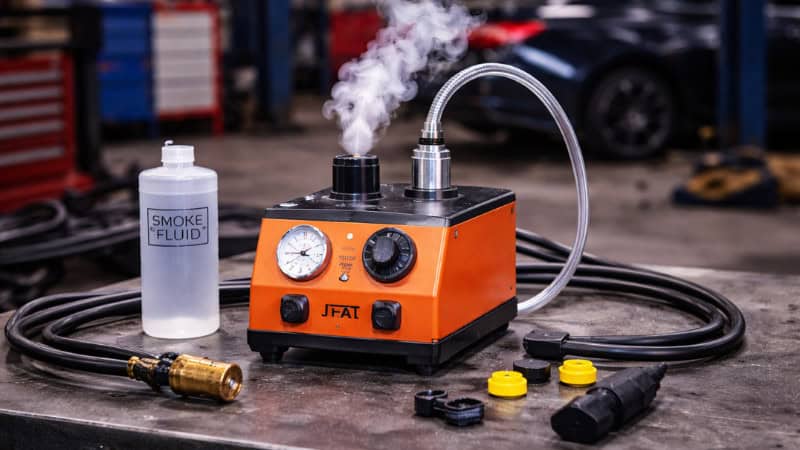
Key Factors Mechanics Consider Before Buying
When choosing a smoke machine, professional mechanics consider more than just price. Smoke density is essential—thin smoke can be hard to see in a brightly lit shop. Machines with built-in air pumps are preferred, as shop air can introduce moisture or too much pressure. Safety features like pressure gauges and flow meters help protect EVAP canisters from damage. Durable construction is important, since plastic housings often fail under daily use. I’ve witnessed inexpensive units break down after only a month of diagnostics. Portability is valuable for mobile technicians, while large reservoirs are better for busy shops. U.S.-based warranty support and parts availability are also key. A quality smoke machine should last for years, not just a few jobs. These factors distinguish professional-grade tools from hobbyist devices.
Comparison Table
| Smoke Machine | Best For | Smoke Output | Air Source | Skill Level | Shop-Grade |
|---|---|---|---|---|---|
| Autool SDT-206 | EVAP diagnostics | High | Built-in pump | Professional | Yes |
| Redline Smoke Pro Total Tech | Vacuum & EVAP | Very High | Built-in pump | Professional | Yes |
| OTC 6522 LeakTamer | General leak detection | Medium | Shop air | Pro / DIY | Yes |
| Autool SDT-202 | Budget diagnostics | Medium | Built-in pump | DIY | No |
| Bosch EVAP Smoke Machine (ESM) | Dealer-level EVAP | Very High | Built-in pump | Professional | Yes |
| JTC Auto Tools Smoke Machine | Beginners | Low–Medium | Built-in pump | DIY | No |
1. Autool SDT-206
The Autool SDT-206 consistently delivers efficient, accurate diagnostics for a variety of vehicles. It produces dense smoke, features a built-in air pump, and provides precise pressure control, which is crucial for sensitive EVAP work. The integrated flow meter makes it easy to confirm the repair’s success. This machine helps save diagnostic time and avoid unnecessary repairs, offering strong value for professionals seeking fast, accurate results.
2. Autool SDT-202
The Autool SDT-202 offers dependable diagnostics at a budget-friendly price. It is especially well-suited for vehicle owners and DIYers, providing reliable detection for intake and vacuum leaks. Its smoke output, while less dense than premium models, is sufficient for most situations. The SDT-202 includes essential safety features and is compact for convenient home use. Though not designed for heavy shop use, it stands out as a practical entry-level option for EVAP leak detection.
3. Redline Smoke Pro Total Tech
The Redline Smoke Pro Total Tech excels in professional environments with its precise leak detection and dense smoke output. It includes multiple adapters for versatility across vehicle systems. The robust construction and user-friendly controls support frequent use in busy shops. Its higher initial cost is balanced by its proven accuracy and reliability for professional diagnostic needs.
4. Bosch EVAP Smoke Machine
The Bosch EVAP Smoke Machine is optimized for high-volume shops, delivering continuous dense smoke and proven durability. It is reliable for frequent emissions diagnostics, though larger and less portable than some alternatives. Its design supports technicians handling repeated smoke tests each day.
5. OTC 6522 LeakTamer
The OTC 6522 LeakTamer functions effectively for both stationary and mobile mechanics. Powered by shop air, this lightweight unit is portable and easy to use in various settings. Its moderate smoke output is suited for most leak detection applications. The durable, straightforward design ensures ongoing dependability. While it lacks a built-in pump, its practicality and robustness appeal to technicians with access to compressed air.
6. JTC Auto Tools Smoke Machine
The JTC Auto Tools smoke machine is designed for straightforward operation, making it ideal for newcomers and apprentices. It uses preset pressure controls to maintain safety during diagnostics. While it produces less smoke and is therefore better suited to dim shop lighting, the machine offers an affordable, user-friendly starting point for basic leak detection needs. It meets the needs of those seeking simplicity without extensive shopping.
Common EVAP & Leak Problems Smoke Machines Can Find
- Small and large EVAP system leaks.
- Cracked or brittle vacuum hoses
- Intake manifold gasket leaks
- Throttle body air leaks
- Pre-catalytic exhaust leaks
- Fuel vapor line cracks near the tank
- Faulty purge valve seals
- Leaking vent solenoids
- Loose, damaged, or incorrect gas caps
How to Use an EVAP Smoke Machine
Using a smoke machine correctly is key to accurate diagnostics. Always ensure the system is fully sealed before adding smoke—open lines can give misleading results. For EVAP system testing, introduce smoke through the service port and cap the purge line. Maintain low pressure, as EVAP systems aren’t built for high PSI. In my shop, we closely monitor the flow meter to verify that leaks are fixed after repairs. Give the smoke enough time to move through the entire system, and use dim lighting to help spot small leaks. Following the right procedure protects components and ensures consistent, reliable results.
Smoke Machine vs Other Leak Detection Methods
Spray testing and scan tools each have their limitations. Carb cleaner might miss intermittent leaks and carries a fire risk. While scan tools can identify a leak code, they can’t pinpoint the leak’s location. Smoke machines provide visual proof, removing the guesswork from diagnostics. I’ve seen vehicles misdiagnosed several times before, but smoke testing finally revealed the actual problem. In professional diagnostics, smoke testing saves labor, prevents unnecessary parts replacement, and boosts customer confidence. It’s the most effective method for leak detection in modern vehicles.
Frequently Asked Questions
FAQ 1: Are automotive smoke machines safe for EVAP systems?
Yes, automotive smoke machines are safe for EVAP systems when used correctly. Professional smoke machines operate at very low pressure, usually under 1 PSI, which is well within EVAP system limits. Most quality units include pressure regulators or flow meters to prevent over-pressurization. In real-world shop use, damage occurs only when technicians bypass safety controls or use unregulated shop air. Following manufacturer instructions ensures safe, accurate EVAP leak testing without harming charcoal canisters or valves.
FAQ 2: Do I need shop air to use an EVAP smoke machine?
Not necessarily. Many modern automotive smoke machines come with built-in air pumps, which are preferred in professional shops because they provide clean, controlled airflow. Shop-air–powered machines work well but require a properly regulated air source. In real-world use, unregulated shop air can introduce moisture or excessive pressure. For DIY users or mobile mechanics, built-in pump models are usually more convenient and safer, especially for EVAP system diagnostics.
FAQ 3: Can one smoke machine test EVAP, intake, and vacuum leaks?
Yes, most automotive smoke machines are designed to test multiple systems, including EVAP, intake, vacuum, and even exhaust leaks. The key difference is using the correct adapters and test procedures. In my shop, the same smoke machine is routinely used on EVAP systems in the morning and intake leaks on turbo engines in the afternoon. As long as pressure is controlled and connections are sealed properly, a quality smoke machine can handle all common leak diagnostics.
FAQ 4: How much pressure is safe for EVAP smoke testing?
EVAP systems are designed for very low pressure, typically less than 1 PSI. Most professional smoke machines automatically stay well below this limit. In real-world diagnostics, higher pressure does not improve results and can even damage components such as vent valves or charcoal canisters. That’s why experienced mechanics rely on machines with built-in regulators and flow meters. If your smoke machine does not display pressure or flow, extra caution is required during EVAP testing.
FAQ 5: Are cheap smoke machines worth buying?
Cheap smoke machines can be worth it for occasional or DIY use, but they have limitations. In my experience, budget models work fine for basic vacuum or intake leaks but often struggle with very small EVAP leaks. They usually produce thinner smoke and have fewer safety features. For professional shops, cheap units rarely last long under daily use. If you’re diagnosing your own vehicle occasionally, a budget smoke machine is acceptable, but professionals should invest in higher-quality equipment.
FAQ 6: Can a smoke machine find intermittent leaks?
Yes, smoke machines are one of the best tools for intermittent leak detection. Unlike scan tools or spray testing, smoke provides visual confirmation even when leaks only open under certain conditions. I’ve diagnosed temperature-related EVAP leaks where smoke only escaped after components warmed up. By running smoke while manipulating hoses or valves, intermittent issues become visible. This makes smoke testing far more effective than relying on fault codes alone for complex leak problems.
FAQ 7: How long does smoke machine diagnostic testing take?
A proper smoke test usually takes 10 to 30 minutes, depending on the system being tested and the vehicle layout. In real shop conditions, this is significantly faster than trial-and-error parts replacement. Simple vacuum leaks can be found in minutes, while EVAP system testing may take longer due to system sealing and smoke travel time. Even at the higher end, smoke testing saves hours of labor compared to traditional diagnostic methods.
FAQ 8: Is a smoke machine necessary for modern vehicles?
For modern vehicles, a smoke machine is almost essential. Today’s engines and EVAP systems are tightly sealed, and leaks are often too small to hear or feel. Scan tools can identify a leak code, but cannot show the leak location. In professional diagnostics, smoke machines bridge that gap. As emissions systems become more complex, smoke testing has become a standard tool in U.S. repair shops rather than an optional accessory.
Final Verdict
Professional shops should invest in premium models like the Redline Smoke Pro or Bosch ESM for their accuracy and long-term reliability. DIYers and beginners will get great value from Autool and JTC units, while mobile mechanics benefit from portable options like the OTC LeakTamer. The right automotive smoke machine takes the guesswork out of diagnostics, speeds up repairs, and improves accuracy—making it an indispensable tool in any garage.
Read more:
