
Still using a corded car polisher in 2026? Upgrade to cordless for freedom from extension cords and modern performance. Advances in lithium-ion batteries mean longer run times, quicker recharging, and torque as strong as many corded units. Whether you’re an enthusiast or professional, cordless polishers handle swirls, buff clear coat, and apply wax efficiently. They now offer professional power and control for both quick touch-ups and demanding projects.
How We Tested & Rated These Cordless Car Polishers
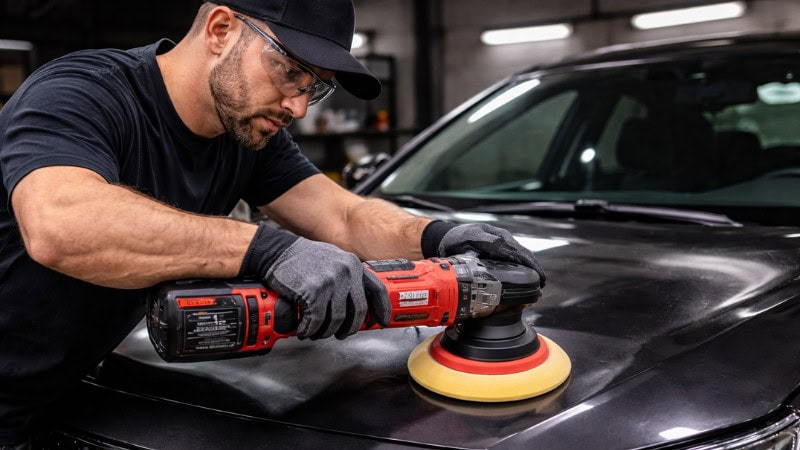
We evaluated cordless polishers in authentic shop conditions, testing paint correction, waxing, and extended finishing. We measured power under load, RPM stability, battery life, and comfort during long use. Balance, ergonomics, and battery swap convenience also factored in, since downtime matters. The final list reflects real-world performance you can trust in any garage.
Comparison Table
7 Best Cordless Car Polishers of 2026
1. Milwaukee M18 FAP180 Fuel
The Milwaukee M18 FAP180 Fuel cordless polisher is designed for professional performance. Its 18V brushless motor keeps torque steady with aggressive compounds. Variable-speed control enables precise adjustments for various tasks. The tool remains balanced and durable and integrates with the M18 battery system for convenience if you already use Milwaukee tools. Its reliable battery and power make it suitable for daily use and demanding correction work.
2. Ryobi R18P-0 ONE+ Cordless Polisher
The Ryobi R18P-0 ONE+ Cordless Polisher stands out for value and simplicity. It prioritizes user-friendly operation over high torque, making it ideal for light polishing and waxing tasks. The multi-speed control allows adjustment for most entry-level requirements. As an option for those new to paint care, it offers an affordable start and is compatible with Ryobi ONE+ batteries for added convenience.
3. Ginour Dual Action 21V Brushless
For those seeking professional features at an accessible price, the Ginour Dual Action 21V Brushless Polisher offers dual-action movement, reducing swirl marks and providing smooth starts and stops. Variable speed settings enable full control from compounding to finishing. Its weight and battery life support regular use in workshops, making it a reliable option for frequent work.
4. Protmex 21V Orbital Polisher Kit
The Protmex 21V Orbital Polisher Kit provides strong value with two 21V batteries and a comprehensive pad set included. Its orbital action supports effective results on oxidized paint while being user-friendly. With eight speed settings, the tool adapts to different tasks. While it does not deliver shop-grade power, it serves home users and those seeking affordability well.
5. Batoca S5 Mini Polisher
The Batoca S5 Mini Cordless Polisher is compact and lightweight. Its six-speed 12V design is suited to detailed work on small vehicles or in tight spaces. Not for large jobs, but perfect for precision.
6. Milwaukee M18 FAP180 Fuel
For addressing deep swirls and scratches, the Milwaukee M18 FAP180 Fuel offers the torque and consistency required. Its brushless motor, paired with smooth speed control, lets users apply pressure confidently. Equipped with appropriate pads, it is ready for professional-grade paint correction directly out of the box.
7. Ofeace 21V Cordless Polisher Kit
For mobile detailers focused on runtime and versatility, the Ofeace 21V Cordless Polisher Kit offers two 21V batteries and eight speed settings for task flexibility. Capable of handling correction, polishing, and waxing, it eliminates the inconvenience of cords, making it practical for on-site work at clients’ locations.
Key Features Mechanics Look for in a Cordless Car Polisher
- Brushless Motor: Smooth, longer life, and better torque under load.
- Variable Speed Control: Adjust RPM for compounding, polishing, or finishing.
- Battery System Integration: Works with existing battery platforms (Milwaukee, Ryobi, etc.).
- Ergonomic Design: Balanced weight and grip reduce arm fatigue.
- Durability: Sealed bearings and rugged housing for shop use.
- Pad Compatibility: Easy hook-and-loop backing plate system.
- Thermal Protection: Prevents overheating on long jobs.
Cordless vs. Corded Car Polishers – Is Cordless Worth It in 2026?
Back in the day, corded polishers were king — no argument. But in 2026, cordless units have closed the gap big time. Today’s brushless cordless polishers deliver enough power for most paint correction and finishing jobs without being tied to a wall socket. That freedom alone is huge, especially for driveway work or mobile detailing. Corded models still make sense for nonstop, heavy correction in a fixed shop, but they come with cable drag and limited mobility. Cordless polishers are quieter, safer around water, and quicker to set up. For most DIYers and even many pros, cordless is absolutely worth it now — fewer hassles, same solid results.
you may like: 10 Best Trim Removal Tool Comparison
Battery Life, Charging Time & Replacement Costs
Battery performance can make or break a cordless car polisher. Most modern 18V–21V systems deliver enough juice to polish or wax an entire midsize vehicle on a single charge if you work efficiently. Higher amp-hour batteries last longer but add weight, so there’s always a trade-off. Fast chargers help keep downtime low, especially in busy shops or mobile setups. Long-term, replacement batteries are the biggest cost factor, so choosing a brand with a strong ecosystem matters. If your polisher shares batteries with drills or impacts, you save money in the long run. Smart mechanics always keep at least one spare battery charged and ready — it keeps jobs moving without frustration.
you may like: 10 Best Parts Washer Solvents and Cleaners
Maintenance Tips to Make Your Cordless Polisher Last Longer
A cordless polisher isn’t cheap, so taking care of it pays off. After every job, wipe down the housing to remove polish dust and residue — buildup can clog vents and cause overheating. Check pads regularly and replace worn ones before they shed or damage paint. Batteries should be stored in a cool, dry place and never left fully drained for long periods. Avoid dropping the tool or resting it pad-down on hard surfaces, which can damage the backing plate. Every now and then, inspect screws and mounts to make sure nothing’s loosening up. Treat your polisher like any other precision tool, and it’ll stay reliable for years.
FAQ
FAQ 1: Are cordless car polishers powerful enough for paint correction?
Yes, modern cordless car polishers are absolutely powerful enough for most paint correction jobs. Thanks to brushless motor technology and high-output lithium-ion batteries, today’s cordless units deliver steady torque under load. While extreme, all-day heavy correction might still favor corded tools, cordless polishers handle swirl removal, oxidation, and moderate scratches without issues. With the right cutting pad and compound, you can achieve professional-level correction results without being tied to a power outlet.
FAQ 2: How long does a cordless car polisher battery last on one charge?
Battery life depends on voltage, amp-hour rating, and how hard you’re pushing the tool. On average, an 18V–21V cordless polisher runs for 60-120 minutes per charge. Lower speeds used for waxing last longer, while aggressive correction drains batteries faster. Most mechanics recommend keeping at least one spare battery charged so you can finish a full vehicle without downtime or rushing through the job.
FAQ 3: Are cordless polishers safe for beginners to use?
Yes, cordless polishers are beginner-friendly, especially dual-action models. They offer smoother power delivery and controlled speed settings that reduce the risk of burning the clear coat. Beginners should start on low speeds, use light pressure, and practice proper pad movement. Cordless units also eliminate cable drag, making handling easier. With basic technique and patience, new users can safely polish and wax vehicles without damaging paint.
FAQ 4: What’s the difference between a cordless polisher and a cordless buffer?
A cordless polisher is designed for paint correction, polishing, and finishing, usually with variable speed and dual-action or rotary motion. A cordless buffer is typically more aggressive and is mainly used to quickly spread wax or compounds. Buffers spin faster and can damage paint if misused. For most car detailing tasks, a cordless polisher is the safer, more versatile tool, especially for clear-coat finishes.
FAQ 5: Do cordless polishers overheat during long detailing sessions?
High-quality cordless polishers feature thermal protection systems to prevent overheating. Brushless motors run cooler than older brushed designs, which helps during extended use. However, overheating can still occur if vents are blocked or the tool is pushed too hard for too long. Taking short breaks, cleaning air vents, and using proper pads help keep temperatures under control and extend the tool’s lifespan.
FAQ 6: Can I use the same pads on cordless and corded polishers?
Yes, most polishing pads are interchangeable between cordless and corded polishers as long as the backing plate size matches. Common sizes include 5-inch and 6-inch hook-and-loop pads. Always check your polisher’s backing plate diameter before buying pads. Using the correct pad ensures better balance, smoother operation, and safer paint correction, whether the tool is cordless or corded.
FAQ 7: Are cordless polishers good for mobile detailing businesses?
Cordless polishers are excellent for mobile detailing. They eliminate the need for generators or searching for power outlets at customer locations. With spare batteries and fast chargers, mobile detailers can complete multiple jobs efficiently. Cordless tools also speed up setup and teardown time, making jobs smoother and more professional. For mobile operations, cordless polishers are often more practical than corded alternatives.
FAQ 8: How long do cordless car polishers usually last?
A well-maintained cordless car polisher can last many years. Brushless motors significantly extend tool life by reducing internal wear. Battery lifespan usually ranges from 3 to 5 years, depending on usage and charging habits. Regular cleaning, proper storage, and avoiding excessive heat all help extend durability. Investing in a reputable brand with available replacement batteries ensures long-term value and reliable performance.
Final Verdict
Choosing the right cordless car polisher comes down to how you work. If you want maximum power and reliability for frequent use, a pro-grade brushless model is worth the investment. For beginners or weekend detailers, a lighter, more affordable polisher still delivers great shine without overwhelming power. Mobile detailers should prioritize battery life and quick swaps, while tight-space work benefits from compact designs. The good news is that 2026 cordless polishers are more capable than ever. No matter your skill level or budget, there’s a solid option that gets the job done without cords dragging behind you. Buy smart, match the tool to your workload, and you won’t regret going cordless.
