
Most modern vehicles use 12-volt systems, but 6-volt batteries are still essential for some vehicles. I often see them in classic cars, vintage trucks, tractors, and older utility vehicles with simpler electrical systems. These vehicles were built specifically for 6 volts, not 12. With proper wiring and good grounds, a quality 6-volt battery can start an engine as reliably as newer systems. The real issue is usually poor battery quality or lack of maintenance, not voltage. This guide covers the top 6-volt car batteries, what to consider when buying, and which models perform best in the garage.
Who Should Buy a 6 Volt Car Battery?
A 6-volt battery isn’t for everyone, but for the right vehicle, it’s the logical choice. If you’re restoring a classic car from the 1930s to early 1950s, sticking with 6 volts keeps authenticity and proper electrical function. Owners of vintage farm equipment also need 6V batteries, since many tractors require high torque and low-speed cranking. Show car enthusiasts use 6V systems to preserve originality and avoid wiring changes. Even vehicles used only seasonally can perform well on a 6V battery if maintained. Converting a vehicle designed for 6 volts to 12 volts often brings more problems than solutions.
you may like: How to Clean Battery Acid
Key Things a Mechanic Checks Before Recommending a 6V Battery
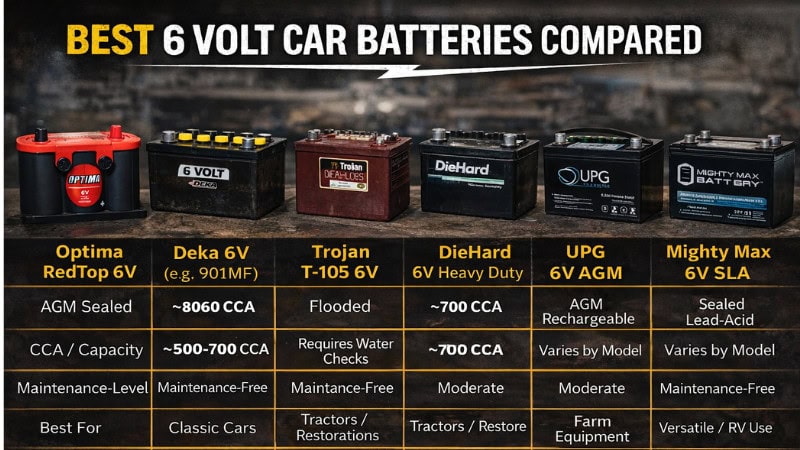
Before recommending any 6-volt battery, I check a few critical factors. Cold Cranking Amps (CCA)—a measure of a battery’s ability to start an engine in cold temperatures—top the list, since older starters need more current, not higher voltage. Battery construction is important; thicker lead plates (the internal layers that produce electricity) usually indicate greater durability and a longer lifespan. Reserve capacity—the time a battery can supply power without the engine running—matters too, as classic cars often sit unused. Maintenance style matters: some owners prefer maintenance-free batteries (sealed, no water needed), while others are comfortable with traditional flooded types (need topping off with water). Fitment—making sure the battery’s size and terminal orientation match the vehicle—prevents vibration damage or grounding issues. In a 6V setup, every connection counts.

Best 6 Volt Car Batteries Compared
Top 6 Volt Car Battery Reviews
- The best 6-volt batteries are the ones that deliver consistent cranking power over time, not just strong performance when they’re brand new. Reliability matters more than marketing numbers.
- Flooded lead-acid batteries usually provide stronger initial torque, which is especially helpful for older and higher-compression engines commonly found in classic cars and tractors.
- AGM 6-volt batteries excel in long-term durability and low maintenance. They resist vibration, don’t spill acid, and perform well in vehicles that sit for long periods.
- Many early battery failures are caused by cheap construction, including thin internal plates and low lead content, which shorten lifespan and reduce starting power.
- A heavier 6-volt battery often means more lead inside, and in real shop experience, that usually translates into better performance and longer service life.
- Battery performance depends heavily on the rest of the electrical system. Undersized cables, rusty grounds, or poor connections can make even a new battery seem weak.
- Most “bad battery” complaints turn out to be wiring or grounding issues, not actual battery defects.
- When a quality 6-volt battery is paired with proper heavy-gauge cables and clean grounds, starting problems are usually eliminated.
Pros and Cons of 6 Volt Car Batteries
Advantages of 6V Batteries:
- High torque output for older starter motors
- Designed specifically for vintage electrical systems
- Simpler wiring and easier diagnostics
- Maintains originality in classic restorations
- Lower risk of damaging gauges and accessories
Limitations to Consider:
- Limited availability compared to 12V batteries
- Requires thicker battery cables
- Sensitive to corrosion and poor grounds
- Slower cranking if maintenance is neglected
- Fewer modern accessories are supported.
you may like: How to Charge a Car Battery Without a Charger
Maintenance Tips to Make a 6V Battery Last Longer
Maintenance is the key to making any 6-volt system reliable. Always keep battery terminals clean and tightly connected—any resistance will reduce performance. Use only thick, high-quality battery cables, as thin cables can restrict current flow. If you have a flooded battery, check the electrolyte levels regularly and add only distilled water when needed. If your vehicle sits unused for long stretches, store the battery on a maintainer. Ensure all ground straps are solid and clear of paint or rust. With proper care, a 6-volt battery can last for years, but neglect will quickly shorten its lifespan. In older vehicles, maintenance isn’t optional—it’s a must.
6 Volt vs 12 Volt Battery: Should You Convert?
This is a question I hear all the time. In most cases, if the vehicle runs fine on 6 volts, there’s no mechanical reason to convert. A 12-volt conversion can mask wiring problems but often introduces new ones, like damaged gauges and burned-out components. That said, if you plan to add modern accessories or drive the vehicle daily, a conversion might make sense. Just understand it’s not a simple battery swap—it requires alternators, resistors, and rewiring. From a mechanic’s standpoint, originality plus proper maintenance usually beats conversion. A healthy 6-volt system works exactly as intended.
you may also like: How Long Does a Car Battery Last Without Driving?
FAQ
FAQ 1: How long does a 6-volt car battery usually last?
A high-quality 6-volt car battery typically lasts 3 to 5 years with proper maintenance. Longevity depends heavily on cable condition, clean grounds, charging habits, and how often the vehicle is driven. Classic cars that sit unused for long periods may shorten battery life if not kept on a maintainer. From a mechanic’s perspective, most early failures aren’t battery defects—they’re caused by corrosion, poor connections, or improper charging systems.
FAQ 2: Why does my 6-volt system crank slower than a 12-volt system?
A 6-volt system cranks slower by design, but it should still turn the engine confidently. Slow cranking usually means resistance somewhere in the system, not low voltage. Thin cables, rusty grounds, weak connections, or a tired starter motor are common causes. A properly set up 6-volt system uses thick cables and clean grounds to deliver high current. Fix those issues, and cranking speed improves dramatically.
FAQ 3: Can I jump-start a 6-volt car safely?
Yes, a 6-volt car can be jump-started, but it must be done carefully. Ideally, use another 6-volt vehicle or a dedicated 6-volt jump pack. If using a 12-volt source, only connect briefly and never rev the donor vehicle. Long connections can damage gauges, bulbs, and wiring. As a mechanic, I always recommend diagnosing why the battery died instead of relying on frequent jump-starts.
FAQ 4: Are AGM 6-volt batteries better than flooded ones?
AGM 6-volt batteries are better for low-maintenance and storage, while flooded batteries often deliver stronger cranking power. AGM batteries don’t spill, don’t need water, and resist vibration, making them ideal for show cars or seasonal use. Flooded batteries, on the other hand, are usually cheaper and perform better under high load conditions, such as in tractors. The “better” option depends on how you use the vehicle, not just battery type.
FAQ 5: What size battery cables should a 6-volt system use?
Cable size is critical in a 6-volt system. Most setups require 0- or 00-gauge cables, which are thick, heavy wires used for battery connections. These are much thicker than modern 12-volt cables. Thin cables restrict current flow, causing a voltage drop (a reduction in electrical pressure that leads to poor starting) and slow cranking. This is one of the most common mistakes I see in classic cars. Installing the correct cable size often fixes starting problems without replacing the battery or starter.
FAQ 6: Should I convert my vehicle from 6 volts to 12 volts?
Conversion isn’t always necessary. If your vehicle starts and runs well on 6 volts, there’s no mechanical advantage to switching to 12 volts. Many conversions hide wiring problems rather than fix them. However, if you plan to run modern accessories or drive the vehicle daily, a 12-volt conversion may make sense. Just remember, a proper conversion requires more than swapping batteries—it involves the entire electrical system.
FAQ 7: How should I store a 6-volt battery during winter?
For winter storage, remove the battery or disconnect it and place it on a 6-volt battery maintainer. Store it in a cool, dry location—not directly on concrete. Clean the terminals before storage and check electrolyte levels if it’s a flooded battery. Letting a battery sit discharged over winter is the fastest way to kill it. Proper storage can easily add years to battery life.
FAQ 8: Why do 6-volt batteries fail faster in classic cars?
Most early failures aren’t the battery’s fault. Classic cars often suffer from old wiring, corroded grounds, worn starters, and incorrect charging systems. A 6-volt battery is less forgiving of resistance than a 12-volt one. Any small issue gets magnified. When the entire system is healthy—clean grounds, thick cables, good generator—a 6-volt battery performs reliably and lasts just as long as expected.
Final Thoughts
Choosing the right 6-volt car battery is about understanding your vehicle’s needs and appreciating how it was originally engineered. In my experience as a mechanic, most issues attributed to 6-volt systems actually stem from poor wiring, thin cables, weak grounds, or lack of maintenance—not the battery itself. If you pick a quality battery with the right Cold Cranking Amps, use correct cable sizes, and keep your electrical system clean, a 6-volt setup can be just as reliable and long-lasting as any modern alternative.
Whether you drive a classic car, a vintage truck, or older farm equipment, sticking with a well-maintained 6-volt battery will often give you better results than switching to a 12-volt system. Choose the right battery for your needs, take care of it, and your vehicle should start and run just as its engineers intended.
