
As a mechanic, I frequently hear, “My car only overheats when I’m stuck in traffic with the AC on.” This issue confuses many drivers because the temperature gauge stays normal while driving, but rises when the car is stopped. That’s an important clue. Overheating at idle usually indicates airflow or cooling system problems, not major engine failure. When the AC is running, your engine has to work harder, especially at low RPMs. Any weakness in a cooling component prevents excess heat from escaping. Ignoring this problem can cause serious engine damage, so understanding the cause early can help you avoid costly repairs later.
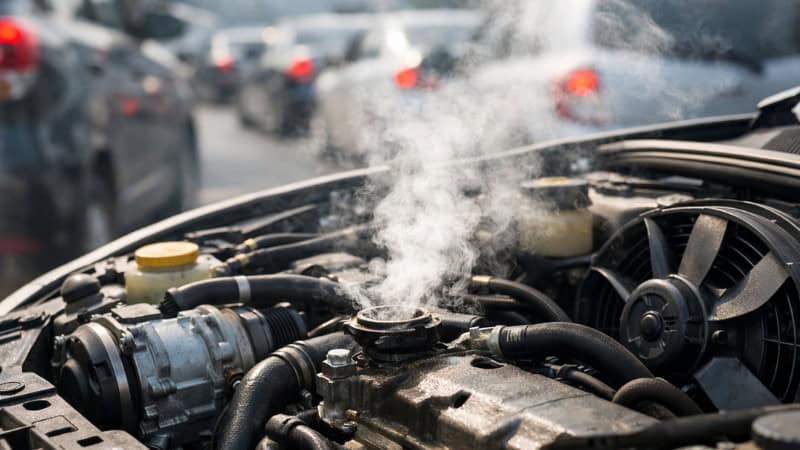
How the AC System Affects Engine Temperature
When you turn on your air conditioning, the AC compressor adds extra load to the engine. At highway speeds, this isn’t usually a problem because airflow through the radiator and condenser keeps temperatures under control. At idle, however, your engine is spinning slowly and relying almost entirely on electric cooling fans. The AC condenser also dumps additional heat into the radiator. If airflow is weak or coolant circulation is inefficient, heat builds up quickly. That’s why overheating with the AC on almost always shows up at stoplights or in traffic. This condition doesn’t mean your AC is “bad”—it means the cooling system can’t keep up with the added demand.
Most Common Causes of Overheating at Idle With AC
- Radiator cooling fan not turning on.
- Cooling fan running only at low speed.
- Low engine coolant level
- Incorrect coolant-to-water mixture
- Failing radiator fan motor
- Blown fan fuse or bad relay
- Clogged radiator or AC condenser
- Thermostat stuck partially closed.
- Worn or slipping water pump
- Dirty radiator fins are blocking airflow.
- Faulty coolant temperature sensor
- Engine control module not commanding fan activation
Overheating at Idle vs While Driving
Overheating at idle differs greatly from overheating while driving. On the move, natural airflow through the radiator helps remove heat even with weak fans. At idle, without this airflow, the cooling system relies on electric fans and efficient coolant circulation. Cooling down once you start driving almost always suggests a fan, airflow, or sensor issue. Overheating while driving typically points to more serious issues, such as a clogged radiator, a failing water pump, or internal engine trouble. Knowing this distinction aids diagnosis.
Cooling System Components to Check First
Why This Problem Is More Noticeable in Hot Weather
Hot weather makes this issue more noticeable. Higher outside temperatures decrease the efficiency with which your radiator releases heat. When the AC is running, the condenser adds extra heat to the cooling system. Coupled with stop-and-go traffic, heat accumulates quickly. Engines also experience heat soak after running for a while, especially when idling. This is why many cars overheat on hot afternoons but not during cooler mornings. The problem is not seasonal—it means the system is already weakened, and summer heat pushes it past its limit. If overheating occurs now, it will only worsen over time.
Can You Keep Driving If This Happens?
The short answer is that it’s not safe to keep driving for long when your temperature gauge rises. If it goes up slightly and returns to normal when you turn off the AC, you may be able to make it home, but repeated overheating risks critical engine issues such as warped cylinder heads or blown head gaskets. If the temperature gauge enters the red zone, turn off the engine immediately. Continuing to drive while overheating can escalate a minor repair into a complete engine rebuild. Overheating is a significant problem and should never be ignored.
Professional Diagnostic Tips From a U.S. Mechanic
The first thing a mechanic checks is whether the cooling fan turns on when the AC is engaged. If it doesn’t, we inspect the fan relay, fuse, wiring, and temperature sensors. A scan tool helps verify whether the engine computer is commanding the fan correctly. We also pressure-test the cooling system to check for leaks and test the thermostat’s opening temperature. Another overlooked step is inspecting airflow—leaves, dirt, or plastic bags can block the radiator or condenser. Good diagnostics matter because guessing wastes money. A proper inspection usually finds the problem faster than replacing random parts.
Preventive Maintenance to Avoid Idle Overheating
Preventive maintenance goes a long way with cooling systems. Regular coolant flushes prevent internal buildup that restricts flow. Keeping the radiator and condenser clean ensures proper airflow. Replacing worn hoses before they collapse internally can prevent circulation issues. Pay attention to early signs like temperature fluctuations, weak AC cooling at idle, or fans running constantly. These are warnings, not quirks. Most overheating problems don’t appear suddenly—they develop over time. Addressing small issues early keeps your engine healthy and prevents breakdowns on the road. Preventive maintenance is always cheaper than emergency repairs.
FAQ
FAQ 1: Why does my car only overheat when stopped?
When your car is stopped or idling, it loses much of the natural airflow through the radiator, causing the cooling system to rely almost entirely on the electric radiator fans and proper coolant circulation. If a fan is not turning on, is running slowly, or airflow is blocked, heat can quickly build up. While driving, air movement compensates for these issues, lowering the temperature.
FAQ 2: Can low coolant cause overheating only at idle?
Yes, low coolant can absolutely cause overheating, mainly at idle. Coolant removes heat from the engine, and when the level is low, heat transfer becomes inefficient. At higher speeds, airflow may compensate enough to keep temperatures stable. At idle, however, reduced airflow combined with low coolant allows heat to build rapidly, especially when the AC system adds extra thermal load.
FAQ 3: Is it safe to turn off the AC to prevent overheating?
Turning off the AC may temporarily reduce engine heat, but this does not solve the underlying issue. Potential causes, such as a faulty fan, sensor, or airflow problem, remain present and can lead to sudden overheating in traffic or hot weather. The cooling system should be properly diagnosed and repaired as soon as possible.
FAQ 4: Does a bad thermostat cause idle overheating?
Yes, a faulty thermostat can cause overheating that’s more noticeable at idle. If the thermostat is partially stuck closed, coolant flow is restricted. At driving speeds, higher engine RPM and airflow may help compensate. At idle, reduced flow combined with AC heat load can quickly raise engine temperatures. Thermostat problems are common and relatively inexpensive to fix when caught early.
FAQ 5: Can a clogged radiator cause this problem?
A clogged radiator is a common cause of idle overheating. Internal clogs restrict coolant flow, while external debris blocks airflow. At idle, limited airflow makes these restrictions critical. With the AC on, extra heat overwhelms the system. Even partial blockages can cause temperature spikes at stoplights.
FAQ 6: Why does my cooling fan work sometimes and not others?
Intermittent fan operation usually indicates an electrical issue. Common causes include failing fan relays, worn fan motors, bad temperature sensors, or loose wiring. Heat can worsen electrical resistance, causing the fan to fail exactly when it’s needed most. This inconsistency often makes it hard for drivers to diagnose without proper testing with a scan tool or direct fan-activation checks.
FAQ 7: Will overheating damage my engine immediately?
One overheating event may not destroy your engine, but repeated overheating absolutely will. Excessive heat can warp cylinder heads, damage head gaskets, and degrade engine oil. Even short periods in the red zone can shorten engine life. Many major engine failures start with ignored overheating warnings. If your temperature gauge climbs repeatedly, repairs should be done immediately to avoid catastrophic damage.
FAQ 8: How much does it usually cost to fix this issue?
Most overheating-at-idle repairs are affordable when caught early. Fan relays, sensors, or coolant service typically cost between $100 and $300. Fan motors and thermostats may run $200–$500. However, ignoring the issue can lead to head gasket or engine damage costing thousands. Early diagnosis is the difference between a minor repair and a major financial hit.
Final Thoughts
If your car overheats at idle with the AC on, this is not normal and should not be overlooked. Most causes relate to the cooling system and are cost-effective to resolve if addressed promptly. The main risk is delaying repairs until overheating becomes consistent. An unresolved issue, such as a faulty fan or thermostat, can ultimately result in severe engine damage. If turning off the AC alleviates the problem, treat this as a warning, not a long-term solution. Consult a qualified mechanic for prompt diagnosis and repair. Early attention safeguards your engine, finances, and peace of mind.
