
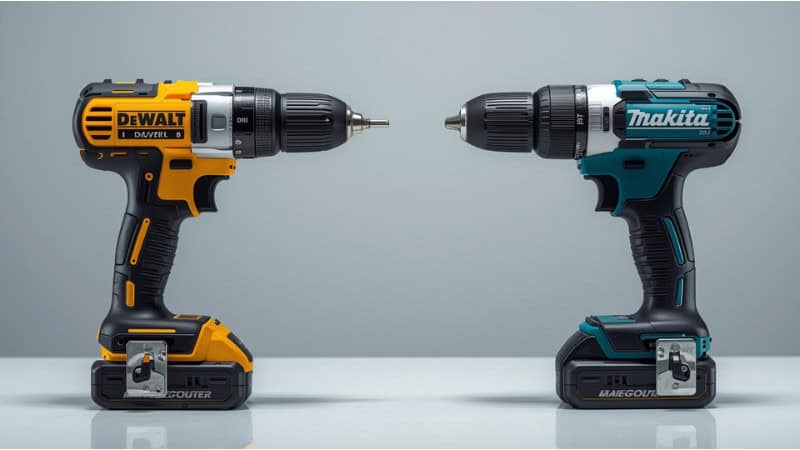
On most jobsites in the United States, the debate between Dewalt and Makita is common. These brands are widely used because they are reliable, powerful, and built for demanding work. Whether you are a mechanic, contractor, or dedicated DIYer, choosing the right cordless drill is important. This article focuses on real-world performance, including torque, battery life, durability, and user comfort. By the end, you will have a clear understanding of which brand best fits your work style and why.
Brand Reputation & Jobsite Trust
In the United States, a tool’s reputation is earned through performance on jobsites, in garages, and in service bays. DeWalt is recognized as dependable and durable, trusted to withstand harsh conditions like dust and accidental drops. Their drills are common in auto shops and factories, aided by widely available replacement parts, batteries, and service centers.
Makita stands out for consistency and attention to detail. Mechanics appreciate the smooth operation and long-term reliability of its drills. While less prominent on large construction sites, professionals who prioritize precision and balance hold Makita in high regard.
Power & Performance: Torque, Speed, and Real-World Use
For mechanics, true power is proven on the job. Dewalt cordless drills outperform Makita in delivering stronger torque—crucial for driving large bolts and drilling through thick steel or stuck fasteners. DeWalt stands out for its reliable performance on demanding tasks.
Makita drills, unlike Dewalt drills, focus on controlled power delivery. Their motors apply torque more gradually than Dewalt’s, reducing user strain and improving accuracy. For extended or precision work, this smoothness is more pronounced with Makita.
Dewalt vs Makita Power Comparison
| Performance Factor | Dewalt Cordless Drills | Makita Cordless Drills |
|---|---|---|
| Max Torque | Higher overall | Slightly lower |
| Power Delivery | Aggressive, punchy | Smooth, controlled |
| Best For | Heavy-duty, automotive, framing | Precision, long-duration work |
| Stall Resistance | Excellent under load | Very consistent |
Battery Technology & Runtime
A cordless drill is only as good as its battery—especially if you’re working a long shift and can’t keep running to the charger. DeWalt’s 20V MAX battery system is made for tough jobs. These batteries pack a punch, keep performing even in cold garages or outside, and last through heavy use. If you already have other Dewalt tools, their FlexVolt batteries let you use the same batteries across different tools, which is a big plus.
Makita’s 18V LXT batteries focus on efficiency and rapid charging, charging faster than Dewalt and most competitors. While Dewalt emphasizes high output under load, Makita maintains steady power and longer-lasting runtime, prioritizing longevity over Dewalt’s peak bursts.
Dewalt vs Makita Battery Comparison
| Battery Factor | Dewalt | Makita |
|---|---|---|
| Voltage Platform | 20V MAX / FlexVolt | 18V LXT |
| Runtime Under Load | Strong, power-focused | Efficient, steady |
| Charging Speed | Good | Faster |
| Cold-Weather Performance | Excellent | Good |
Build Quality & Durability on the Job
Build quality is a critical factor for cordless drills. DeWalt drills feature robust housings, durable rubber grips, and internal components designed to withstand dust, vibration, and impacts. Many mechanics rely on DeWalt tools for their durability in frequent transport and demanding environments. Even after years of use, Dewalt drills typically remain operational, despite cosmetic wear.
Makita, unlike Dewalt’s focus on brute durability, emphasizes lasting refinement. Makita’s lighter drills maintain smoothness and performance over time—especially in workshops—while Dewalt handles abuse but may show operational wear sooner than Makita.
Ergonomics & Comfort
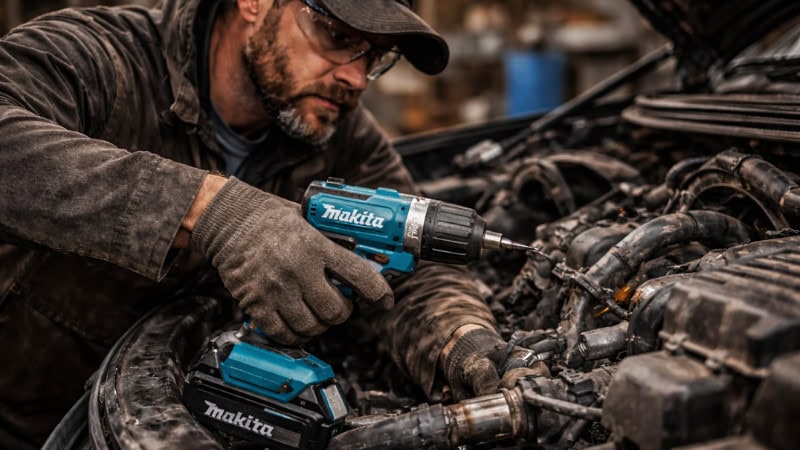
Comfort doesn’t always cross your mind—until your wrist starts aching halfway through the day. DeWalt drills are sturdy and solid, but that toughness comes at a price: more weight. If you’re doing quick, heavy jobs, it’s not a big deal. But after hours of drilling, you’ll start to feel it. The grip is solid and secure, but with bigger batteries, the drill can feel front-heavy.
Makita clearly outperforms Dewalt in comfort. The lighter weight and superior balance set it apart during prolonged use. Its ergonomic grip, responsive trigger, and low vibration substantially reduce fatigue, whereas Dewalt’s heavier build can become a drawback for extended tasks.
Drill Lineup Comparison
Both Dewalt and Makita offer a wide range of cordless drills, each with a distinct focus. DeWalt emphasizes power and durability. While their entry-level models are suitable for most tasks, the XR series is designed for professionals requiring high torque and advanced performance. Upgrading within the Dewalt system is straightforward, as most batteries and tools are compatible.
Makita’s drills, unlike Dewalt’s, maintain smoothness and balance across all models, not just the top tier. Technicians who need precision and exceptional control frequently choose Makita. Although Makita’s top power lags Dewalt’s, its entire lineup excels in predictable, comfortable use rather than maximum force.
Price, Value & Long-Term Investment
Price is important, but value means looking beyond the initial cost. DeWalt kits are typically more budget-friendly upfront, often including extra batteries that save you money if you’re starting out or expanding. The broad battery compatibility across Dewalt tools adds convenience and can reduce costs for users who need to switch between different types of power tools—making Dewalt strong in versatility and ease of upgrades.
Makita usually has a higher upfront price, especially for standalone tools. However, the brand’s value lies in its renowned durability, steady operation, and comfort, which reduce fatigue during long projects. For professionals, Makita’s higher initial cost can be justified by fewer breakdowns, less maintenance, and greater satisfaction during demanding, repetitive work—delivering reliable value over the tool’s lifetime.
Dewalt vs Makita: Price & Value Comparison
| Cost Factor | Dewalt | Makita |
|---|---|---|
| Initial Kit Price | Lower | Higher |
| Tool-Only Price | Competitive | Premium |
| Battery Ecosystem Cost | Lower over time | Moderate |
| Long-Term Value | High for heavy users | High for precision users |
Warranty, Service & Parts Availability
Warranties and easy service matter if your drill breaks during a busy week. DeWalt offers a three-year limited warranty and a one-year free service agreement. A notable perk is the widespread availability of service centers and replacement parts in the US, reducing downtime when issues arise.
Makita also offers a three-year warranty, and its tools generally require fewer repairs. However, service centers are less common in some regions, leading to longer repair times. Many professionals accept this limitation due to Makita’s reliability, though limited access may matter for time-sensitive needs.
Pros & Cons Summary
Dewalt cordless drills, compared to Makita, are built for users who need maximum toughness and power. They’re ideal for heavy-duty automotive and construction work, but their added strength results in greater weight and a faster onset of fatigue—giving Makita a clear advantage for all-day tasks.
Makita drills, unlike Dewalt, focus on smooth performance and lighter, more comfortable handling. This appeals to those working long hours. While Makita sacrifices some brute force and costs more at first, it offers an advantage in extended use comfort. The better choice depends on whether you value raw power or prolonged comfort.
Which One Should You Choose?
Choosing between Dewalt and Makita should be based on your job requirements rather than brand preference. For tasks involving high torque, such as automotive repair or drilling through dense materials, Dewalt is often the preferred option. Its robust construction and power provide reliability in demanding conditions.
But if your work means long hours of constant drilling, careful control, or working overhead, Makita will probably feel better. The lighter weight and smooth performance help reduce fatigue and keep you accurate all day. Many experienced mechanics pick Dewalt for tough, heavy jobs and Makita for comfort and consistency. Both are pro-grade—you just need the one that matches your work style.
FAQ
FAQ 1: Is Dewalt or Makita Better for Professional Mechanics?
Both Dewalt and Makita are professional-grade brands, but they suit different mechanic styles. DeWalt is often preferred by mechanics who handle heavy torque applications, stubborn bolts, and rough environments. Makita is favored by professionals who work long hours and need smoother operation with less fatigue. Neither brand is “better” overall—it depends on whether your work demands brute force or long-term comfort and precision.
FAQ 2: Which Cordless Drill Has More Power, Dewalt or Makita?
In most direct comparisons, Dewalt cordless drills deliver higher peak torque than Makita models in the same category. This additional power is evident when drilling through thick metal, driving large fasteners, or operating under heavy load. Makita drills also perform well, but their power delivery is smoother. For maximum strength, Dewalt typically has the advantage.
FAQ 3: Are Makita Cordless Drills Worth the Higher Price?
For many US mechanics, Makita drills justify their higher price through superior comfort, balance, and long-term reliability. Although the initial cost is higher, Makita tools maintain smooth, consistent performance over time. For extended drilling or precision work, reduced fatigue and steady operation can offset the higher investment.
FAQ 4: Which Brand Has Better Batteries, Dewalt or Makita?
DeWalt and Makita both make excellent batteries, but they focus on different strengths. DeWalt batteries deliver strong output under heavy loads and perform well in cold conditions, which is useful for outdoor or industrial work. Makita batteries charge faster and hold consistent performance as they drain. For high-power demands, Dewalt stands out; for efficiency and longevity, Makita shines.
FAQ 5: Which Is Better for Long Workdays and Comfort?
Makita is generally superior in terms of comfort during extended workdays. Their drills are lighter, well-balanced, and generate less vibration, reducing wrist and shoulder strain. While Dewalt drills are durable, their additional weight becomes apparent during prolonged use. For continuous drilling, Makita is typically more comfortable.
FAQ 6: Should I Switch Brands or Stay in One Ecosystem?
If you already own several batteries and tools from one brand, remaining within that ecosystem is often the most cost-effective choice. Batteries represent a significant long-term investment. Switching brands is advisable only if your current tools no longer meet your work requirements. Many experienced mechanics continue with Dewalt for power-intensive tasks or Makita for comfort-focused work, and seldom switch without a compelling reason.
Final Verdict
At the end of the day, there’s no single winner between Dewalt and Makita cordless drills—just the right tool for your kind of work. Dewalt is the go-to for maximum power, toughness, and jobsite durability. You grab it when things are tough, rusty, or you need extra muscle. Makita’s strength is comfort, balance, and keeping you steady through long shifts. It’s the smarter pick if you drill all day and want to avoid fatigue. Both are trusted, pro-grade brands. The best drill isn’t about loyalty—it’s about finding the tool that works as hard as you do.
