
Ever stared at bottles of DOT 3, DOT 4, and DOT 5 brake fluid at the auto parts store? You’re not alone—even experienced mechanics can find these choices confusing. Picking the wrong one affects pedal feel, braking power, and your brakes’ health. These fluids differ, and a higher DOT number isn’t always better. This guide explains DOT 3, DOT 4, and DOT 5 in plain English—no marketing fluff. By the end, you’ll know which brake fluid your car needs and why the right DOT rating matters for safety.

What Does “DOT” Mean in Brake Fluid?
DOT stands for Department of Transportation. With brake fluid, it’s a federal safety standard, not a suggestion. Each DOT rating sets the boiling point, chemical makeup, and minimum performance requirements. That’s why DOT matters more than brand. DOT 3, 4, and 5 are tested for heat, pressure, and moisture resistance. A higher DOT means a higher boiling point—but not always a better fit for your car. Manufacturers design brake systems for specific DOT fluids. Using the wrong one can lead to a soft pedal, ABS problems, or damaged seals.
DOT 3 Brake Fluid Explained
DOT 3 is the most common brake fluid for everyday cars and trucks. It’s glycol-based and designed for normal and light-duty use. DOT 3 has a lower boiling point than DOT 4, which is sufficient for most sedans, SUVs, and older trucks. DOT 3 absorbs moisture, lowering its boiling point and potentially softening your brake pedal if not changed regularly. For most vehicles, DOT 3 is affordable, easy to find, and effective—just use it in the right system.

DOT 4 Brake Fluid Explained
DOT 4 brake fluid is also glycol-based and handles higher temperatures than DOT 3. Its higher boiling point helps in vehicles that do heavy braking, such as tow trucks, performance cars, or those with strong ABS. DOT 4 resists brake fade better during long downhills or in heavy traffic. The downside? DOT 4 absorbs moisture even faster than DOT 3, so maintenance is crucial. DOT 4 is only an upgrade if your maker allows it.

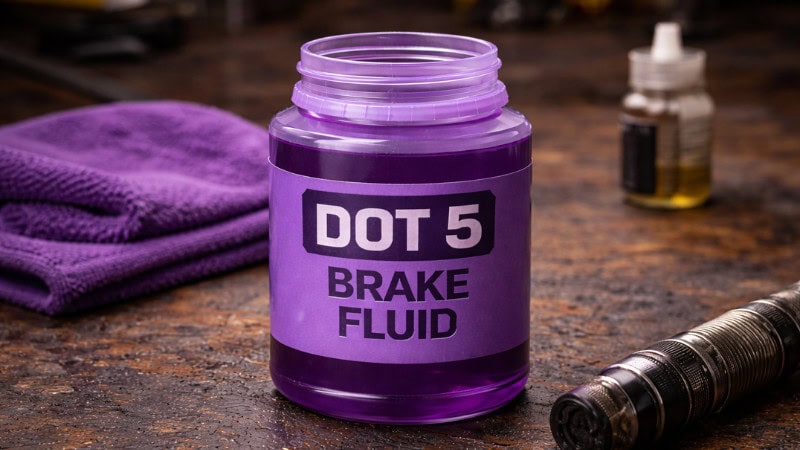
DOT 5 Brake Fluid Explained
DOT 5 brake fluid is different. It’s silicone-based—not glycol—so it doesn’t absorb moisture. That sounds good, but it comes with trade-offs. DOT 5 traps air, leading to a spongy brake pedal. It also doesn’t work with most ABS systems, so it’s rare in modern cars. DOT 5 is mainly for military vehicles, motorcycles, or classic cars that sit unused for long periods. For daily drivers, most mechanics avoid DOT 5 unless the system was built for it.
DOT 3 vs DOT 4 vs DOT 5: Side-by-Side Comparison
DOT 3, DOT 4, and DOT 5 differ mainly in boiling point, moisture handling, and compatibility. DOT 3, with the lowest boiling point, is suitable for regular driving. DOT 4, with a higher boiling point, works better for towing or spirited driving. DOT 5, silicone-based and moisture-resistant, isn’t always better: it can cause bubbles and does not work with ABS. Always use the fluid specified for your car.
Can You Mix DOT 3, DOT 4, and DOT 5?
Many people get confused here. DOT 3 and DOT 4 can mix, since both are glycol-based—but only in an emergency. Mixing lowers the boiling point to match the weaker fluid, so it’s not ideal. Never mix DOT 5 with DOT 3 or DOT 4. DOT 5 is silicone-based, doesn’t blend with glycol fluids, and can damage seals or cause ABS failure. If DOT 5’s been used, always flush the system. Always use the brake fluid type listed on your master cylinder cap.
Which Brake Fluid Should You Use?
For most daily-driven cars and trucks, use the manufacturer’s recommendation. If your cap or manual specifies DOT 3, use only DOT 3. Reserve DOT 4 for vehicles that tow, handle mountains, or run hotter brakes—only if specified. DOT 5 is a specialty fluid, not for modern daily drivers. Choosing the wrong fluid can cause more issues than benefits. Always match the fluid to your system—never guess or assume an upgrade is better. When in doubt, check and verify.
Common Brake Fluid Mistakes Mechanics See
A common mistake is thinking that a higher DOT number automatically means better brakes—it doesn’t. Another big issue is ignoring brake fluid until the pedal feels soft or the ABS light comes on. Moisture is the silent killer for DOT 3 and DOT 4. We also see people mix fluids without a full flush, which lowers performance and can damage seals. Using DOT 5 in a system made for glycol fluid? That’s asking for expensive repairs. Most brake fluid problems can be avoided by following the correct DOT spec and changing fluid on schedule.
How Often Should Brake Fluid Be Changed?
Brake fluid doesn’t last forever—even if you drive little. DOT 3 and DOT 4 brake fluids absorb moisture, which lowers their boiling points and performance, so most manufacturers recommend changing them every 2 to 3 years. If you drive in humidity, traffic, or tow, change it sooner. DOT 5 doesn’t absorb moisture but still needs maintenance. Key takeaway: Fresh fluid maintains braking power and protects expensive ABS modules.
FAQ
FAQ 1: Is DOT 4 Better Than DOT 3 Brake Fluid?
DOT 4 isn’t always better—it’s just for higher heat. Its higher boiling point helps in towing, performance, or heavy stop-and-go. For most daily driving, DOT 3 suffices. Use DOT 4 only if the manufacturer allows it, and don’t expect improved daily braking feel.
FAQ 2: Can DOT 4 Replace DOT 3 in Older Cars?
In many cases, yes—but only if the manufacturer approves it. DOT 4 is glycol-based like DOT 3, so compatibility is usually fine. However, DOT 4 absorbs moisture more quickly, so fluid changes become more important. In older vehicles with basic brake systems, DOT 3 is often the smarter, lower-maintenance choice. As a mechanic, I only recommend switching if the vehicle sees higher heat or if the service manual allows it.
FAQ 3: Why Is DOT 5 Not Recommended for ABS Systems?
DOT 5 is silicone-based, and that’s the problem. ABS systems rely on rapid fluid movement and precise pressure control. DOT 5 can trap air bubbles and compress more than glycol-based fluids, leading to inconsistent ABS operation. It also doesn’t mix with DOT 3 or DOT 4, which creates a real contamination risk. That’s why most manufacturers clearly warn against using DOT 5 in ABS-equipped vehicles.
FAQ 4: Can You Mix DOT 3 and DOT 4 Brake Fluid?
Yes, DOT 3 and DOT 4 can be mixed because they’re both glycol-based, but it’s not ideal. Mixing them lowers the overall boiling point of the weaker fluid, defeating the purpose of upgrading. In a shop, we only mix them temporarily in emergencies. Long-term, the correct move is a full flush using one consistent fluid type that meets the vehicle’s DOT specification.
FAQ 5: What Happens If You Use DOT 5 Instead of DOT 3 or DOT 4?
Using DOT 5 in a glycol system can cause major problems. The fluids don’t mix, which may damage seals, cause uneven braking, or trigger ABS failure. A full teardown and flush is often needed, sometimes involving rubber parts. This isn’t a simple mistake—it’s expensive. That’s why checking the master cylinder cap is critical before adding brake fluid.
FAQ 6: Does Brake Fluid Brand Matter or Just the DOT Rating?
The DOT rating is the most important. If the fluid meets DOT specs, it’s safe. Reputable brands often have better quality, but always prioritize the right DOT rating for your car.
FAQ 7: How Do I Know What Brake Fluid My Car Needs?
Check the master cylinder cap—it usually lists the needed DOT fluid. You can also check the owner’s manual or service manual. If not available, a dealer or mechanic can confirm. Never guess. Using the wrong fluid can damage seals, reduce braking performance, and lead to costly repairs.
FAQ 8: Does Brake Fluid Affect Pedal Feel and Stopping Power?
Absolutely. Key points: Old or moisture-contaminated brake fluid lowers boiling point and can cause a spongy pedal, especially under hard braking. While brake fluid doesn’t increase stopping power, it ensures consistent pressure and response. Using fresh, correct-spec fluid keeps the pedal firm and predictable. Often, a brake fluid flush fixes pedal issues without replacing calipers, hoses, or master cylinders.
Conclusion
Choosing between DOT 3, DOT 4, and DOT 5 brake fluid isn’t about picking the highest number—it’s about using what your brake system was built for. DOT 3 is great for everyday driving, DOT 4 is for higher heat and heavier use, and DOT 5 is a specialty option. Most brake problems come from neglect or using the wrong fluid—not from the fluid itself. Stick to the DOT spec your car calls for, keep up with fluid changes, and your brakes will stay firm, predictable, and safe. When it comes to brake fluid, the right choice beats the fanciest choice every time.
