
If you’ve ever tried to change your oil and found the drain plug stuck, you’re not alone. This often happens because quick-lube shops use air tools, over-tighten plugs, and stretch threads, leading to plugs seizing after a few heat cycles.
A stuck oil drain plug usually isn’t serious. With patience, proper tools, and smart techniques, you can often remove it without damaging anything. This guide shows you, step by step, how to safely loosen a stubborn plug—just like pros do.
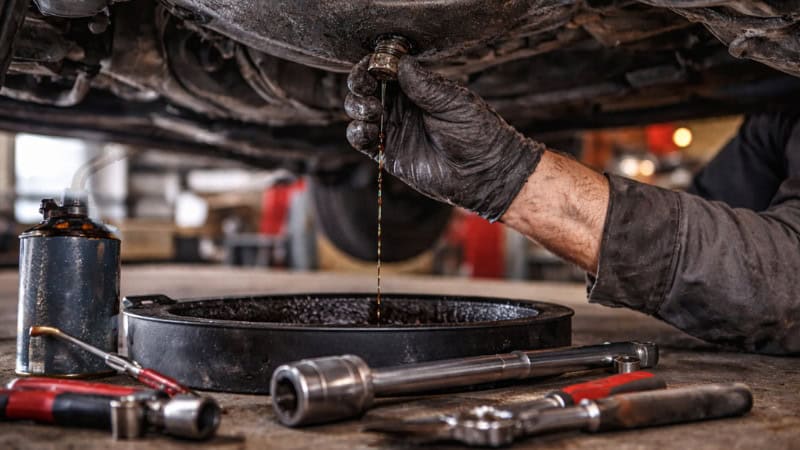
Common Reasons an Oil Drain Plug Gets Stuck
Most of the time, human error—not old age or wear—causes a stuck oil drain plug. The main culprit is over-tightening during the last oil change. When someone cranks a plug down too hard, especially with an impact gun, the threads can bind together as the engine heats and cools. This problem is especially common with aluminum oil pans. They expand and contract more than steel plugs.
Rust and corrosion also play a big role, especially in snowy areas where road salt attacks exposed parts. A crushed or reused drain plug washer can make things worse. It creates uneven pressure, causing the plug to stick. In the worst cases, the plug might be slightly cross-threaded. This can lock it in place as soon as you try to loosen it.
Tools You’ll Need to Remove a Stuck Oil Drain Plug
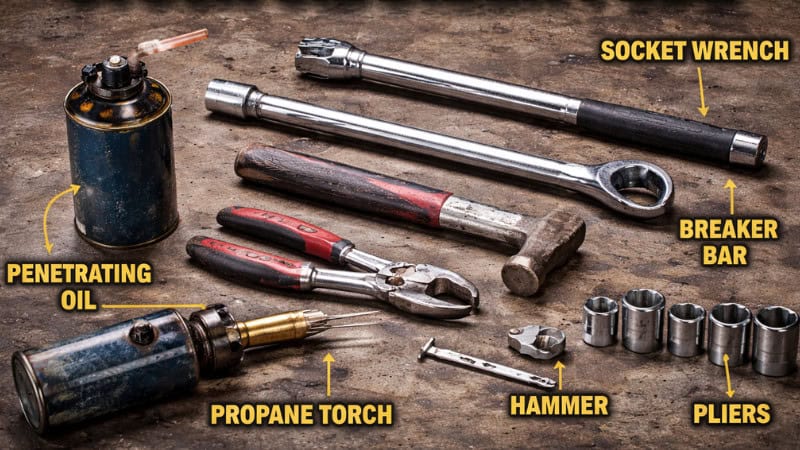
Before you wrestle with a stuck oil drain plug, check that you have the right tools. This simple step can save you frustration. The most important tool is a 6-point socket, which fits snugly onto a hexagonal plug. Avoid 12-point sockets, as they are more rounded and can slip. Pair your socket with a sturdy ratchet (a handle with internal gears to make turning easier), or better yet, a breaker bar, which is a long handle for extra leverage on tough bolts.
You’ll also want some penetrating oil—a spray lubricant like PB Blaster or Kroil, which seeps into tight spaces to break up rust and loosen stuck threads. A small hammer or mallet can help with gentle tapping, and don’t forget safety gloves in case the plug suddenly breaks free. These are the go-to tools for most professional mechanics.
Prepare the Engine Before Loosening the Drain Plug
Preparation matters more than muscle when loosening a stuck oil drain plug. Start by running your engine for a few minutes—just enough to warm the oil and oil pan. Warm metal expands slightly and can help reduce tension on the threads. Don’t work on a fully hot engine. Scalding oil and soft aluminum cause trouble. Let it cool until it’s warm but not too hot to touch.
Next, clean around the drain plug. Dirt, old oil, and grime can keep your socket from fitting snugly and raise the risk of rounding off the plug. Once it’s clean, spray penetrating oil directly onto the threads and let it soak. This simple step can be the difference between a quick fix and a stripped plug.
The Easiest Way to Break a Stuck Oil Drain Plug Loose
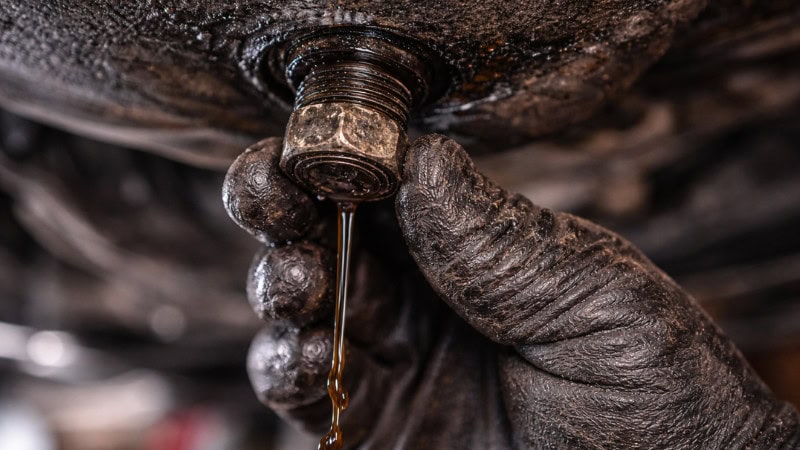
The real trick to removing a stuck oil drain plug is technique, not brute strength. Make sure your 6-point socket is fully seated on the plug. Avoid any tilt or wobble. Attach your breaker bar or long ratchet. Apply steady, even pressure instead of yanking it loose. Pull slowly and smoothly. Jerking the handle can snap plugs or strip threads.
If the plug still won’t budge, try turning it just a tiny bit tighter before loosening. This can help break the thread’s grip, even though it might sound strange. You can also try lightly tapping the socket handle with a hammer to loosen things. Usually, a little patience and gentle persuasion are all it takes.
You May Like: How to Remove a Stuck Oil Dipstick Tube Without Breaking It
What to Do If the Oil Drain Plug Still Won’t Budge
If the drain plug still won’t move, don’t panic and don’t force it. This is where many DIYers cause expensive damage. Try using controlled heat. Use a heat gun or a small propane torch to gently warm the oil pan, not the plug. This helps the metal expand and loosens the plug’s grip. Keep the heat moderate. Avoid seals or plastic parts.
If the plug head is starting to round off, try locking pliers or a drain plug extractor socket. These tools bite into the metal and give you a much better grip than a regular socket. Apply slow, steady pressure. Once the plug starts moving, keep it steady until it comes out fully.
Worst-Case Scenarios and What You Should NOT Do
When a drain plug is really stuck, most mistakes stem from frustration. Whatever you do, don’t grab an impact gun. These tools deliver sudden force that can snap the plug or strip the threads in a flash. Avoid drilling the plug, too. That often sends metal shavings into your oil pan, which is a whole new headache.
Too much heat is risky, especially with aluminum engines. Overheating can warp the oil pan or damage nearby seals. Avoid cheap adjustable wrenches, which almost always round off the plug. If the plug spins but won’t come out, stop right there. That means the threads are damaged. Sometimes, pausing saves you from a big, costly repair later.
What to Do After You Remove the Stuck Oil Drain Plug
Once you finally get the stubborn drain plug out, don’t rush. Inspect the plug and the oil pan threads closely. Threads are grooves on the plug and the hole that the screw fits into. If you see damaged threads, a rounded head, or heavy rust, replace the plug. They’re inexpensive, and reusing a bad one invites future problems. Always use a new crush washer or sealing washer. A washer is a thin, flat ring that helps seal between the plug and the oil pan. Reusing old washers is a major reason plugs get stuck again.
Before you reinstall, wipe the threads clean. These are the spiral grooves on the plug and inside the oil pan hole. Start threading the new plug in by hand. This helps you avoid cross-threading. Cross-threading means the plug isn’t lined up and can damage the grooves. Then tighten it with a torque wrench. This tool measures how much force you’re applying. Tighten to the manufacturer’s specs. Proper torque prevents leaks and keeps the plug from seizing.
How to Prevent a Stuck Oil Drain Plug in the Future
It’s much easier to prevent a stuck drain plug than fix one. Always use a torque wrench (a tool that measures how hard you tighten) when you reinstall the plug. Most cars need only 18–30 foot-pounds of torque (a unit of twisting force). Many plugs end up way tighter. Tightening the plug ‘until it feels good’ leads to stripped threads (damaged grooves that stop secure tightening).
Always replace the drain plug washer when you change your oil. A new washer (a thin ring that seals the plug) seals better and doesn’t need extra tightening. If your car’s manual says it’s OK, use a tiny bit of anti-seize on the threads. Anti-seize is a paste that prevents parts from sticking together, but go easy! Another smart move is upgrading to a magnetic or high-quality drain plug. This resists rust and makes future oil changes easier.
When to Stop and Call a Professional
If a stuck oil drain plug becomes a bigger headache, it’s okay to stop. If the plug spins but won’t come out, the oil pan threads may be damaged. Forcing it can destroy the pan. Call a pro if the plug head is fully rounded, the oil pan is flexing, or oil starts leaking during removal.
From a mechanic’s view, patience saves money. Most plug disasters happen when someone rushes or forces things. Use the right tools, take your time, and follow torque specs. You’ll avoid most problems this way. If you do things right, removing a stuck oil drain plug is manageable. Your simple oil change stays simple.
FAQ
FAQ 1: Can I remove a stuck oil drain plug without stripping it?
Yes, you can remove a stuck oil drain plug without stripping it if you slow down and use the right technique. The key is using a correctly sized 6-point socket and steady pressure, not sudden force. Penetrating oil and light tapping help break the thread bond. Most stripped plugs happen when people rush, use the wrong socket, or muscle it loose instead of letting the tools do the work.
FAQ 2: Is it safe to use heat to loosen a stuck oil drain plug?
Heat works if used carefully and sparingly. Warm only the oil pan, not the plug, to let the pan expand and loosen its grip. Use a heat gun instead of an open flame, especially on aluminum. Avoid heat near plastic, rubber, or fuel lines.
FAQ 3: What is the best socket to remove a stuck oil drain plug?
A 6-point socket is best for removing a stuck oil drain plug. Unlike a 12-point socket, a 6-point socket grips the flat sides of the plug head, reducing the risk of rounding. Make sure the socket fits snugly. Many drain plug problems start because the wrong socket gets used during removal or installation.
FAQ 4: Why does my oil drain plug spin but not come out?
If the oil drain plug spins but doesn’t back out, the threads in the oil pan are probably damaged or stripped. This is common on aluminum oil pans. When this happens, stop immediately. Continuing to turn the plug can destroy the remaining threads. A pro can often remove it and repair the threads with a thread insert rather than replacing the entire oil pan.
FAQ 5: Should I reuse the old drain plug washer?
No, you should not reuse the old drain plug washer. Reusing washers is one of the main reasons drain plugs get stuck or leak. A crushed washer no longer seals properly, which leads people to over-tighten the plug. New washers are inexpensive and designed to seal at the proper torque. Replacing the washer every oil change prevents leaks and reduces the risk of the plug seizing again.
FAQ 6: Can overtightening really damage the oil pan?
Yes, overtightening can absolutely damage the oil pan, especially if it’s aluminum. Aluminum threads are softer than steel drain plugs, so excessive torque can stretch or strip them. Once damaged, the pan may not hold a plug securely, leading to leaks or complete thread failure. That’s why professional mechanics rely on torque wrenches instead of tightening “by feel,” especially during routine oil changes.
FAQ 7: Is anti-seize safe to use on oil drain plug threads?
Anti-seize can be safe if the vehicle manufacturer allows it, but it must be used sparingly. A very light coating is enough. Too much anti-seize can cause over-tightening because it reduces friction, leading to damaged threads. Many modern vehicles don’t require it if the plug is torqued correctly and the washer is replaced. Always check manufacturer recommendations before using anti-seize.
FAQ 8: When should I stop and take the car to a mechanic?
You should stop and take the car to a mechanic if the drain plug head is fully rounded, the plug spins but won’t come out, or the oil pan begins to deform during removal. These are signs that forcing the plug could cause major damage. A professional has extractor tools and thread repair options that can save the oil pan. Knowing when to stop can save hundreds of dollars.
Conclusion
A stuck oil drain plug can turn a quick oil change into a real hassle, but it doesn’t have to mean a costly repair. Most of the time, it’s caused by over-tightening, rushed work, or reused washers—not a major engine problem. Use the right tools, apply steady pressure, and know when to call for help, and you’ll get the job done without any damage. The biggest takeaway? Prevent problems before they start: use proper torque, replace washers, and be patient. Mechanics see this every day—and it’s almost always preventable. Take it slow, follow the tips in this guide, and your next oil change should be smooth and stress-free.
