
Wheel alignment is a service many drivers have heard of, but few fully understand. Put simply, alignment entails adjusting the angles of your vehicle’s wheels so they sit correctly on the road and conform to the manufacturer’s specifications. Properly aligned wheels help your car drive straight, keep the steering wheel centered, and ensure even tire wear.
Many drivers wonder, “How long does an alignment take?” Most alignments are finished in under an hour, depending on your vehicle type, suspension condition, and any extra repairs needed.
How Long Does an Alignment Take?
At a repair shop, a standard wheel alignment—which means adjusting the steering and suspension parts to properly set your wheels’ angles (camber, caster, and toe)—usually takes 30 to 60 minutes. Most shops use computerized alignment machines equipped with lasers or cameras to accurately measure wheel angles. These tools help technicians make adjustments quickly and accurately, speeding up the process.
However, the time required varies depending on the alignment your vehicle needs. A basic front-end alignment usually takes less than 45 minutes, while a full four-wheel alignment may take about an hour. If suspension parts are worn or stuck, the job takes longer as repairs must be done before finalizing alignment.
What Happens During a Wheel Alignment?
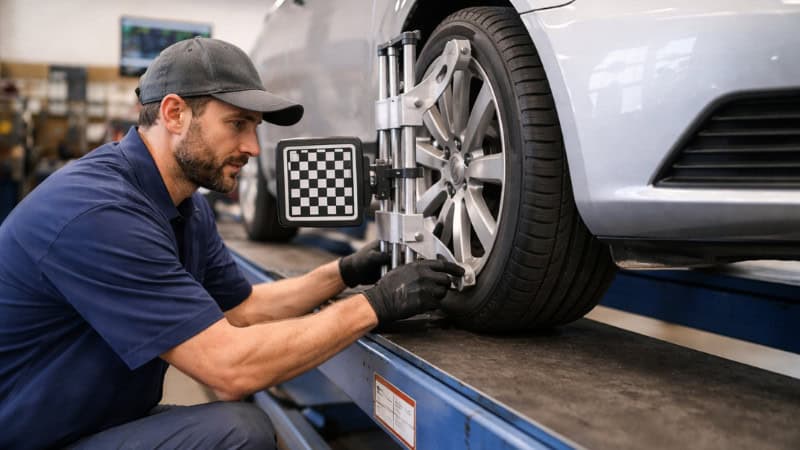
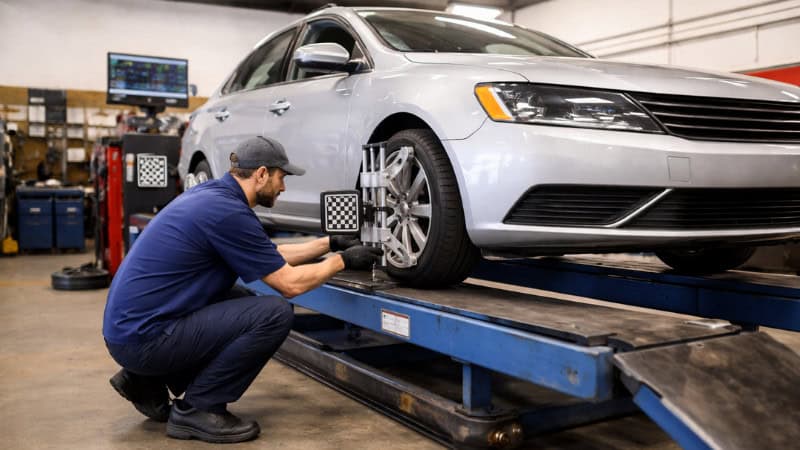
When you bring your car in for an alignment, a trained technician follows a careful process to ensure the wheels are set correctly. First, your vehicle is placed on a special alignment rack that keeps it level and steady. Then, sensors or cameras are attached to each wheel, allowing the alignment machine to measure angles accurately.
The alignment system checks three key angles: camber, caster, and toe. Camber describes whether the top of the tire tilts inward or outward as seen from the front of the car. Caster is the angle of the steering pivot as viewed from the side of the vehicle, affecting stability and steering feel. Toe refers to whether the front of the tires points in toward each other or outward when viewed from above. These measurements determine how your tires touch the road and how your car tracks while driving. If anything is out of spec (not within the recommended settings), the technician adjusts your suspension until everything fits properly. Once the adjustments are done, the system is recalibrated, the steering wheel is centered, and your car is taken for a quick test to ensure it drives straight and smoothly.
Factors That Affect How Long an Alignment Takes
Not every alignment takes the same amount of time. While most are done within an hour, some factors can speed things up or slow them down. The main factor is the condition of your suspension. If any parts are worn or damaged, they’ll need to be fixed before your alignment can be completed correctly.
Another factor is your vehicle type. Larger vehicles, such as trucks and SUVs, may take longer to load because their suspensions are more complex. Rust can also slow the process, especially in older vehicles where adjustment bolts may be stuck. The shop’s equipment matters too—modern alignment machines are much faster than older, manual tools.
you may like: Do Automatic Cars Have Flywheels?
Front-End Alignment vs Four-Wheel Alignment Time
Many people think all alignments are the same, but they actually vary depending on your vehicle’s design. Knowing the difference helps explain why alignment times aren’t always identical.
A front-end alignment adjusts only your front wheels. This is common on older cars with a solid rear axle that can’t be adjusted. Since fewer parts are involved, this service usually takes about 30 to 45 minutes.
A four-wheel alignment, by contrast, adjusts both the front and rear wheels. Most modern vehicles have independent suspension on all four wheels, so the rear angles need to be checked and adjusted as well. This takes more time—usually closer to an hour.
you may like: Floor Jack Safety Guide
Signs Your Car Needs an Alignment
Your car will usually show clear warning signs when the alignment is off. One of the most common symptoms is the car pulling to one side while driving straight. If you find yourself constantly adjusting the steering wheel just to keep the car in your lane, your alignment could be off.
Another sign is uneven tire wear. Improperly aligned wheels cause certain parts of your tires to wear out faster, resulting in uneven tread patterns and a shorter tire lifespan. You might also notice the steering wheel looks crooked when driving straight. Ignoring these issues may lead to more rapid tire wear, lower fuel efficiency, and increased stress on your suspension.
Common Alignment Warning Signs
- Vehicle pulls left or right.
- The steering wheel is off-center.
- Uneven tire wear
- Steering feels loose or unstable.
- Tires squeal during turns.
Can a Wheel Alignment Take More Than an Hour?
While most alignments are quick, sometimes the process takes longer than expected. A common reason is worn suspension parts—if tie rods, ball joints, or control arms are damaged, they have to be replaced first. Trying to align a car with worn parts won’t give accurate results. Another issue is rusted or seized adjustment bolts. Adjustment bolts are fasteners used to make small corrections to wheel alignment angles, such as camber, caster, and toe. If these bolts are rusted in place, technicians need extra time—and sometimes special tools or heat—to loosen them. In severe cases, more suspension work may be needed before alignment can even start.t.
How Often Should You Get a Wheel Alignment?
Most mechanics urge checking your wheel alignment every 6,000 to 10,000 miles, or at least once a year. Many drivers combine this service with regular tire rotations, since they’re due at similar intervals. Regular alignment inspections help your tires wear evenly and keep your automobile handling well.
It’s also smart to get an alignment when you install new tires, as fresh tires can wear unevenly if the wheels aren’t aligned. If you hit a big pothole or curb, that impact can knock your alignment out, too. Scheduling an alignment after these incidents helps prevent tire damage and keeps your car driving safely.
Recommended Alignment Times
- Every 6,000 – 10,000 miles
- When installing new tires
- After hitting a pothole or curb
- If steering feels different
Can You Drive While Waiting for Alignment?
You can technically drive with poor alignment, but it’s not a good idea for long. Wheels that are misaligned make your tires wear out much faster—sometimes a badly misaligned car can ruin a set of tires in just a few thousand miles.
Driving with bad alignment also affects how your car handles. The steering can feel unstable, and the car might drift to one side, making long drives tiring and potentially unsafe. Misalignment also increases rolling resistance, which could slightly reduce fuel efficiency. That’s why it’s best to get an alignment as soon as you spot the warning signs.
Wheel Alignment vs Wheel Balancing
Wheel alignment and wheel balancing are two different services, but they’re often confused. Alignment adjusts the wheel angles so they point in the right direction. Balancing, on the other hand, ensures the mass of the tire and wheel is evenly distributed to prevent vibrations by attaching small weights to the rim.
Balancing is usually done when you get new tires or if you notice vibrations in the steering wheel at highway speeds. Technicians attach small weights to the wheel to fix unbalanced weight distribution. Alignment doesn’t use weights—it’s about adjusting the suspension. Both services improve comfort and help your tires last longer, but they solve different problems.
Alignment vs Balancing
| Service | Purpose | Typical Time |
|---|---|---|
| Wheel Alignment | Adjusts wheel angles | 30–60 minutes |
| Wheel Balancing | Balances tire weight | 15–30 minutes |
Cost of a Wheel Alignment in the US
The cost of a wheel alignment varies by your vehicle and the amount of adjustment needed. In the US, a standard front-end alignment usually runs $50 to $100, while a full four-wheel alignment typically costs $100 to $200.
Luxury cars, sports cars, or trucks with high-tech suspension systems may cost more because they require additional adjustments and specialized tools. Some shops offer lifetime alignment packages for a one-time fee. While alignments may seem like a small expense, getting them regularly can save you money by extending tire life and boosting fuel efficiency.
FAQ
1. How long does a wheel alignment usually take?
A standard wheel alignment typically takes 30 to 60 minutes. Modern machines measure wheel angles quickly, letting technicians adjust suspension components accurately. Minor adjustments may only take about 45 minutes. If worn parts or seized bolts are found, service could take longer. Most drivers can expect their car to be ready within an hour.
2. Can a wheel alignment be done in 20 minutes?
In some cases, a wheel alignment might be completed in about 20 to 30 minutes, but this is not typical for most vehicles. This usually happens when the alignment is only slightly off, and the shop uses advanced computerized equipment. However, technicians still need time to inspect suspension components and verify measurements. Rushing the process could result in inaccurate results. For most vehicles, a proper alignment usually takes closer to 30 to 60 minutes.
3. Do I need an appointment for a wheel alignment?
While some repair shops accept walk-in customers, scheduling an appointment is usually the best option. An alignment needs specialized equipment and a technician’s time, so many shops operate on scheduled service slots. Booking an appointment helps reduce waiting time and guarantees your vehicle gets serviced quickly. It also allows the shop to properly inspect your suspension system. If you arrive without an appointment during busy hours, you might have to wait longer.
4. How often should I get a wheel alignment?
Most mechanics recommend getting a wheel alignment every 6,000 to 10,000 miles, or about once a year. Many drivers combine this service with tire rotations to keep tire wear even. However, you may need to align sooner if you hit a pothole, a curb, or road debris. These impacts can easily knock your wheels out of alignment. If you notice your car pulling to one side or uneven tire wear, it’s a good idea to have the alignment checked immediately.
5. Can I drive with bad wheel alignment?
Yes, you can technically drive with bad wheel alignment, but it’s not recommended. Improperly aligned wheels cause uneven tire wear, which can cause your tires to wear out much faster than normal. Over time, this may result in decreased traction and poor handling. Your vehicle may also pull to one side, making driving less comfortable and potentially unsafe. Driving with poor alignment for extended periods can strain suspension components and reduce fuel efficiency.
6. What causes wheel alignment problems?
Numerous factors can cause wheel alignment problems over time. One of the most common causes is hitting potholes, curbs, or road debris, which can push suspension components slightly out of position. Normal wear and tear on suspension parts such as tie rods and ball joints can also affect alignment. Even everyday driving on rough roads can slowly change wheel angles. Periodic inspections help detect these faults early before they cause serious tire damage.
7. Is wheel alignment the same as tire balancing?
No, wheel alignment and tire balancing are different services, although they are often performed together. Wheel alignment adjusts the angles of the wheels so they point correctly relative to the road and the vehicle frame. Tire balancing, on the other hand, corrects imbalanced weight distribution in the tire and wheel assembly. Balancing helps reduce vibrations at higher speeds. Both services improve ride comfort and extend tire life.
8. Does a wheel alignment improve fuel efficiency?
Yes, a proper wheel alignment can improve fuel efficiency. When your wheels are aligned correctly, the tires roll smoothly without excess resistance. Improperly aligned wheels create extra friction with the road surface, forcing the engine to work harder to move the vehicle forward. Over time, this increased resistance can slightly reduce your miles per gallon. Keeping your wheels properly aligned not only protects your tires but also helps maintain better overall vehicle efficiency.
Conclusion
Wheel alignment is a quick but essential service for keeping your vehicle’s handling sharp and your tires healthy. Most alignments take between 30 minutes and an hour, especially if your shop has modern equipment. Simple front-end alignments are often faster, while four-wheel alignments can take a bit longer due to additional adjustments.
If your suspension parts are worn or damaged, the process may take longer, as those issues need to be fixed first. Regular wheel alignment checks help prevent uneven tire wear, boost fuel efficiency, and make sure your car drives straight and safely. For most drivers, a quick alignment makes a clear difference in how their car feels on the road.
Read More:
