
Most drivers ignore their engine air filter until something feels off, but by then, damage might already be happening. As a mechanic, I’ll tell you: the engine air filter is your engine’s main protection. Every drive, your engine pulls in thousands of gallons of air—full of dust, dirt, and road debris. The filter blocks this junk. Once it’s clogged, airflow drops, fuel efficiency suffers, and performance slips. Don’t let this often-overlooked part quietly lead to expensive engine problems.
How Often Should You Change It?
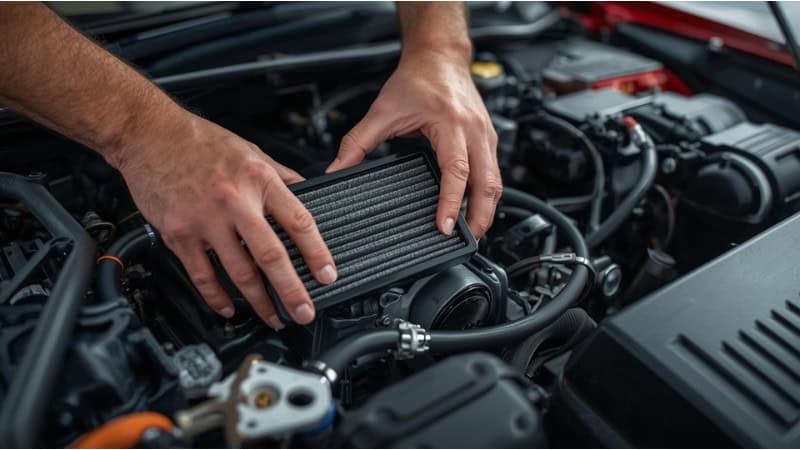
Most of the time, you should change your car’s engine air filter every 12,000 to 15,000 miles, or about once a year. That’s the standard advice from most U.S. mechanics. But here’s the real deal: that number assumes “normal” driving conditions, which many of us don’t have. If you’re in heavy traffic, dusty areas, or near construction zones, your filter can clog much faster. On the flip side, mostly highway driving in clean air can stretch that interval. The smartest move isn’t just counting miles—it’s checking the filter regularly and replacing it when it looks dirty.
What the Manual Says
Manuals say to change the air filter at 15,000–30,000 miles—but these numbers assume perfect conditions. In reality, dust, traffic, and weather shorten filter life. Treat the manual as a rough guide, not a rule. Waiting too long can lead to running with a dirty filter, which can harm your engine.
Driving Conditions
How and where you drive matters as much as mileage. City traffic, construction, rural or dusty roads, heat, and pollen clog your filter faster. Even short trips take a toll. In these cases, waiting for the “recommended mileage” means waiting too long. Adjust your routine to your driving reality.
Signs Your Engine Air Filter Needs Changing
Your car usually gives warning signs before a dirty filter becomes a real problem. First, you’ll notice worse gas mileage, since the engine works harder. You might feel sluggish acceleration, especially when merging or climbing hills. Some cars exhibit a rough idle or an odd engine sound when airflow is restricted. Check the filter—if it’s dark, clogged, or packed with debris, it’s time for a new one. Rarely, a dirty filter may trigger the check engine light.
What Happens If You Don’t Change It on Time
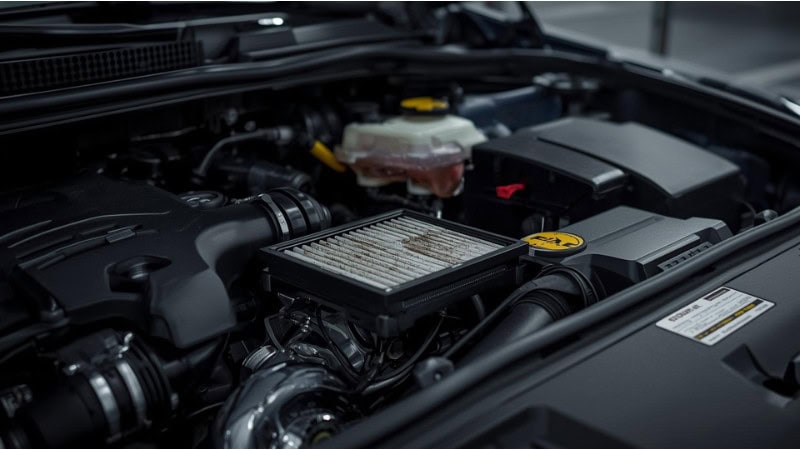
Driving too long with a dirty air filter won’t usually cause immediate breakdown—but it causes silent, long-term harm. Restricted airflow throws off the air-fuel balance, hurting power and fuel economy and wearing out engine parts. Debris may even damage your engine. Skipping this cheap fix can lead to costly repairs.
How Often Should Drivers Change Their Air Filter
Not every driver should follow the same schedule. Daily commuters should replace filters closer to 12,000 miles. Ride-share and delivery drivers rack up miles quickly—check the filter at each oil change. Low-mileage drivers need to watch the calendar too, as filters clog with time, not just distance. If you drive on rural or off-road roads—even rarely—replace filters more often. Performance and turbo engines also need more frequent checks.
How to Check Your Engine Air Filter Yourself
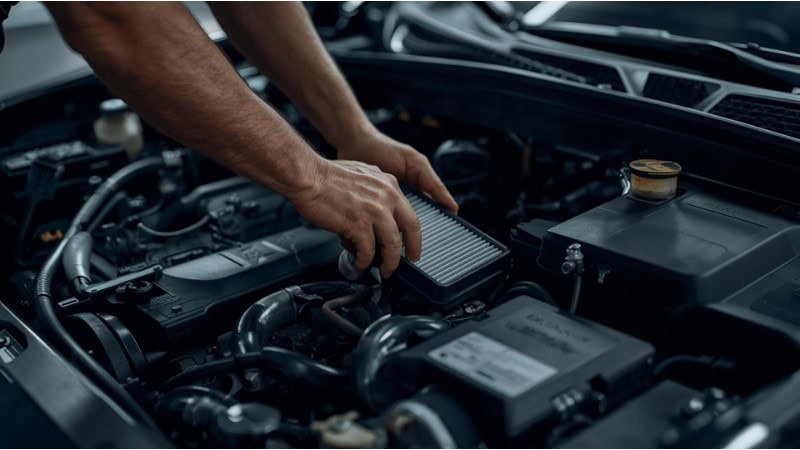
Checking your engine air filter is one of the easiest DIY car tasks. In most cars, the filter sits in a black plastic air box under the hood, usually held by clips or a few screws. Turn the engine off, open the air box, and pull the filter out. Hold it up to the light—if you can’t see light through it, it’s time for a new one. A clean filter looks light and free of heavy debris. This check takes less than five minutes and doesn’t need special tools. Doing it regularly lets you avoid guessing and helps you change the filter at the right time.
Engine Air Filter vs Cabin Air
Many drivers mix up the engine air filter and the cabin air filter, but they’re totally different parts. The engine air filter cleans the air entering the engine, affecting performance, fuel economy, and engine longevity. The cabin filter, on the other hand, cleans the air you breathe inside the car. A dirty cabin filter can cause weak airflow or bad smells, but it won’t hurt your engine. Replacing one doesn’t take care of the other—they’re separate parts, each with its own schedule.
OEM vs Aftermarket vs Performance Air Filters
When it comes to engine air filters, you have three main options. OEM filters are made to factory specs and are a safe, reliable choice for most drivers. Aftermarket paper filters are usually cheaper and work well if you buy from a good brand. Performance or reusable filters promise better airflow, but they need proper cleaning and oiling to work right. If neglected, they can let more dirt into your engine. For daily drivers, most mechanics recommend a quality paper filter—it’s simple, affordable, and low-maintenance. Performance filters are best for enthusiasts who enjoy extra maintenance, not for set-it-and-forget-it drivers.
Cost to Replace an Engine Air Filter in the U.S.
Replacing your engine air filter is one of the cheapest maintenance jobs you’ll ever do. If you do it yourself, a good filter usually costs $15 to $30, depending on your car. Most people can swap it in under ten minutes. At a repair shop, expect to pay $40 to $70, including labor. Dealerships often charge more, sometimes over $80, mainly because of higher labor rates. DIY makes sense for most people, but it’s fine to pay a shop if you’re already there for an oil change. Just make sure the filter is truly replaced—not just “checked.”
Mechanic’s Pro Tips to Make Your Filter Last Longer
A few simple habits can help your engine air filter last longer. One is to check it at every oil change, even if you’re not ready to replace it. Don’t tap or blow out a paper filter with compressed air—it can tear the material and make it less effective. Always make sure the air box is sealed after checks; loose covers let dirt sneak past the filter. If you drive in dusty areas, replace the filter a bit early instead of pushing your luck. Checking the filter with routine maintenance keeps surprises to a minimum.
FAQs:
FAQ 1. Can a dirty engine air filter cause a check engine light?
Yes, it can—though it’s not the most common cause. A severely clogged air filter can restrict airflow enough to throw off the air-fuel mixture. That imbalance may trigger sensors, such as the mass airflow sensor, which can set a check engine light. That said, many other issues can cause the same light, so don’t assume the filter is the only problem. Still, checking or replacing the air filter is a smart first step before chasing more expensive diagnostics.
FAQ 2. Does changing the engine air filter really improve gas mileage?
In many cases, yes—but don’t expect miracles. A clean air filter helps the engine breathe properly, which supports efficient combustion. If your old filter was heavily clogged, you may notice improved throttle response and slightly better MPG. If the filter wasn’t very dirty, the difference will be minimal. Think of it this way: changing the air filter helps your engine perform as designed, not outperform its original efficiency rating.
FAQ 3. How long can you drive with a dirty engine air filter?
You can often drive for thousands of miles with a dirty filter, which is why people ignore it. The problem is what’s happening behind the scenes. Reduced airflow forces the engine to work harder, hurting fuel economy and performance over time. While it usually won’t cause an immediate breakdown, long-term neglect increases wear and tear. From a mechanic’s standpoint, driving too long on a clogged filter is an unnecessary risk for a cheap, easy fix.
FAQ 4. Is it safe to clean and reuse a paper engine air filter?
No—paper engine air filters are designed to be replaced, not cleaned. Blowing them out with compressed air or shaking them can tear the filter media, reducing their ability to trap dirt. Even if the filter looks cleaner afterward, it won’t protect the engine as well as it did before. Reusable filters are built differently and require specific cleaning methods. If you’re using a standard paper filter, replacement is the safest and smartest option.
FAQ 5. Do newer cars need engine air filter changes less often?
Not really. Newer engines are more efficient and rely heavily on precise airflow readings from sensors. That actually makes clean airflow more important, not less. While some modern cars may have longer recommended intervals, real-world driving still fills filters with dirt. In fact, turbocharged and direct-injection engines can be more sensitive to airflow restriction. New technology doesn’t eliminate basic maintenance—it just makes doing it correctly even more important.
FAQ 6. Should I change my air filter every time I get an oil change?
Not automatically. Most oil change intervals are shorter than air filter intervals. What you should do is check the air filter at every oil change. If it’s dirty, replace it. If it’s still clean, leave it alone. Some shops push air filter replacements too aggressively, while others forget to check them at all. A quick visual inspection takes seconds and prevents both unnecessary replacements and overdue neglect.
FAQ 7. Are performance air filters worth it for daily driving?
For most daily drivers, no. Performance air filters are marketed for increased airflow, but the real-world gains are usually minimal on stock engines. They also require regular cleaning and proper oiling, which many owners forget to do. When neglected, they can allow more dirt into the engine. For everyday commuting, a quality paper filter offers reliable protection with zero maintenance headaches. Performance filters make more sense for enthusiasts who stay hands-on.
FAQ 8. What’s the biggest mistake drivers make with engine air filters?
The biggest mistake is assuming “no symptoms” means “no problem.” Air filters clog gradually, so performance loss happens slowly and often goes unnoticed. Another common mistake is trusting mileage alone instead of checking the filter’s condition. The driving environment matters just as much as the miles. From a mechanic’s view, the smartest approach is simple: inspect regularly, replace when dirty, and don’t overthink one of the easiest maintenance items on your car.
Conclusion
How often to change your engine air filter comes down to one thing: check it regularly. Most cars do fine with a new filter every 12,000 to 15,000 miles, but real-world driving is rarely “average.” Dust, traffic, heat, and short trips clog filters faster than you’d think. Waiting too long usually won’t cause your engine to fail right away, but it slowly robs you of power, fuel efficiency, and reliability. The good news? This is one of the easiest, cheapest maintenance jobs there is. A quick check takes minutes and removes all the guesswork. Change the filter when it’s dirty—not just when you hit a certain mileage.
