
If you’re wondering how often to change a cabin air filter, you’re not alone. This is one of the most neglected maintenance items in the shop. The cabin air filter protects you by cleaning the air entering the vehicle from your heating and air conditioning system, removing dust, pollen, exhaust fumes, and other contaminants before they reach the cabin.
A clean cabin air filter keeps your AC strong, prevents bad smells, and improves air quality. A clogged filter drops airflow and makes your HVAC system work harder. Change it regularly to save money, boost comfort, and avoid future HVAC troubles.
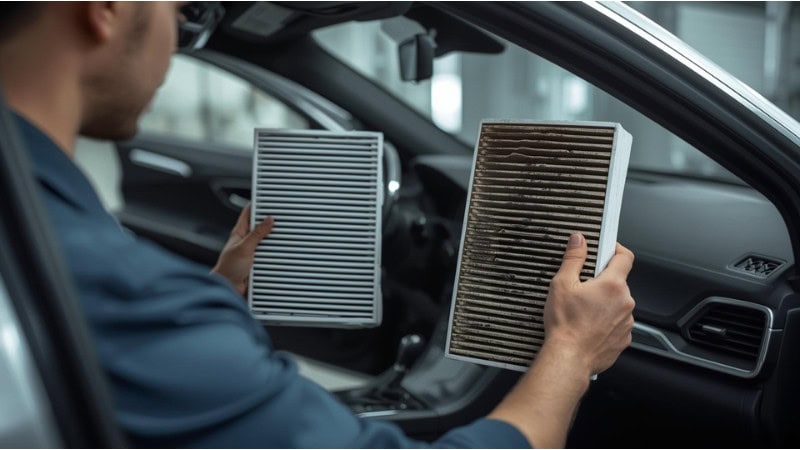
How Often Should You Change a Cabin Air Filter?
Replace your cabin air filter every 12,000 to 15,000 miles, or about once a year. Most US mechanics do this, even if manuals recommend longer intervals, because real driving—traffic, pollution, and weather—clogs filters faster than manuals assume.
If you drive in city traffic, wait in long lines, or live in high-pollen states like Texas, California, or the Southeast, your filter clogs faster. Highway drivers can typically go longer, but should still check yearly. To avoid weak AC, odors, or dust, replace the filter regularly—it’s a cheap fix that keeps air flowing and clean.
What Can Change the Cabin Air Filter Replacement Interval?
Not everyone needs to change their cabin air filter at the same mileage. Real-world driving makes a big difference. If you’re in stop-and-go traffic a lot, your HVAC is always pulling in air—and all the junk that comes with it. That clogs the filter faster.
Dusty roads, construction, and city pollution clog filters quickly. Spring pollen does the same. Wildfire smoke and extreme heat strain ACs, accelerating wear. Even parking under trees shortens filter life. Tough conditions mean more frequent filter changes—sometimes within a year.
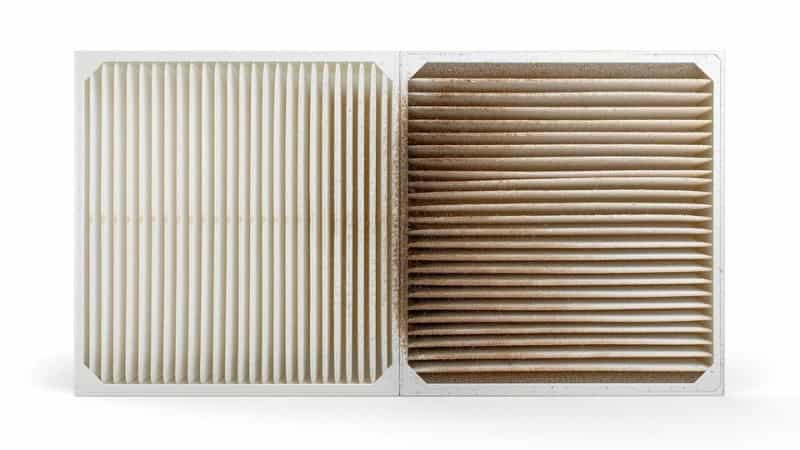
Signs Your Cabin Air Filter Needs to Be Changed
Cabin filters don’t fail instantly—they warn you. The first sign is weaker airflow from vents, even on high fan. Musty, damp, or dirty smells from the AC or heat are another clear sign.
You may notice more dust on the dashboard or windows fogging faster than usual. Allergy symptoms might worsen while driving. If customers report weak AC but everything else is fine, a clogged cabin filter is often the cause. Key takeaway: If you notice any of these signs, change the filter right away—don’t wait for mileage.
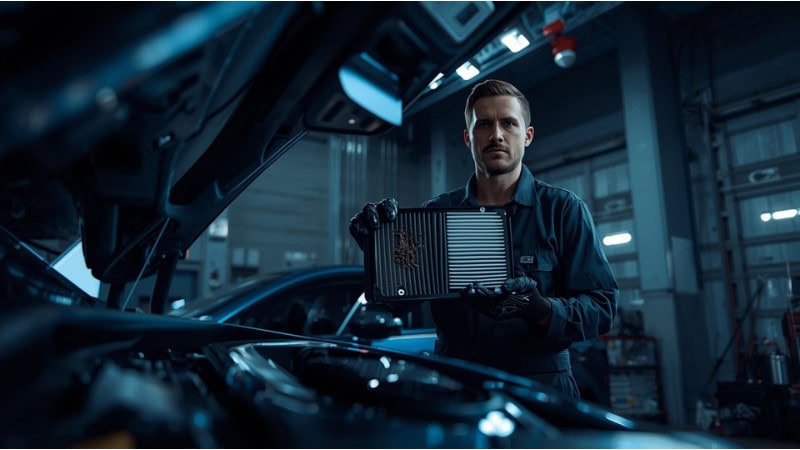
What Happens If You Don’t Change the Cabin Air Filter?
Ignoring your cabin air filter for too long, and problems add up. Restricted airflow makes your AC and heater work harder. This strain shortens blower motor life—a costly fix compared to a filter.
Dirty filters trap moisture, which can lead to mold and mildew in the HVAC system. That’s the source of sour, gym-bag smells. Poor airflow can also fog your windshield in humid or cold weather. While you can still drive, comfort drops quickly. Key takeaway: Regular filter changes are a cheap way to avoid costly repairs and discomfort.
How Much Does a Cabin Air Filter Replacement Cost?
Changing your cabin air filter is one of the cheapest car maintenance jobs. Most filters cost $15 to $40, depending on brand and type (standard or charcoal). If a shop does it, labor usually adds another $30 to $70—mostly for getting to the filter, not because the job is hard.
Dealerships charge more, though the job takes less than ten minutes. Many mechanics suggest checking it yourself first. Compared to AC or blower repairs, it’s pocket change. In the shop, we recommend pairing a cabin filter change with an oil change or tire rotation. This saves time, cuts costs, and keeps the air clean.
Can You Change the Cabin Air Filter Yourself?
In many vehicles, yes—you can absolutely change the cabin air filter yourself. Most are behind the glove box or under the dashboard, and the job usually takes just 5 to 15 minutes. You rarely need special tools, just a little patience. We see customers do this in the parking lot all the time.
The key is installing the new filter correctly. There’s an airflow arrow on the side, and it needs to point in the correct direction. Put it in backward, and the airflow can suffer. Some vehicles make access tighter than others, but it’s still one of the simplest DIY maintenance tasks. If you’re comfortable checking engine oil, you can handle this job without a problem.
How to Check Your Manual for the Right Interval
Your manual is the first place to check for cabin air filter service intervals. Most manuals list it under “Maintenance” or “HVAC system,” usually with a recommended mileage range. Some manufacturers suggest replacing it every 20,000 miles or more—but that’s based on ideal driving conditions.
In our shop, manual intervals are optimistic. Manuals assume clean air, light traffic, and mild weather—rare for most drivers. Mechanics recommend checking your filter yearly, even if the manual suggests otherwise. If it’s dark, dusty, or clogged, replace it. The manual guides, but real conditions decide.
Cabin Air Filter vs Engine Air Filter
Many drivers assume the cabin air filter and the engine air filter do the same thing. They don’t. The engine air filter cleans the air entering the engine, allowing it to run efficiently. The cabin air filter cleans the air you breathe inside the vehicle. Two different jobs, two different locations.
Engine air filters are usually under the hood and affect fuel economy and performance. Cabin air filters are inside the dashboard area and affect airflow, comfort, and air quality. Replacing one doesn’t cover the other. In the shop, we often see clean engine filters paired with filthy cabin filters. Both matter, but for different reasons. Keeping them on separate replacement schedules helps avoid confusion and ensures your car runs well while staying comfortable inside.
Mechanic’s Final Advice
The cabin air filter is a small part with a big impact. Check it yearly and replace when dirty—even if mileage is low. It’s a cheap and effective way to keep your AC and heater working right.
If you notice musty odors, weak airflow, or worsening allergies, check your cabin filter. Pair this quick task with oil changes, and don’t wait for a warning light—fresh air means comfort, less HVAC strain, and fewer issues.
Frequently Asked Questions
How often should I change my cabin air filter in dusty areas?
If you drive in dusty conditions—rural roads, construction zones, or desert states—you’ll need to change your cabin air filter more often than average. In these environments, we usually recommend checking it every 6 to 9 months instead of once a year. Dust builds up quickly, restricting airflow. In the shop, we see filters clogged solid well before the mileage interval. If airflow drops or the vents smell dusty, don’t wait—replace them early.
Is it bad to drive without a cabin air filter?
Driving without a cabin air filter is a bad idea. Dust, pollen, leaves, and debris go straight into the HVAC without it, clogging the evaporator and damaging the blower motor. It also lets in smells and unfiltered air. Sometimes cars arrive missing the filter, and the HVAC is packed with dirt. A filter is cheap protection—don’t skip it.
Does a dirty cabin air filter affect AC performance?
Absolutely. A clogged cabin air filter restricts airflow, which makes it feel like your AC isn’t blowing cold enough—even when the system itself is fine. The air is cold, but it can’t move through the vents properly. This leads many drivers to think they need AC repairs when they really just need a new filter. In hot states, especially, this is one of the first things we check before diagnosing bigger HVAC problems.
Can a bad cabin air filter cause bad smells in the car?
Yes, and it’s one of the most common causes. A dirty cabin air filter traps moisture, dust, and other organic material, which can lead to mold and mildew. That creates a musty, sour smell when you turn on the AC or heat. Replacing the filter often fixes the issue immediately. If the smell has been there a long time, the HVAC system may also need cleaning. But in many cases, the filter is the main culprit.
How do I know if my cabin air filter is clogged?
The easiest way is to pull it out and look at it. If it’s dark gray, packed with dirt, or full of leaves and debris, it’s clogged. Other signs include weak airflow, foggy windows, and bad smells from the vents. In the shop, we don’t guess—we inspect it. If you wouldn’t want to breathe through it, your car shouldn’t either. Visual inspection beats mileage estimates every time.
Can changing the cabin air filter improve allergies?
Yes, especially for drivers with seasonal allergies or asthma. A clean cabin air filter removes pollen, dust, and airborne irritants before they enter the cabin. Many customers tell us they notice fewer sneezes and less irritation after replacement. Charcoal or HEPA-style filters work even better in high-allergy areas. While it’s not a medical solution, a clean filter definitely helps create a healthier driving environment—especially during spring and fall allergy seasons.
Do electric vehicles have cabin air filters?
Yes, electric vehicles absolutely use cabin air filters. Even though there’s no engine, EVs still have HVAC systems that pull outside air into the cabin. In fact, some EVs use advanced filters because cabin comfort is a big focus. Replacement intervals are similar to those of gas vehicles. We see many EV owners forget to change their oil because there’s no oil change reminder. The rule still applies: check it yearly and replace it when it’s dirty.
Should I replace the cabin air filter with every oil change?
Not necessarily every oil change, but it’s a good time to check it. Oil changes usually happen every 5,000–7,500 miles, which may be too frequent for replacement. However, inspecting the filter during an oil change is a good idea. If it looks dirty, replace it. If it’s clean, reinstall it. This habit prevents forgetting about it altogether and helps you stay ahead of airflow and odor problems.
Conclusion
Changing your cabin air filter is one of the easiest ways to keep your car comfortable and your air clean. Most drivers should replace it once a year or every 12,000 to 15,000 miles, but checking it regularly matters more than following a number. If airflow drops, smells show up, or allergies get worse, the filter is often the cause. It’s inexpensive, quick to replace, and helps your AC and heater work better. From a mechanic’s perspective, this is simple maintenance that prevents bigger HVAC issues.
