
If your engine takes longer than usual to start, struggles during acceleration, or refuses to start altogether, checking fuel pressure should be high on your troubleshooting list. In a perfect world, you’d simply attach a fuel pressure gauge and check the PSI. But in reality, you might be stuck in your driveway, stranded on the roadside, or just lacking the proper tool.
The good news? You can still run a handful of reliable checks to see if your fuel system is delivering pressure. Although these methods won’t give you exact PSI numbers, they can help you figure out whether you’re facing a weak pump, clogged filter, or another fuel delivery issue. Let’s walk through each step together.
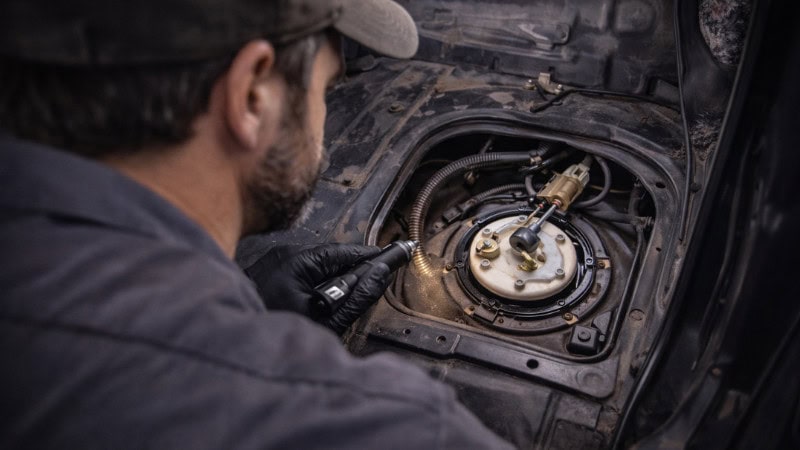
Why Fuel Pressure Is Critical for Engine Performance
Fuel pressure pushes gasoline from the tank, through the fuel lines, and into the injectors with the right force. Modern engines rely on this precise delivery to keep the air-fuel ratio balanced. If the pressure drops too low, the engine runs lean; if it’s too high, it runs rich. Either problem can cause driveability issues and poor performance.
Low fuel pressure can cause hesitation, stalling, and misfires. High fuel pressure might lead to black smoke, rough idling, or fouled spark plugs. Consistent fuel pressure is key for smooth starts, strong acceleration, and efficient combustion. Without it, even a well-maintained engine won’t run as it should. Diagnosing fuel delivery faults early can help you avoid expensive repairs later.
Common Symptoms of Low Fuel Pressure
Low fuel pressure tends to make itself known through some pretty obvious symptoms. The engine just can’t get the fuel it needs when it’s under load. Here are the most common signs mechanics look for:
- Hard starting or extended cranking
- The engine starts, then dies.
- Hesitation during acceleration.
- Loss of power uphill.
- The engine sputters at high RPM.
- Lean trouble codes (P0171, P0174).
- Misfires under load.
- Stalling at idle.
- Surging at highway speeds.
If you notice several of these symptoms at the same time, there’s a good chance your fuel pump is weak, your filter is clogged, or something is restricting the fuel line.
Common Symptoms of High Fuel Pressure
High fuel pressure isn’t as common, but it can be just as troublesome. When too much fuel enters the engine, the mixture becomes rich, which affects both combustion and emissions.
Look out for these warning signs:
- Strong fuel smell from the exhaust.
- Black smoke from the tailpipe.
- Poor fuel economy.
- Rough idle.
- Engine flooding.
- Hard starting when warm.
- Fouled spark plugs.
- Rich codes (P0172, P0175).
High fuel pressure can result from a faulty pressure regulator or a blocked return line. Ignoring it can damage your catalytic converters and oxygen sensors, so don’t let this issue slide.
1. Listen for the Fuel Pump Prime Sound
One of the simplest checks doesn’t require any special tools. Turn your ignition key to the ON position—don’t start the engine. You should hear a soft humming or buzzing from the back of the vehicle for 2 to 3 seconds. That’s your fuel pump priming the system.
If you don’t hear anything, the pump might not be getting power or could be completely dead. If the sound is faint or inconsistent, the pump motor could be failing. While this isn’t a foolproof test, no prime sound usually means no fuel pressure. It’s always the first thing to check before moving on to more involved diagnostics.
2. Perform the Schrader Valve Fuel Test
Most fuel-injected engines have a Schrader valve on the fuel rail. It looks similar to a tire valve stem. This is where a fuel pressure gauge normally connects, but you can still use it for a quick check.
Place a rag over the valve to catch fuel. Carefully press the valve core with a small screwdriver. If fuel sprays forcefully, you likely have decent pressure. If it only dribbles out or barely leaks, pressure is low.
Important: Wear safety glasses and keep sparks away. This method won’t tell you the exact PSI, but a strong spray usually means the pump is at least functioning.
3. Check Fuel Flow at the Fuel Line
If you suspect weak pressure, you can disconnect the fuel line at a safe access point, such as near the fuel rail. Always relieve pressure first and follow proper safety precautions. Then cycle the key to the ON position.
A healthy pump should produce a strong, steady stream of fuel. If the flow’s weak, inconsistent, or barely coming out, that’s a sign of low pressure or a clogged filter. Keep in mind that flow volume isn’t the same as pressure, but weak flow often points toward a failing pump. This test is more hands-on, so only attempt it if you’re comfortable working around fuel systems.
4. Use Starting Fluid as a Diagnostic Tool
Starting fluid can help confirm whether your problem is fuel-related. Remove the intake hose and spray a small amount of starting fluid into the throttle body. Reinstall the hose and attempt to start the engine.
If the engine fires up briefly and then dies, that’s a strong indicator you have a fuel delivery issue. The ignition system is working, but fuel isn’t reaching the cylinders properly. This doesn’t measure pressure, but it confirms the engine is starving for fuel. Don’t overuse starting fluid. It’s meant for diagnostic use only and can cause damage if sprayed into the intake excessively.
5. Check Fuel Pump Relay and Fuse
Before condemning the fuel pump, always inspect the electrical side. Locate your fuse box and identify the fuel pump fuse and relay. Pull the fuse and test for continuity or visible damage. Replace it if it is blown.
For the relay, swap it with another identical relay from the fuse box, such as the horn relay. If the vehicle starts after swapping, the relay was faulty. Electrical issues can mimic fuel pressure problems. A pump without power produces zero pressure, so ruling this out early saves time. This step costs nothing and often fixes the problem quickly.
6. Scan for Fuel Trim Codes
If you have an OBD2 scanner, check fuel trims. Look at Short-Term Fuel Trim (STFT) and Long-Term Fuel Trim (LTFT). High positive numbers, typically above +10 percent, indicate the engine is adding fuel to compensate for a lean condition.
That lean condition can result from low fuel pressure. Negative numbers suggest a rich condition, possibly due to excessive pressure. While this doesn’t directly measure PSI, fuel trim data provides strong indications of how the fuel system is behaving. Combined with the other tests, this method helps confirm whether fuel pressure is likely the root cause.
What Is Normal Fuel Pressure?
Fuel pressure varies depending on engine type. Here’s a general reference:
Always consult your vehicle’s service manual for exact specifications. Without a gauge, you’re estimating system health rather than measuring exact numbers. These ranges give you context to understand what your system should be producing.
When to Replace the Fuel Pump vs. Fuel Filter
Not every low-pressure issue means the pump is bad. A clogged fuel filter can restrict flow and reduce pressure. If your vehicle has high mileage and the filter hasn’t been replaced, start there. It’s cheaper and easier.
Replace the fuel pump if you notice:
- No prime sound.
- Weak or inconsistent pressure.
- Repeated stalling.
- Vehicle dies under load.
- Pump noise is getting louder over time.
Replace the fuel filter if:
- Pressure seems borderline.
- The vehicle improves temporarily.
- Filter maintenance is overdue.
Proper diagnosis saves money and prevents unnecessary parts replacement.
Safety Precautions When Checking Fuel Pressure
Working with fuel requires caution. Gasoline is highly flammable and can ignite easily.
- Always wear safety glasses.
- Work in a well-ventilated area.
- Keep sparks and open flames away.
- Relieve system pressure before disconnecting lines.
- Keep a fire extinguisher nearby.
- Dispose of spilled fuel properly.
Never rush fuel system work. Even a small mistake can create a fire hazard. If you’re unsure, it’s safer to let a professional handle the inspection.
FAQ
FAQ 1: Can I check fuel pressure without a gauge?
Yes, you can perform preliminary checks without a gauge, but you cannot measure exact PSI. Methods like listening for the fuel pump prime, pressing the Schrader valve, checking fuel flow, and reviewing fuel trim data can indicate whether pressure is present or weak. These tests help confirm fuel delivery problems, but they are not precise. If you need accurate pressure readings to diagnose a specific issue, a dedicated fuel pressure gauge remains the most reliable approach.
FAQ 2: How do I know if my fuel pump is weak?
A weak fuel pump often causes long crank times, hesitation during acceleration, loss of power under load, and intermittent stalling. You may also notice a whining noise from the fuel tank area. When testing the Schrader valve, weak pumps produce a dribble rather than a strong spray. Fuel trim readings may show a lean condition. If symptoms worsen over time, especially during highway driving, the pump is likely losing pressure capacity.
FAQ 3: What happens if fuel pressure is too low?
Low fuel pressure causes the engine to run lean, meaning it receives too much air and not enough fuel. This leads to hesitation, misfires, poor acceleration, and possible stalling. Over time, running lean can cause internal components to overheat and damage valves or pistons. You may also see lean trouble codes, such as P0171. If left unchecked, chronic low pressure can markedly reduce engine lifespan and compromise performance.
FAQ 4: What happens if fuel pressure is too high?
Excess fuel pressure forces too much gasoline into the engine, forming a rich mixture. This can cause a rough idle, black exhaust smoke, poor fuel economy, and fouled spark plugs. Over time, high pressure may damage oxygen sensors and catalytic converters. It is often caused by a faulty fuel pressure regulator or a restricted return line. Rich conditions should be corrected quickly to prevent expensive emissions-related repairs.
FAQ 5: Is it safe to press the fuel rail Schrader valve?
It is safe if done carefully. Always wear safety glasses and cover the valve with a rag before pressing it. Fuel may spray out under pressure, so keep your face and hands clear. Perform this test in a well-ventilated area away from sparks or open flames. Never press the valve on a hot engine or near ignition sources. Taking basic precautions makes this a simple and effective diagnostic step.
FAQ 6: Can a clogged fuel filter cause low pressure?
Yes, a clogged fuel filter can restrict fuel flow and lower overall rail pressure. When the filter becomes blocked, the pump must work harder to push fuel through, which can result in weak delivery. Symptoms often mimic a failing fuel pump, including hesitation and loss of power. If your vehicle has high mileage and the filter hasn’t been replaced, it’s wise to change it before replacing the pump.
FAQ 7: Will a bad fuel pump always trigger a check engine light?
Not always. A failing pump may cause driveability issues before setting any codes. The check engine light usually appears when the air-fuel mixture becomes consistently lean or rich enough to trigger fuel trim faults. Intermittent pump problems may not immediately store codes. That’s why physical testing and symptom evaluation are important. Do not rely solely on warning lights when diagnosing fuel pressure problems.
FAQ 8: Should I buy a fuel pressure gauge for DIY work?
If you regularly work on your own vehicles, owning a fuel pressure gauge is a smart investment. It allows you to measure exact PSI rather than estimate system health. Accurate readings help distinguish between a weak pump, a clogged filter, or a faulty regulator. Gauges are affordable and easy to use on most fuel-injected engines. For serious DIY diagnostics, having the right tool saves time and prevents unnecessary part replacements.
Final Thoughts
Checking fuel pressure without a gauge is possible, but it’s a diagnostic, not a precise method. These methods help you determine whether fuel delivery is likely the issue. Listening for pump prime, testing the Schrader valve, checking flow, and reviewing fuel trims can point you in the right direction.
That said, nothing replaces an actual fuel pressure gauge when you need exact numbers. If symptoms persist or the diagnosis becomes unclear, investing in a gauge or visiting a trusted mechanic is the smart move. Proper fuel pressure keeps your engine running strong, and catching problems early prevents bigger repairs later.
Read More: