
Brake dust quickly transforms spotless wheels into dirty ones. In most US repair shops, customers complain their wheels turn black only days after washing. That’s because brake dust doesn’t behave like regular dirt—it contains metal shavings, carbon, and sticky material produced each time the brake pads squeeze the rotors. Modern cars stop faster, but that stopping power usually leaves more dust on your wheels.
If left, brake dust can stain your wheels and damage the clear coat. The good news? You don’t need expensive detailing to fix it. With the right steps, you can clean brake dust in minutes and keep it controlled. Here’s how mechanics do it.
What Causes Brake Dust to Build Up So Fast
Modern brake pad materials and everyday driving quickly lead to brake dust buildup. Most factory pads contain steel and iron fibers. When you brake, these metal bits grind off and become brake dust. That dust heats, sticks to the wheels, and hardens fast.
Front wheels usually collect more dirt because they do most of the stopping. Your driving style plays a role, too. Stop-and-go traffic, frequent braking, short trips, and aggressive driving all produce more dust. Heat bakes dust onto wheels, and road salt or moisture causes it to stick even more—especially in winter.
Tools You’ll Need
You don’t need professional detailing gear to remove brake dust. You probably already have most of what you need in your garage, or you can find it at any auto parts store. Use wheel-safe products that clean well without damaging the finish.
Use a good acid-free wheel cleaner as your main tool—it loosens brake dust without harming your wheels. Grab a soft wheel brush or microfiber mitt to scrub without scratching. Rinse with a bucket of clean water and a hose or spray nozzle.
Prevent brake dust by applying a simple wheel sealant or spray wax. It makes the surface slick, so brake dust doesn’t stick as easily. You’ll clean up much faster next time.
How to Clean Brake Dust in Under 10 Minutes
Clean brake dust fastest by following proper steps—not by using more elbow grease. Always start with cool wheels—spraying cleaner on hot wheels can stain the finish and make dust harder to remove. Rinse the wheel first to wash away loose dirt that could scratch the surface.
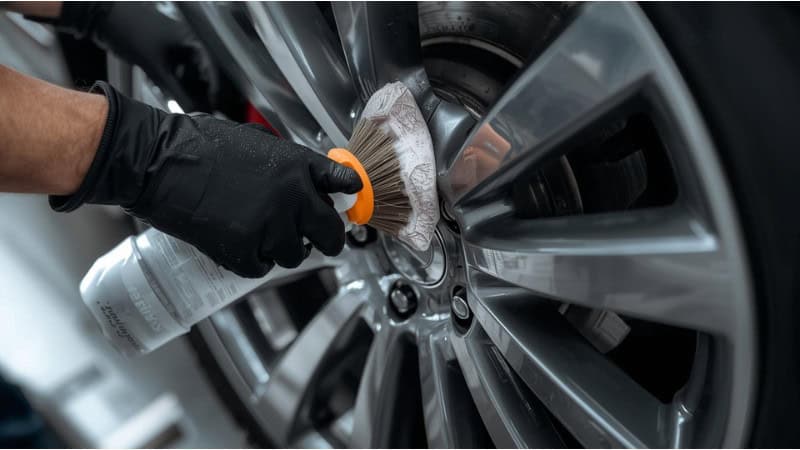
Spray the wheel cleaner evenly across the face and inside the barrel. Let it sit for a minute to break down the dust. Gently scrub with a soft brush or microfiber mitt—focus on tight spots around the lug nuts and spokes. Use light pressure. Rinse thoroughly and dry the wheel to prevent water spots and keep dust from sticking again.

Fast Emergency Cleaning
Sometimes you lack a hose or time for a full wash, but your wheels still need to look good. In those cases, grab a waterless wheel cleaner or spray-and-wipe product to quickly remove light or moderate brake dust. These products wrap up the dust so you can wipe it away safely without scratching the wheels.
Spray the cleaner onto a microfiber towel (not directly on the wheel). Gently wipe one section at a time, flipping the towel often so you don’t grind dust back into the finish. For heavy buildup, use a second clean towel to dry and polish. This method is best for quick touch-ups—not for baked-on dust. Mechanics use this trick for inspections or quick customer pickups when time is tight and looks matter.
You may also like: How to Clean Rusty Tools
Common Mistakes That Make Brake Dust Worse
A lot of wheel damage happens when people try too hard to clean brake dust. One big mistake is using harsh or acidic cleaners on clear-coated or painted wheels—they can etch the finish and make dust stick even faster next time. Cleaning wheels while they’re hot is another common issue. Heat makes dust bond harder and can leave permanent stains.
Using stiff brushes, steel wool, or rough sponges is also a problem. They scratch the clear coat, creating tiny grooves that trap brake dust. Many people also ignore the inside of the wheel, where most dust builds up first. When that area stays dirty, brake dust quickly spreads back to the wheel face. Proper tools and patience prevent most of these long-term issues.
How to Prevent Brake Dust
Preventing brake dust is easier than constantly cleaning it. One of the most effective solutions is switching to low-dust ceramic brake pads. Most daily drivers in the US don’t need aggressive semi-metallic pads, and ceramic pads produce far less dust while staying quiet. They also keep wheels cleaner for longer periods.
Applying a wheel sealant or spray wax after cleaning makes a big difference. It creates a slick barrier that keeps brake dust from sticking and baking onto the surface. Driving habits also matter. Smooth braking and avoiding hard stops reduce dust production and heat buildup. Regular light cleaning is better than waiting until dust is baked on. When brake dust doesn’t get time to settle, it is easier to remove and causes less long-term damage to the wheel finish.

Best Brake Pads for Low Dust
If keeping your wheels clean matters, the choice of brake pads makes a big difference. For most US daily drivers, ceramic brake pads are the go-to option. They produce significantly less dust than semi-metallic pads and keep wheels looking cleaner between washes. Ceramic pads also run quieter and are less abrasive on rotors, helping reduce long-term maintenance costs.
Semi-metallic pads still have their place, especially for trucks, towing, or performance driving, where maximum stopping power is needed. The trade-off is heavier dust and more frequent wheel cleaning. Organic pads create less dust but wear out faster and don’t handle heat as well.
In most shops, ceramic pads are recommended for commuters and family vehicles because they balance stopping power, low dust, and quiet operation without sacrificing safety.
How Often Should You Clean Brake Dust?
How often you clean brake dust depends on how and where you drive. For most daily drivers in the US, cleaning the wheels every one to two weeks is enough to prevent buildup from becoming permanent. Regular light cleaning prevents dust from baking into the clear coat and speeds each wash.
City drivers who deal with stop-and-go traffic may need to clean more frequently because frequent braking creates more dust. Highway drivers can usually go longer between cleanings since steady speeds reduce brake use. Seasonal changes also matter. Winter driving introduces road salt and moisture, which helps brake dust stick faster and harder.
If you’ve applied a wheel sealant or ceramic coating, you can stretch cleaning intervals even more. The goal is consistency, not aggressive scrubbing, to protect the wheel finish in the long term.
FAQ
Q1: Is Brake Dust Harmful to Breathe?
Brake dust isn’t something you want to breathe in regularly. It contains fine metal particles, carbon fibers, and bonding materials from brake pads. While modern brake pads no longer contain asbestos, the dust can still irritate your lungs, eyes, and skin—especially if you’re cleaning wheels dry or using compressed air. In shops, we always rinse first and avoid blowing dust around. Wearing gloves and rinsing wheels before scrubbing is the safest approach for DIY cleaning.
Q2: Can Brake Dust Permanently Damage Wheels?
Yes, brake dust can permanently damage wheels if it’s left on too long. When dust heats up, it can bond to the wheel’s clear coat, causing staining or pitting over time. I’ve seen plenty of alloy wheels ruined by months of ignored brake dust. Regular cleaning prevents this. Once the clear coat is damaged, fixing it usually means refinishing or replacing the wheel, which costs far more than basic maintenance.
Q3: Does a Lot of Brake Dust Mean My Brakes Are Bad?
Not necessarily. Heavy brake dust doesn’t automatically mean your brakes are failing. In many cases, it means you have semi-metallic pads, which are designed to stop well but create more dust. That said, excessive dust combined with noise, vibration, or pulling could indicate worn pads or rotors. If the car stops smoothly and quietly, dust alone usually isn’t a problem—it’s just a maintenance issue, not a safety one.
Q4: Why Do Front Wheels Get Dirtier Than Rear Wheels?
Front wheels get dirtier because they do most of the braking. On most vehicles, about 70 percent of the stopping power comes from the front brakes. That means more heat, more friction, and more brake dust up front. Rear brakes assist with balance and stability, but don’t work as hard. That’s why you’ll usually see black front wheels while the rear ones still look relatively clean, even on the same vehicle.
Q5: Are Black Wheels Harder to Keep Clean?
Black wheels don’t actually get dirtier faster, but they show brake dust much more clearly. Light-colored wheels hide dust better, while black or dark gray wheels highlight every speck. This makes maintenance feel more frequent. Using a wheel sealant or ceramic coating is especially helpful on black wheels because it reduces how strongly dust sticks. With proper protection, black wheels can stay clean longer and require less effort to maintain.
Q6: Can I Use Household Cleaners to Remove Brake Dust?
Using household cleaners is risky and not recommended. Many contain harsh chemicals that can strip clear coat, stain wheels, or cause dull spots. I’ve seen wheels ruined by oven cleaner and bathroom sprays. Always use a wheel-specific, acid-free cleaner designed for automotive finishes. They’re formulated to break down brake dust safely without damaging the wheel. Spending a few extra dollars on the right product saves you from expensive repairs later.
Q7: Does Brake Dust Mean I Need Ceramic Brake Pads?
Brake dust alone doesn’t mean you must switch pads, but ceramic pads are a smart upgrade if clean wheels matter to you. Ceramic brake pads produce much less dust, run quieter, and are easier on wheels and rotors. For most daily drivers, ceramics provide plenty of stopping power. If you tow heavy loads or drive aggressively, semi-metallic pads may still be better. It’s about matching the pad to your driving needs.
Q8: How Long Does It Take Brake Dust to Build Up Again?
Brake dust can start building up almost immediately, especially with city driving. On a daily driver with semi-metallic pads, noticeable dust can appear within a few days. That doesn’t mean your cleaning failed—it’s just how brakes work. Applying a wheel sealant significantly slows this process. With proper protection and smooth driving habits, you can extend the time between cleanings and keep wheels looking good with minimal effort.
Conclusion
Brake dust is unavoidable, but dealing with it doesn’t have to be a headache. With the right cleaning method, you can remove brake dust in minutes without damaging your wheels or wasting time. The real difference comes from prevention. Switching to low-dust ceramic brake pads, applying a wheel sealant, and cleaning regularly before dust bakes on will save you hours in the long run.
From a mechanic’s perspective, most wheel damage comes from neglect or aggressive cleaning, not normal brake use. Treat wheels like any other painted surface, and they’ll last. Clean smarter, not harder. When brake dust is handled correctly, your wheels stay cleaner, your finish lasts longer, and your car keeps that well-maintained look without constant effort.
