
Keeping your tires at the right air pressure is one of the simplest ways to care for your car, save gas, and stay safe. Whether you drive a small car or an SUV, proper tire pressure helps your tires last, keeps your car driving straight, and prevents problems on long trips.
Most people think about tire pressure only when a warning light appears or a tire looks low. By then, the tires are already working too hard, and fuel use increases. The good news: filling your tires is simple. When done right, your car handles better and your tires last longer.
This guide will show you, step by step, how to fill your tires with air—using clear, simple language. You’ll learn what tools you need, how to find the right pressure for your car, how to use air pumps at home or at a gas station, and how to spot tire problems that may need a pro. By the end, you’ll be able to check and fill your tires with confidence.

Tools You Need Before Filling Tires
Gather the right tools before you begin. Most tire inflation problems come from using a bad gauge, a leaky air hose, or guessing the pressure. Use basic, reliable tools to avoid over inflation or valve stem damage.
You need a tire pressure gauge. Digital gauges are easy to read and usually accurate. Pencil or dial types work well, too, if they are in good condition. Pick one that seals tightly on the valve stem and gives a steady reading. Keep a gauge in your glove box.
You’ll also need a way to add air—a gas station pump, portable inflator, or home compressor. Any will work if used carefully. And knowing your car’s recommended PSI—on a sticker inside the driver’s door—is as important as having the right tools.
Use valve caps. They protect the valve from dirt and moisture and help prevent slow leaks.
How to Check Your Recommended Tire Pressure
Before adding air, know your car’s tire pressure. Using the wrong PSI can make your ride less comfortable, compromise braking performance, and wear out your tires. Car makers pick the right number for each vehicle.
You’ll usually find the right PSI on a sticker inside the driver’s door jamb. If it’s missing, check the owner’s manual. Always use this number for daily driving.
Don’t use the number on the tire’s sidewall—that’s the maximum, not for daily use. It makes your ride stiff and wears out tires unevenly.
Check tire pressure when the tires are cold. Even short drives heat them and raise pressure, giving false readings. For best results, check before driving or after parking for a few hours.
Step-by-Step Guide: How to Fill Tires With Air
Once you know the right PSI, filling your tires is easy. Work slowly and carefully for the best results. Rushing can overinflate or damage the valve stem.
Step 1: Park on a flat surface, set the parking brake, and wait for the tires to cool. Step 2: Remove the valve cap and keep it safe.
Step 3: Press the gauge onto the valve stem and record the PSI.
Step 4: If low, prepare to add air.
Step 5: Attach the air hose to the valve stem, listen for air flow, and add air in short bursts.
Step 6: Remove the hose, check the pressure with your gauge, and repeat as needed.
Step 7: If you overfill a tire, press the valve core gently to release air, then check pressure again.
Step 8: Replace the valve cap. Repeat all steps for each tire.
How to Fill Tires With Air at a Gas Station
Filling your tires at a gas station is one of the quickest ways to get the job done, and most U.S. stations use similar air pump setups. Even though the equipment is simple, many drivers lose accuracy because they rush the process or don’t understand how the machine regulates pressure. Taking a steady approach ensures you hit the correct PSI without overinflating.
When you pull up to the air station, position your vehicle so the hose easily reaches all four tires. Most stations place the compressor on a short island, so parking close helps avoid stretching the hose or dragging it across dirty pavement. Before you start, check whether the machine requires payment or if it’s free with a fuel purchase. Many modern pumps have a digital screen that lets you set your target PSI before you even touch the hose. If yours has that feature, enter the number listed on your door jamb, and the machine will automatically shut off once the tire reaches the correct pressure.
If the pump doesn’t have an automatic setting, you’ll have to work manually. Hold the hose firmly on the valve stem, let the air flow for a second or two, then stop and check the pressure with your own gauge. Gas station pumps can be aggressive, so short bursts are always safer than holding the trigger too long. Dirt and debris on public hoses sometimes create small leaks around the connector, so if you hear a lot of hissing, try adjusting your angle until the seal tightens.
Once you reach the recommended PSI, put the valve cap back on and move to the next tire. Before leaving, glance at the air pump again to make sure you didn’t leave the hose on the ground where it could get damaged or run over. A quick final walk-around is always smart practice—any tire that still looks noticeably low after filling may have a leak and should be checked by a mechanic.
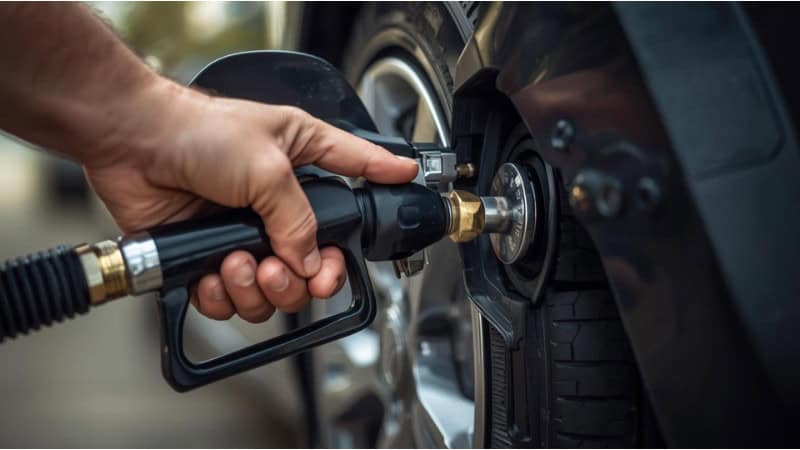
How to Fill Tires With Air at Home
Filling your tires at home is the most convenient option, especially if you keep a portable inflator or a small shop compressor in your garage. Home equipment usually gives you more control and consistency than a public air pump, and it lets you check and top off your tires whenever pressure changes with temperature or long trips.
If you’re using a portable inflator, the setup is simple. Most units plug into your vehicle’s 12-volt outlet or run off a built-in battery. Turn the inflator on, connect the hose to the valve stem, and watch the pressure rise on the display. Many modern inflators let you set a target PSI, just like digital gas station pumps. Once the tire reaches the selected pressure, the device automatically shuts off, making home inflation almost foolproof. These inflators aren’t as fast as large compressors, but they’re highly accurate and perfect for routine maintenance.
A shop air compressor offers more power and fills tires much faster, but it requires a bit more awareness. Before you squeeze the trigger, make sure the regulator on the compressor is adjusted so the output isn’t excessively high. A fast burst of air can overshoot your target PSI in seconds. Work in shorter pulses and check your gauge frequently until you dial in the exact pressure. This approach gives you the precision you’d expect from a professional garage.
Checking tire pressure at home means cold readings and accurate results. Keep all your tools together—gauge, inflator, caps, and compressor—to finish in minutes.
How Often Should You Check and Fill Tires?
Tire pressure changes naturally over time. Check at least once a month, more often if needed. Air slowly escapes, so perfect tires last month can be low today.
Seasonal temperature swings play a big role, too. When the weather turns colder, the air inside your tires contracts, causing a noticeable drop in PSI—sometimes three to five pounds overnight. That’s why so many drivers see their TPMS warning light pop up every fall or winter morning. On the other hand, hot pavement and long drives can temporarily raise tire pressure, but you should never bleed air out when the tire is warm. Wait until the tire cools and check it again before making adjustments.
Drivers who tow, haul heavy cargo, or take frequent highway trips should check tire pressure more often than those who drive short distances on city streets. Extra weight puts more heat and stress on the tire, making proper inflation even more important. A quick check before a long trip, or anytime your vehicle feels a little sluggish or pulls slightly to one side, can prevent premature wear and keep the ride predictable.
Making tire pressure checks part of your regular routine keeps your fuel economy steady, ensures even tread wear, and reduces the risk of blowouts from underinflation. It takes less than a minute per tire and saves a lot more in the long run.
Common Problems and How to Fix Them
Even when you stay on top of your tire pressure, a few common issues can still show up. Knowing what they mean and how to respond can save you from getting stranded or wearing out a tire long before its time.
One of the most frequent problems is a slow leak. This usually comes from a small nail or screw lodged in the tread, a leaking valve core, or a poor seal at the tire-rim interface. If you notice a tire losing two or three PSI every couple of days, that’s a sign that something is wrong. You can temporarily top off the tire, but the vehicle should be inspected by a shop as soon as possible. A small puncture in the tread can often be patched, but anything in the sidewall or shoulder area normally requires a replacement.
Over-inflation is another issue that catches drivers off guard. Sometimes it happens because a gas station pump is inaccurate, or someone holds the air hose too long. An overinflated tire feels stiff, rides rough, and wears heavily in the center of the tread. The fix is simple: press the valve core gently to release a little air and check your pressure again until it’s back within the recommended range.
Valve stem damage is also fairly common, especially on older vehicles. A cracked or dry valve stem may not show visible damage, but it can allow air to escape slowly. If you hear a faint hiss around the valve area or see bubbling when you brush soapy water on it, the valve may need to be replaced. This is a quick job at any tire shop.
Sometimes the issue isn’t the tire at all—it’s the air pump. Gas station hoses get worn out, leak around the connector, or deliver inconsistent pressure. If you’re adding air but the pressure doesn’t change, or you hear a loud continuous hiss even when the chuck is sealed, the pump may be unreliable. In that case, using your own gauge and working in short bursts helps avoid overfilling.
Any tire problem that repeats itself, feels unusual, or causes rapid pressure loss should be inspected by a professional. Tires often give small warnings before bigger issues develop, and catching them early is always the safest move.
How to Know When Your Tires Need Professional Attention
Even if you keep your tires properly inflated, certain signs signal that it’s time to bring your vehicle to a tire shop. Some problems can be managed at home, but others point to structural issues that only a professional can diagnose safely.
One major warning sign is visible damage. If you notice bulges on the sidewall, deep cuts, or exposed steel cords, the tire is no longer safe to drive on. Bulges usually indicate that the internal layers have failed, and a tire in that condition can fail without warning. No amount of air pressure adjustment will fix structural damage like this.
Unusual vibration is another indicator. If your steering wheel shakes at highway speeds or the vehicle feels like it’s bouncing, one of the tires may be out of balance, developing a flat spot, or separating internally. Drivers sometimes mistake this for alignment issues, but vibration that increases with speed is often a sign of a failing tire.
Uneven tread wear also deserves attention. If the inside or outside edge of your tire is wearing down much faster than the center, the vehicle may be out of alignment, or one of the tires has been running underinflated for too long. Feathered tread, cupping, or scalloping typically point to suspension issues or imbalance. A tire shop can check both the tires and the alignment to prevent further damage.
Another sign to watch for is a tire that refuses to hold pressure even after refilling. Slow leaks may be patchable if they’re in the tread, but leaks near the sidewall or bead area usually require a replacement. Persistent TPMS warnings also mean it’s time for a technician to inspect the sensor or the tire itself.
When in doubt, it’s always safer to have a trained tech look things over. Modern tires carry a lot of load and generate significant heat, so catching problems early prevents blowouts, uneven wear, and costly repairs down the road.
Safety Tips From a Mechanic
Maintaining proper tire pressure is about more than just fuel economy—it’s a critical safety measure. Driving on under-inflated or over-inflated tires affects handling, braking, and overall control. Mechanics often see preventable problems caused by small lapses in tire maintenance, so a few practical habits go a long way.
Never drive long distances on a tire that’s noticeably low. Even a few pounds below the recommended PSI can cause excessive heat buildup, weakening the rubber and increasing the risk of a blowout. Likewise, over inflation makes your ride harsh and reduces traction, especially in wet conditions. Always aim for the manufacturer’s PSI, measured when the tires are cold.
Top-off timing matters as well. Adding air immediately after driving can lead to inaccurate readings because heat temporarily increases tire pressure. Wait a few hours for the tires to cool, or adjust based on cold readings for the most reliable results.
Some drivers ask about using nitrogen instead of regular air. While nitrogen can slightly reduce slow pressure loss, it isn’t necessary for most everyday vehicles. Standard compressed air works perfectly when tires are checked and filled regularly.
Finally, never ignore TPMS lights. These alerts indicate pressure is outside the safe range and should prompt an immediate check. Small issues addressed early prevent bigger problems later, keeping both your tires and your drive safe.
Frequently Asked Questions
Q1: What PSI should my tires be filled to?
The correct tire pressure for your vehicle is set by the manufacturer and should always be followed. You’ll usually find this number on a sticker inside the driver-side door jamb or in the owner’s manual. This PSI is based on the vehicle’s weight, suspension design, and handling requirements. Many drivers mistakenly use the number printed on the tire sidewall, but that figure represents the tire’s maximum pressure, not its recommended operating pressure. Running the proper PSI helps your tires wear evenly, improves ride quality, and ensures predictable braking and steering.
Q2: Can I overinflate my tires?
Yes, overfilling a tire is a common problem and can cause more harm than people realize. An overinflated tire becomes stiff and loses contact with the road, reducing traction, especially in wet conditions. It also causes the center of the tread to wear faster than the edges, shortening tire life. From a mechanic’s perspective, over inflation often happens at gas stations when drivers hold the air hose too long. Always add air gradually and recheck pressure frequently to stay within the recommended PSI range.
Q3: Why should tire pressure be checked when tires are cold?
Tire pressure increases as the tire heats up from driving. Even a short trip can raise pressure by several PSI, which gives you a false reading. Manufacturers list recommended tire pressure based on cold tires, meaning the vehicle hasn’t been driven for a few hours. If you check or adjust pressure while the tires are warm, you may end up underinflating them once they cool down. Mechanics always check pressure first thing in the morning or after the vehicle has been parked to ensure the most accurate and consistent results.
Q4: How often should I fill or check my tires?
Most mechanics recommend checking tire pressure at least once a month and before any long trip. Tires naturally lose small amounts of air over time, even when there’s no puncture. Seasonal temperature changes also affect pressure, especially during colder months when PSI can drop quickly. If you tow, carry heavy loads, or regularly drive long stretches of highway, more frequent checks are a smart idea. If you tow, carry heavy loads, or regularly drive long stretches of highway, more frequent checks are a smart idea.
Q5: Can I drive if my tire pressure is low?
Driving a short distance with slightly low tire pressure usually isn’t an emergency, but it’s not something you should ignore. Underinflated tires flex more as they roll, generating heat and accelerating wear. Over time, this can weaken the tire’s internal structure and increase the risk of a blowout. Low pressure also reduces fuel efficiency and makes steering feel sluggish. From a mechanic’s standpoint, the safest move is to add air as soon as possible and inspect the tire if the pressure keeps dropping.
Q6: Is it better to use nitrogen or regular air in tires?
For most everyday vehicles, regular compressed air works perfectly fine. Nitrogen is sometimes used because it leaks out more slowly and is less affected by temperature changes, but the difference is minimal for normal driving. Unless you’re tracking tire pressure very closely or driving in extreme conditions, nitrogen doesn’t provide a noticeable advantage. Mechanics generally agree that consistent pressure checks matter far more than the type of gas used. Proper maintenance with regular air will give you safe performance and long tire life.
Q7: Why does my tire pressure warning light keep coming on?
A tire pressure monitoring system (TPMS) light usually means one or more tires are below the recommended PSI. This can happen due to seasonal temperature drops, a slow leak, or uneven air loss between tires. Sometimes the pressure is only a few pounds low, but it’s still enough to trigger the warning. If the light comes back on shortly after filling the tires, there may be a leak or a faulty sensor. A mechanic can check both the tire condition and the TPMS system to pinpoint the issue.
Conclusion
Keeping your tires properly inflated is one of the simplest ways to protect your vehicle, improve fuel efficiency, and stay safe on the road. Filling your tires with air isn’t complicated, but following the correct steps—checking cold pressure, using a reliable gauge, and topping off carefully—ensures your tires perform as intended and wear evenly over time.
Routine tire maintenance doesn’t just prevent premature wear; it also gives you confidence behind the wheel, reduces the risk of accidents, and keeps your vehicle handling predictably in every condition. Whether you use a gas station pump, a portable home inflator, or a shop compressor, doing the job right every time is what professional mechanics recommend. By making tire checks a regular habit, you’ll save money, extend tire life, and enjoy a smoother, safer drive.
