
Knowing how to read your tire size is a basic skill every driver should have, even if you never plan to change your own tires. As any mechanic will tell you, the right tire size affects how your car brakes, steers, rides, and how much fuel it uses. If you put the wrong size on your car, you might run into problems like rubbing, uneven tire wear, traction control issues, or a speedometer that reads incorrectly. These are issues mechanics see all the time.
Tire size isn’t just a random number on the side of your tire. Car makers pick a specific size to match your car’s suspension, weight, and driving style. Using the correct size keeps you safe and saves you money in the long run.

Where to Find Tire Size Information
The simplest way to find your tire size is to look on the tire’s sidewall, where it’s molded in big, bold letters. Mechanics check this first because it shows what’s actually on the car.
If the tires are worn or hard to read, check the driver-side door jamb for a factory sticker. It lists the original tire size, air pressure, and load rating, and is the main shop reference.
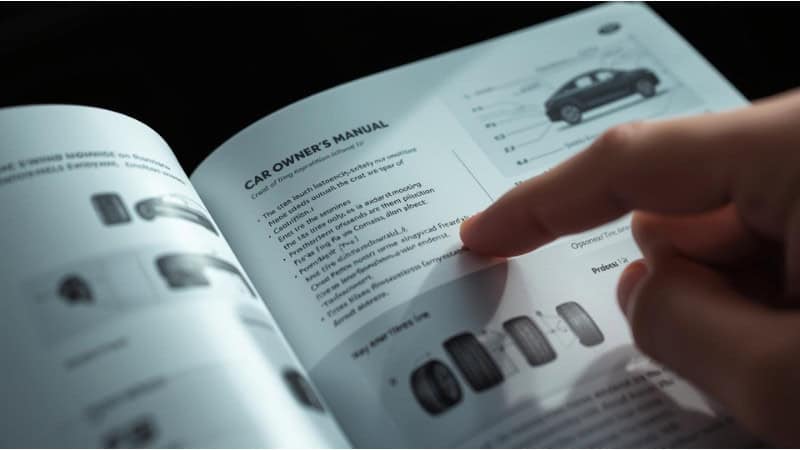
You can also check your owner’s manual for tire size info if the door sticker is missing or faded. Usually, these sources should match; if not, your car might have the wrong tire size.
How to Read Tire Size on the Sidewall
When you find the tire size on the sidewall, you’ll see something like P215/65R16. At first, it might look confusing, but every part of that code means something important about how the tire is built and what it fits. For example, the “P” stands for “passenger” tire, the next number is the width in millimeters (the measurement across the tire), the number after the slash is the aspect ratio (sidewall height as a percent of width), “R” means radial construction (internal layers built radially), and the final number is the wheel diameter in inches (rim size the tire fits). Learning what those letters and numbers mean helps you pick the right replacement every time.
Read the tire size from left to right. It starts with a letter (indicating the tire type), followed by numbers for the width, sidewall height, and wheel diameter. Tire makers use the same format everywhere, so it doesn’t matter if you buy a budget or high-end tire—the code is always the same. This code is the best way to know your true tire size.
What the First Letter in Tire Size Means
The first letter in the tire size indicates the type of vehicle the tire is designed for. Mechanics check this closely, especially for SUVs and trucks. Most regular cars have a “P” for passenger tire—these are made for everyday driving, comfort, and saving gas.
For trucks and some big SUVs, you might see “LT” at the start, meaning Light Truck (tires made for heavier vehicles and larger loads). These tires have tougher sidewalls and can carry heavier loads. Sometimes there’s no letter—that usually means it’s a European-metric tire (a tire with sizing based on European standards) built to similar standards.
Using the wrong tire type can affect your ride quality, your car’s load capacity, and how long your tires last. So, it’s just as important to match the letter as it is to get the numbers right.
Understanding Tire Width
The first number after the letter indicates the tire’s width, in millimeters, from sidewall to sidewall. (The sidewall is the thick rubber part from the edge of the tread down to the rim of the wheel.) So, if you see “215” in P215/65R16, it means that the tire is 215 mm wide. The width affects how much grip you have, how the car handles, and how the tire fits on the rim.
Wider tires usually give you more traction, especially when it’s dry, but they can make the ride louder and use more fuel. Narrower tires are better for gas mileage and can be safer in rain or snow, but they might not be as stable when you’re turning fast.
Mechanics always ensure the tire width matches the car maker’s recommendation. If a tire is too wide or too narrow, it can rub against the suspension or wear unevenly, shortening its life and reducing performance.
Understanding Aspect Ratio
The second number is called the aspect ratio. It shows the sidewall height as a percentage of the tire’s width. (Aspect ratio means how tall the sidewall is compared to the width across the tire—if a tire is 200 mm wide and the aspect ratio is 50, then the sidewall is 100 mm tall.) So, in the P215/65R16 example, “65” means the sidewall is 65% as tall as the tire is wide. Aspect ratio affects ride comfort, how the car handles, and the tire’s overall size.
A higher aspect ratio, like 70 or 75, means a taller sidewall. Tall sidewalls soak up bumps and make the ride smoother, but they aren’t as sharp in corners. Low numbers like 40 or 45 mean a shorter, stiffer sidewall—great for handling, but the ride can get a bit rough.
Mechanics closely check the aspect ratio because changing it (without adjusting other parts) can mess up your speedometer, ABS, and how stable your car feels.
Tire Construction and Wheel Diameter
The letter after the aspect ratio, usually “R”, stands for the tire’s construction type. “R” means radial, which is the standard construction for nearly all modern tires. Radial tires have layers of fabric cords running radially (from the tire’s center outward), providing a balance of strength, flexibility, and longevity. Older tires may have a “D” for diagonal or bias-ply construction, which means the cords are placed at a diagonal angle, though this is mostly found on vintage or specialty vehicles.
The number following the construction letter tells you the wheel diameter in inches. For example, in P215/65R16, the “16” shows the tire fits a 16-inch rim. The wheel diameter must match exactly; even a one-inch difference prevents the tire from mounting or causes serious handling issues.
Mechanics always check both construction type and wheel diameter before installation, because mismatches can compromise safety and performance.
Load Index and Speed Rating Explained
After the wheel diameter, tires have a load index and a speed rating, usually shown together, like 95H. The load index is a numerical code that indicates the maximum weight a single tire can safely carry. (Load index refers to the weight each tire supports at maximum air pressure; higher numbers mean greater weight support.) Using a tire with a load index that is too low can lead to sidewall failure, especially when the vehicle is fully loaded. Mechanics always verify this to ensure the tires can handle the car’s weight under normal and heavy-use conditions.
The speed rating, represented by a letter, indicates the maximum speed the tire can safely maintain under its rated load. (Speed rating means the fastest speed the tire is designed to handle while carrying its maximum load, with each letter corresponding to a specific speed range.) For example, H is rated up to 130 mph. While most everyday drivers won’t reach these speeds, using a tire with an inadequate speed rating can affect handling and heat tolerance.
Checking both load index and speed rating is critical for safety and is standard practice in professional tire service.
How to Tell Tire Size Without the Tire
If a vehicle’s tires are worn, mismatched, or missing, check the driver-side door jamb sticker for the original tire size, air pressure, and load rating as specified by the manufacturer. Mechanics use this to order or verify tires.
If the sticker is missing or damaged, the owner’s manual is another reliable source. Every manual includes the correct tire specifications for front, rear, and spare tires.
For newer vehicles, you can also use the VIN (Vehicle Identification Number, a unique code for your specific car) to look up tire sizes online or in manufacturer databases. This method ensures you get the factory-recommended size, even if the vehicle’s tires are incorrect.

Common Tire Size Mistakes to Avoid
One of the most frequent mistakes drivers make is mixing tire sizes between the front and rear axles. This can upset the vehicle’s handling balance, especially on all-wheel-drive vehicles, and may trigger warning lights. Another common error is ignoring the load index or speed rating, which can compromise safety under heavy loads or at high speeds.
Upsizing or downsizing tires without adjusting suspension, wheel offset, or tire pressure is another trap. Even a seemingly small change in diameter or width can cause rubbing, uneven wear, or incorrect speedometer readings. Mechanics always recommend sticking to the manufacturer’s specifications unless a professional carefully evaluates modifications.
Avoiding these mistakes protects your tires, vehicle, and, most importantly, your safety on the road.
When to Ask a Mechanic for Help
While reading tire size is straightforward for most vehicles, there are situations where professional guidance is essential. Modified vehicles, such as those with lifts, lowered suspensions, or oversized rims, often require careful calculations to ensure the tires fit without rubbing or affecting handling.
All-wheel-drive and performance vehicles are particularly sensitive to changes in tire diameter and width. Even small mismatches can strain the drivetrain, trigger warning lights, or compromise traction.
If you’re unsure about load ratings, speed ratings, or aspect ratio changes, a mechanic can provide guidance. They can confirm the correct size, recommend compatible alternatives, and safely install the tires to avoid long-term issues.
FAQs About Tire Size
Q1: Can I use a tire size other than the recommended one?
While it’s technically possible to use a different tire size, it requires careful consideration. Changing the width, aspect ratio, or overall diameter can affect handling, braking, traction, and speedometer accuracy. For example, upsizing may cause rubbing on suspension components, while downsizing can reduce grip and stability. Mechanics always check whether modifications are compatible with the vehicle’s suspension geometry and drivetrain. On all-wheel-drive vehicles, even a small mismatch can damage the differential. If you’re considering a change, a professional assessment ensures safety and prevents expensive long-term issues.
Q2: Do front and rear tires have to match?
Yes, matching front and rear tires is critical, especially for performance and all-wheel-drive vehicles. Mismatched tires can alter handling balance, reduce traction, and increase wear on drivetrain components. Unequal diameters can trigger warning lights and affect ABS or stability control systems. Even on front-wheel-drive cars, differing tire sizes or tread patterns can make braking less predictable. Mechanics always recommend matching tires in pairs at a minimum and ideally replacing all four tires at the same time. Proper rotation patterns also help maintain even wear and safe handling.
Q3: Is tire size the same as rim size?
No, tire size and rim size are related but not the same. The rim diameter, measured in inches, is only one part of the tire size. A complete tire size includes width, aspect ratio, and construction type, which dictate how the tire fits on the rim and interacts with the vehicle. For instance, a 16-inch rim could fit multiple tire widths and sidewall heights, but using the wrong combination can affect handling, clearance, and safety. Mechanics always verify the full tire size rather than just rim diameter to ensure proper fitment.
Q4: How do I read the load index?
The load index is a numeric code on the sidewall that specifies the maximum weight a single tire can safely support. For example, a tire with a 95 load index can carry approximately 1,521 pounds. Using tires with a lower load index than the manufacturer specifies can lead to sidewall failure, especially under heavy loads or at high speeds. Mechanics calculate total vehicle weight, including passengers and cargo, to ensure tires meet or exceed the required load capacity. Even small differences matter, as overloaded tires can overheat, wear prematurely, and create dangerous driving conditions.
Q5: What does the speed rating letter mean?
The speed rating indicates the maximum speed a tire can safely sustain under its rated load. Letters range from L (75 mph) to Y (186+ mph). Exceeding this rating risks excessive heat buildup, sidewall damage, and potential blowouts. Even if you never drive at these speeds, the rating reflects the tire’s structural limits, especially during hard cornering or emergency maneuvers. Mechanics check the rating when replacing tires to ensure compatibility with the vehicle’s performance capabilities. Choosing a lower-rated tire than recommended can compromise handling, braking, and safety in real-world driving conditions.
Q6: Can I change the aspect ratio safely?
Changing the aspect ratio alters the tire’s sidewall height and overall diameter, affecting handling, speedometer accuracy, ABS, and suspension geometry. A lower ratio gives a stiffer, sportier feel, but may reduce ride comfort and increase the risk of sidewall damage on potholes. A higher ratio improves cushioning but can make steering feel less precise. Mechanics carefully calculate the effects on total tire diameter and wheel clearance before approving any change. For safety and drivability, it’s usually best to stick to the manufacturer’s recommended aspect ratio unless a professional has confirmed compatibility.
Q7: Where else can I find the tire size if the tire is missing?
If the tire is worn, missing, or unreadable, there are several ways to confirm the correct size. The driver-side door jamb sticker lists front and rear tire sizes, recommended air pressure, and load ratings. The owner’s manual also provides full specifications, including optional sizes if available. For newer vehicles, a VIN lookup can identify the factory-installed tire size, ensuring accurate replacement. Mechanics rely on these sources to avoid guesswork. Using the correct factory specifications prevents rubbing, drivetrain issues, and mismatched tire problems that can affect safety and performance.
Q8: What happens if I install the wrong tire type (P vs LT)?
Installing the wrong tire type can affect safety, performance, and vehicle longevity. Passenger (P) tires are designed for daily driving comfort and moderate loads, while Light Truck (LT) tires have stronger sidewalls and higher load capacity for towing and heavy-duty use. Using P tires on a loaded truck may result in sidewall flex, reduced load capability, and premature wear. Conversely, LT tires on a passenger car may create a harsher ride and reduced fuel efficiency. Mechanics always confirm the correct tire type before installation, especially for trucks, SUVs, and vehicles that carry heavy loads or tow regularly.
Conclusion
Knowing how to tell tire size is more than just reading numbers on the sidewall—it’s about safety, performance, and protecting your vehicle. Each component of a tire size, from width and aspect ratio to load index and speed rating, plays a specific role in how your car handles, brakes, and rides. Mechanics always verify tire specifications before replacing or upgrading tires to prevent uneven wear, suspension issues, and potential safety hazards.
For everyday drivers, the easiest way to get the right size is to check the sidewall, door jamb sticker, or owner’s manual. For modified, performance, or heavy-duty vehicles, professional guidance ensures that any changes won’t compromise safety or drivability. Taking the time to read and understand tire size keeps your car running smoothly and your passengers safe.
