
Using a car lift seems easy—until you hear a creak or feel a shift. It’s essential: it saves your back, speeds repairs, and gives clear access under the car. But it’s dangerous if you get careless or skip steps. This guide is straightforward, like a mechanic’s routine: checks, lift points, and habits for stability. We’ll use plain language so you can use this as a training guide or blog post. Next: types of car lifts and how to identify them.
Types of Car Lifts
Before operating any car lift, first identify the type you’re working with. Each lift has its own characteristics and potential failure points if misused. The 2-post lift—common in repair shops—offers excellent access to suspension, exhaust, and drivetrain, but balancing and correct lift points are critical. The 4-post lift is the stable, drive-on option, used for alignment, storage, and quick service, yet it still requires wheel chocks and proper engagement of safety locks to prevent rolling. Scissor and mid-rise lifts, ideal for smaller shops, work well for tires and brakes, though they come with tighter spaces and increased risk of pinch points. With the differences in mind, the next step is ensuring safety before you ever lift a car: the pre-lift checklist.
Pre-Lift Safety Checklist
Though easy to overlook, the pre-lift safety checklist is essential for your protection. Start by checking the bay: the floor should be clean, oil-free, free of loose tools, and with sufficient space around doors and posts. Next, inspect the lift: pads must be intact, arms should move smoothly, with no leaks, and safety locks that engage properly. If you notice anything bent, cracked, or suspicious, don’t risk using the lift. Position the vehicle straight between posts or at runway center, set the parking brake, and put the transmission in Park (or gear for manuals). Before proceeding to lifting, always make sure everyone is clear. Once you have a safe setup, it’s time to focus on finding the right lift points to avoid guesswork.
Finding the Right Lift Points
Correctly identifying lift points is crucial for safe lifting. Many accidents occur when people guess rather than use factory-specified spots. Check the service manual, a shop database, or lift diagrams for proper locations. For unibody cars, use reinforced pinch welds or rocker-area pads instead of thin floor pans. For trucks and SUVs, lift on the frame rails, not on control arms or crossmembers unless specified. Never take chances with unknown areas—avoid floor pans, rust, lines, shields, or exhaust. If rust makes a spot unsafe, choose a different lifting approach. With lift points addressed, the next section provides a step-by-step guide to using a 2-post lift effectively.
Using a 2-Post Lift
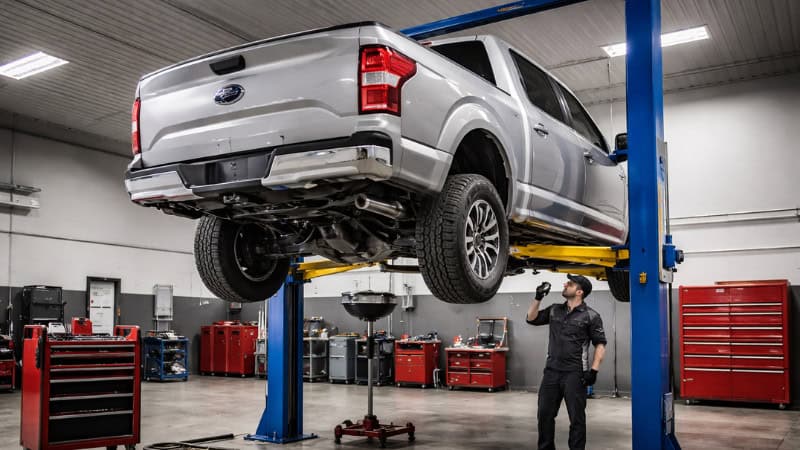
Once the car is centered between the posts, keep weight balanced before engaging the 2-post lift. Set the parking brake, swing in the arms, and align pads to the correct lift points, ensuring each pad sits flat and off of vulnerable areas like plastic or thin metal. Adjust arms evenly. For safety, start by lifting only 6–12 inches, then stop to double-check every pad. If anything is out of place, lower and readjust before lifting higher. This extra check can prevent disasters. After confirming stability, you’re ready to lift to a suitable working height and set the safety locks.
Lift to Working Height and Set Safety Locks
After confirming stability at the 6–12 inch level, lift the vehicle smoothly to your preferred working height. Pay attention to the car’s position—stop if you hear a pop, see a shift, or notice leaning, and lower if anything seems wrong. At working height, don’t leave the car supported only by hydraulics: engage the safety locks, lower the lift slightly so the car rests on them, and check for a secure fit. Gently push at the corners to confirm stability—if it moves too much, lower and readjust. With these safety checks done, let’s move on to drive-on style lifts and what makes them unique.
you may like: 6 Best 4-Post Car Lifts Reviews – 2026
Using a 4-Post Lift Safely
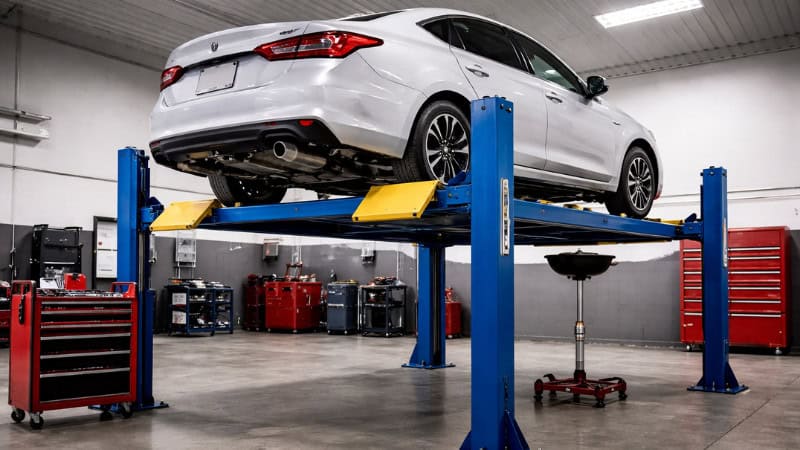
Although a 4-post lift feels safer due to its drive-on design, you must still follow basic safety procedures. Approach runways slowly and straight, and use a spotter when necessary. After centering the tires, stop with the weight balanced, set the brake, and put the car in Park (or gear for manuals). Wheel chocks are a must, especially during vehicle movement on the lift. Raise the car smoothly, lock on mechanical stops, and lower onto them—just as with a 2-post lift. If you need to use a jack tray or bridge jack, position it with care and confirm its stability. Now, let’s explore practical tricks mechanics use to stay accident-free and efficient.
Pro Tips and Tricks Mechanics Use
Here are expert habits. With 2-post lifts (lifts with two vertical posts and swing arms), remember that front-wheel drive and crossover vehicles are heavier at the front: place posts a little behind the car’s center to keep it balanced and prevent the front from dipping. For trucks and SUVs, use height adapters (extensions for the pads) so the pads make contact with solid frame rails, not angled metal, skid plates, or thin parts. Never crush plastic rocker covers—use pinch-weld blocks or special adapters to spread pressure over the strong seams. Before opening car doors wide, check for any posts or obstructions to avoid dents. If the car is loaded with cargo, tools, or a full pickup bed, adjust your lifting plan to keep the weight balanced. Always keep the lift arms and pads clean since dirt increases the risk of slipping. Next: frequent mistakes and how to avoid them.

Common Mistakes
Most lift problems occur when people rush. The main mistake is choosing the wrong lift points: lifting on thin sheet metal or a rusty pinch weld (a reinforced seam under the car meant for lifting) and hoping it holds. Another common error is skipping the 6–12 inch test lift—a short preliminary lift to double-check pad placement before going higher. Never rely solely on the hydraulics (the fluid-lifting mechanism)—always rest the car on the mechanical safety locks (solid metal catches that physically hold the car up). On 4-post lifts, forgetting to use chocks (wedges to keep the tires from moving) or to engage the safety locks can let the car roll when you push on the bolts. Check door clearance before lifting to prevent the door from slamming into a post. Finally, never exceed the lift’s weight limit or try to raise an unevenly loaded car without first checking its center of gravity (the spot where the car balances). Next, non-negotiable safety rules.
you may like: Top 12 Best Mechanic Tools Brands in the World 2026
If the Vehicle Feels Unstable on the Lift
If you ever sense instability while the car’s on the lift, pause immediately. Don’t proceed and hope it settles naturally; instead, lower slowly and watch the pad or runway alignment as you descend. Once down, check the lift points and arms thoroughly—issues often stem from a pad not seating or the car being off-center. Realign everything, then repeat the initial 6–12-inch lift test. If rust or vehicle structure prevents a secure hold, switch to a 4-post setup, use adapters, or follow alternative shop procedures. After stabilizing, move on to proper lift maintenance.
you may also like: 3 Common Types of Jacks for Automotive Use
Basic Car Lift Maintenance
Solid maintenance habits are the foundation of lift safety. That means regularly cleaning pads, removing any oil or grease, and confirming that safety locks work consistently. Pay attention to new noises—squeaks, grinding, or uneven movement signal problems. Check for hydraulic leaks both under the power unit and near cylinders; even small leaks warrant action. Inspect all arms for bends or cracks, particularly on heavily used lifts, and lubricate pivots as specified by your shop or lift manufacturer. Anchored lifts require periodic anchor checks, as loose bolts are a hazard. Make a professional inspection an annual routine. With maintenance covered, let’s move on to frequently asked questions.
FAQ
FAQ 1: Can I lift a car by the pinch weld?
Yes, but only if it’s a factory-approved lift area. Many unibody cars (cars without a separate frame) have reinforced pinch-weld zones (strengthened seams along the edges for jacks and lifts), but the safe spots are specific—usually marked in the service info. Use pinch-weld blocks/adapters (special supports for the seam) so you don’t fold the seam or crack the rocker trim. Don’t lift on random thin metal just because it “looks solid.” If the pinch weld is rusty, bent, or crushed, pick a different approved point.
FAQ 2: Should the parking brake be on while lifting?
Yes—every time. Set the parking brake (mechanical lever or pedal that stops wheel movement) before the wheels leave the ground, whether you’re on a 2-post or 4-post lift. On a 2-post, it helps prevent rolling while you’re positioning arms (the lift supports). On a 4-post, it’s extra insurance against creep (slow movement) while driving on and during the initial lift. Put the car in Park (or in gear for a manual). If shop rules require wheel chocks (tire wedges) on a 4-post, use them.
FAQ 3: How high should I lift a car?
Lift the car to the height you need to work safely and comfortably. Don’t go any higher than needed. The mistake is sending it all the way up “just because.” This increases swing risk (the car moving slightly at high positions) and overhead clearance problems (risk of hitting the ceiling or fixtures). Do the 6–12 inch test lift (lift halfway to check security) first and check pad contact again. Then raise the car smoothly. Once at working height, always set it down onto the mechanical safety locks (solid engagement points). If you need more room, re-check clearance, then go higher.
FAQ 4: Is a 4-post lift safer than a 2-post?
Most of the time, a 4-post feels safer because the vehicle is supported by the tires on runways (tracks under the wheels). It’s great for storage, alignments, and quick service. But “safer” doesn’t mean foolproof: cars can still roll, shift, or creep (move slowly) if you don’t set locks and follow choke rules. A 2-post is very safe when you hit the right lift points (designed lifting areas) and balance the load correctly. Both demand good habits.
FAQ 5: What’s the safest lift for a home garage?
For most home setups, a 4-post is the easiest to live with because positioning is straightforward, and it’s stable for storage. A mid-rise/scissor (compact, portable lifts raising from the center) can also work well if your ceiling is low and you mainly do brakes and tires. A 2-post is awesome for real repair access, but it requires correct lift points (designed lifting positions), solid concrete, proper anchoring (bolting to the floor), and disciplined setup. If you’re new, choose a lift that fits your space and skill level.
FAQ 6: Can I use a car lift on an EV or hybrid?
Yes, but you must use the exact factory lift points (the locations specified by the manufacturer)—no guessing. EVs (electric vehicles) often have large battery packs under the floor, and the battery tray is not a lift point unless the manufacturer specifically states it is. Use proper adapters (special supports for unusual designs) and follow the service manual guidance for that model. Also watch for underbody shields (protective panels underneath) and coolant lines (fluid hoses for temperature control) for battery/drive units. If you’re unsure, look it up before you place the pads. It’s not worth gambling.
FAQ 7: What if my car has rust underneath?
Rust changes everything. If the pinch welds, frame rails (main underbody supports), or jack points (factory-marked lift locations) are flaky, swollen, or crushed, they may not safely support the load. Don’t “test it” with a lift—that’s how cars slip. Use a different approved point if available, or switch to a 4-post (supports car with tires on ramps) where the tires carry the weight. In severe cases, follow your shop’s rust protocol: stand the lift at safe structural spots, or decline the lift until it’s evaluated. Safety first.
FAQ 8: Why do you lift 6–12 inches first before going up?
That small “test lift” is your best safety trick. At 6–12 inches, you can see if pads are fully seated, if an arm is drifting, or if the car is starting to lean—without being committed at full height. If something’s wrong, you lower it and fix it fast. Skipping this step is how people end up with a vehicle shifting high in the air, which is dangerous and expensive. Always test lift, then continue.
Conclusion
Staying safe with a car lift isn’t about courage—it’s about consistency. Choose the right lift for the job, take a half-minute to check your workspace and equipment, and never guess when it comes to lift points. With a 2-post lift, focus on balance and pad contact; always do the 6–12-inch test lift first. With a 4-post lift, don’t get complacent—secure the vehicle, use the locks, and prevent any rolling. No matter which lift you use, always set the car on the mechanical safety locks before working underneath. Make these habits second nature, and you’ll be faster, safer, and more confident every time—whether you’re a DIYer or a pro mechanic.
