
If you’ve lugged tools from lot to bay and felt your bag dig in, you know a good tool backpack matters. The right backpack frees your hands, distributes weight, and ends the constant “where did I put my 10mm?” In 2025, the best tool backpacks do more than hold tools—they’re smart alternatives to rolling toolboxes. Top models organize well, use tough fabric, and have a base that stands, even on messy floors. In this guide, I’ll break down 12 tool backpacks fit for real US shops: fast work, dirty conditions, and heavy tools.

Quick Comparison Table
| # | Backpack Model | Best For | Load Class | Stand-Up Base | Organization | Comfort Under Weight | Weather/Shop Resistance | Price Tier |
|---|---|---|---|---|---|---|---|---|
| 1 | Klein Tools Tradesman Pro Backpack | Best overall daily shop kit | Medium | Yes | High | High | High | Mid |
| 2 | Veto Pro Pac TECH PAC | Big loads / pro abuse | Heavy | Yes | Very High | Very High | Very High | Premium |
| 3 | CLC 1134 Tool Backpack | Best budget value | Medium | Mixed | High | Medium | Medium | Budget |
| 4 | Ergodyne Arsenal 5843 | Mobile / roadside work | Medium | Mixed | Medium–High | High | High | Mid |
| 5 | Veto Pro Pac EDC PAC LCB | Diesel / fleet techs | Heavy | Yes | High | Very High | Very High | Premium |
| 6 | SwissGear 1900 | Tablet/laptop + diag gear | Light–Medium | No | Medium | High | Medium | Mid |
| 7 | Carhartt Legacy Backpack | Weather-resistant use | Medium | Yes | Medium | High | High | Mid |
| 8 | Veto Pro Pac TECH PAC Blackout | Premium “buy once” | Heavy | Yes | Very High | Very High | Very High | Premium |
After checking the comparison table, I’ll explain why I picked these 12 for 2026. Use the table to quickly scan top picks for real shop needs: bags that stand up, handle heavy tools, have durable straps, and have organized pockets. The table also helps you avoid “contractor” backpacks that flop over or wear out in just a few months. With that overview, let’s dive into the criteria for these selections.
How We Picked the Best Tool Backpack for Mechanics
Now let’s dig into why a mechanic’s tool backpack takes more punishment than a regular bag—oil mist, metal dust, sharp edges, and concrete drops. Top contenders stand out for tough build quality, thick fabric, strong seams, and reliable zippers. Next is organization, made for mechanic tools, so everything’s accessible. Stand-up stability is vital—bags that fall over don’t belong in busy shops. Comfort matters: padded straps, a supportive back, and weight close to your body. Let’s see how these criteria play out in the top 12 picks, starting with the best overall tool backpack.
#1 Klein Tools Tradesman Pro Tool Bag Backpack (Best Overall)
For most US mechanics, Klein Tools Tradesman Pro is the sweet spot. It’s tough, organized, and stands upright. The molded base keeps it clean when set down. Pockets separate pliers, screwdrivers, and small tools, leaving room for a meter or scan tool. Strong straps and a sturdy back help it handle weight better than cheap packs. It’s not the biggest, but that keeps you efficient rather than overloaded.
#2 Veto Pro Pac TECH PAC (Best Heavy-Duty for Big Loads)
If you want heavy-duty and are tired of replacing bags, the Veto Pro Pac TECH PAC is the “buy once, cry once” pick many pros trust. Built like a work boot—thick materials, reinforced stitching, sturdy hardware. Its structure holds upright, while its pocket layout separates daily drivers from specialty tools, reducing digging. It’s comfortable with heavy loads and doesn’t cut into your shoulders. Downsides? Price and weight—it’s not light, even empty. But for durability, it’s worth it.
#3 CLC Custom Leathercraft 1134 Tool Backpack (Best Budget That Holds Up)
If you want a tool backpack that won’t break the bank, the CLC 1134 is a strong budget pick. It’s not as tough as Veto, but better than random no-name packs that fall apart. Its strength is the layout: lots of pockets to keep your basics organized. It’s a good starter for newer techs or as a trunk backup. Overload it daily, and it won’t last as long as premium packs, but it’s tough to beat for the money.
#4 Ergodyne Arsenal 5843 Tool Backpack (Best for Mobile Mechanics / Roadside Work)
For those working out of a trunk or van, the Ergodyne Arsenal 5843 is built for quick roadside access and tough weather. Unlike standard black tool packs, its weather-resistant fabric and higher visibility improve safety. While less organized than premium versions, it excels in fast tool access and durability, making it better for mobile mechanics than in-shop backpacks.
#5 Veto Pro Pac EDC PAC LCB (Best for Diesel / Fleet Techs)
Diesel and fleet work demand ruggedness and good organization for heavy loads. The Veto Pro Pac EDC PAC LCB stands out with a sturdy structure and base, so it won’t collapse under weight. It offers pocket layouts for hand and diagnostic tools, unlike less specialized bags. It’s heavier and pricier than general-use packs, but purpose-built for fleet techs who often carry dense tools.
#6 SwissGear 1900 Work Backpack (Best for Tool + Laptop/Tablet Diagnostics)
For techs carrying a tablet, laptop, or diagnostic gear, the SwissGear 1900 offers better electronic protection than most tool backpacks. Its padded laptop compartment shields devices, unlike most industry packs. It works for light hand-tool loads and cables, but isn’t made for heavy tool sets or tough shop use. For mixed tech and tool needs, it’s better than rugged-only, hard-base backpacks.
#7 Carhartt Legacy Tool Bag Backpack (Best Weather-Resistant)
For mechanics moving between shops, trucks, and outdoors, the Carhartt Legacy Tool Bag Backpack provides weather resistance with water-repellent fabric and a rugged base. While not fully waterproof, it outperforms standard packs in wet or muddy environments. Its practical layout and comfort over long walks make it superior for outdoor use compared to shop-only backpacks.
#8 Veto Pro Pac TECH PAC Blackout (Best Premium Pro-Grade)
If you’re done with bags that last a year, this is the “buy once” lane. The Veto Pro Pac TECH PAC Blackout upgrades an already pro-grade design—same tough build, updated looks, and structured feel that holds up even when loaded. Mechanics choose it for long-term abuse resistance: reinforced stitching, strong zippers, and a base that won’t quit after months of use. Organization stays consistent, so you don’t re-learn your layout if a pocket blows out. Pricey? Yes, but if you use your backpack for work daily, repeated cheap replacements cost more over time.
Mechanic Buyer’s Guide: What to Look For
Buying a tool backpack isn’t about brand—it’s about what survives real shop life. Start with the base: if it doesn’t stand up or soak up oil and water, you’ll hate it fast. Next, check the zippers—cheap ones fail first when overloaded, so look for big teeth and sturdy pulls. Thick fabric resists tears from sharp tools and from daily rubbing. Strap comfort matters: wide padding and a solid back panel prevent it from digging into your shoulders. Last is layout—get pockets that fit your tools, not a generic contractor design.

Mechanic Loadouts: What to Carry
A tool backpack works best as a curated daily kit, not a full toolbox. Overstuff it, and it gets heavy, disorganized, and zippers suffer. Start with daily essentials and build from there. For quick jobs: basic pliers, screwdrivers, tape, gloves, a light, and a small socket kit. A standard loadout includes ratchets, more sockets, picks, cutters, and basic electrical tools. A heavy loadout is for diesel/fleet: more sockets, big hand tools, pry bars, and gear you want on hand. Assign each pocket a purpose so you don’t dig.
you may like: Top 12 Best Mechanic Tools Brands in the World 2026
Tool Backpack vs Tool Bag vs Rolling Box
Here’s the real answer: most mechanics end up using a combo. A tool backpack is best when you’re walking—parking lot to shop, across a fleet yard, up stairs, or doing mobile calls. Hands-free matters, and weight rides better on your shoulders than in one hand. A tool bag shines for bench work and quick grab jobs because it’s wide open and easy to toss on a cart. But it’s rough on your hands if you carry it far. A rolling box wins for big loadouts—full socket sets, power tools, bulky stuff—especially on smooth shop floors. The smartest setup for many techs is a rolling box for the heavy arsenal, a backpack for daily essentials, and a diagnostics kit.
Maintenance Tips: Make Your Tool Backpack Last
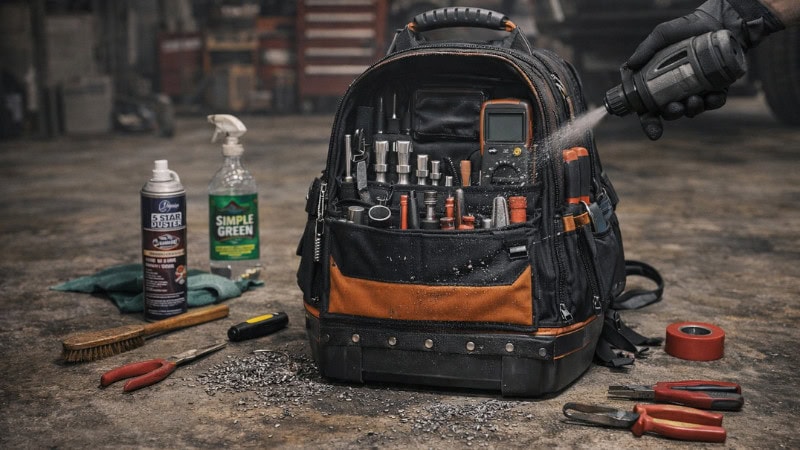
Most tool backpacks don’t “wear out,” they get killed by a few bad habits. First, don’t use the zipper like a clamp—if you have to force it shut, you’re overloading the bag and stressing the teeth every single day. Second, keep sharp tools in sleeves or slots. Loose picks, chisels, and cutters will chew up fabric fast. Third, clean it like a tool, not like luggage. Knock out metal shavings, wipe oil spots, and don’t let grime build up in the zipper track. A quick brush or a blast of compressed air keeps zippers running smoothly. Fourth, check the bottom corners and shoulder straps monthly—those are the failure points. If you catch a loose stitch early, a simple repair saves the bag. Treat it right, and it’ll last years, not months.
FAQ
Q-1 What is the best tool backpack for mechanics in 2025?
The best tool backpack in 2025 is the one that matches your daily loadout and survives shop abuse. For most mechanics, a structured backpack with a hard or molded base, strong zippers, and real tool organization wins the day. If you want a safe “all-around” pick, look at a stand-up style pack like the Klein Tradesman Pro. If you carry heavy loads every day, Veto Pro Pac is the long-life premium lane.
Q-2 Are tool backpacks worth it for auto mechanics?
Yes—if you’re carrying tools more than a few steps, they’re worth it. A backpack keeps both hands free, spreads weight across your shoulders, and makes it easier to move between bays, lots, or service calls. The real benefit is organization: instead of dumping a bag on the floor, you can set a stand-up pack next to the car and grab what you need fast. It’s not a toolbox replacement, but it’s an excellent daily kit.
Q-3 How much weight can a tool backpack hold?
Most quality tool backpacks can handle serious weight, but the real limit is comfort and zipper stress, not the fabric. A packed mechanic loadout can easily hit 25–40 lbs, and some techs push more. The better packs carry it without tearing straps or popping seams because they’re reinforced and structured. The smart move is to keep the backpack as your daily essentials and leave the “heavy iron” in a rolling box.
Q-4 Hard base vs soft base: which is better for a mechanic?
A hard base is usually better for mechanics. It keeps the pack upright in the bay, protects tools from impacts, and prevents the bottom from soaking up oil, water, or slush. Soft base packs can be lighter and sometimes fit tighter spaces, but they’re more likely to flop over and get dirty fast. If you work on concrete floors, around fluids, or outdoors, a hard or molded base pays for itself quickly.
Q-5 What size tool backpack do I need for automotive work?
Go smaller than you think. A mid-size backpack that holds your daily drivers—ratchets, common sockets, extensions, pliers, screwdrivers, picks, tape, light, gloves—is usually perfect. Oversized packs tempt you to carry your whole life, and that’s when it gets heavy, messy, and slow. If you’re a diesel or fleet tech, you may need bigger capacity, but most auto shop work is faster with a tighter kit.
Q-6 Can a tool backpack replace a toolbox?
Not fully, and it shouldn’t. A tool backpack is best as a daily-use kit for the tools you reach for constantly, plus basic diagnostic gear. A toolbox or rolling box still wins for big socket sets, specialty tools, power tools, and the stuff you don’t use every hour. Think of the backpack as your “go bag” that keeps you moving and efficient, while the toolbox is your home base for everything else.
Conclusion
A good tool backpack isn’t about looking “pro”—it’s about moving faster with less hassle. In a real US shop, the winners are the packs that stand up on their own, keep your daily tools organized, and don’t punish your shoulders when you load them with sockets and hand tools. If you want the safest all-around pick, go with a structured, stand-up style backpack like Klein Tradesman Pro. If you’re carrying heavy every day and you’re tired of replacing bags, Veto Pro Pac is the long-life option that actually earns the price. Keep your backpack as a tight daily loadout, leave the heavy extras in a rolling box, and you’ll work cleaner, quicker, and with less back-and-forth.
