
One of the most common questions drivers ask is: “Should I check my car oil when it’s hot or cold?” It’s a good question without an obvious answer. Advice varies widely, but checking at the wrong time can give a false reading. As a mechanic, I’ve seen engines overfilled, underfilled, or even damaged due to improper oil checks. This guide explains, in simple terms, when and how to check your oil so you always get an accurate reading.

Should You Check Oil Hot or Cold?
For most cars, checking oil on a cold engine gives the most accurate result. When the engine is cold, all oil drains back into the pan for a true dipstick reading. You can also check the oil after 5–10 minutes of waiting after shutting off the engine—never right after driving, as the oil hasn’t settled. Always consult your owner’s manual for specifics. Key takeaway: For accuracy, check oil cold at home, wait after driving if needed, and follow your manual’s guidance.

Why Engine Temperature Matters When Checking Oil
Engine oil expands as it gets hot and shrinks as it cools. While the engine is running, oil is pumped throughout, lubricating components such as the crankshaft, camshaft, and valves. This means less oil is left in the oil pan, which is where the dipstick measures it. If you check the oil right after shutting off the engine, you might see a low level even if there’s actually enough oil. Temperature also affects how thick or thin the oil is—hot oil runs quickly, cold oil moves slowly. That’s why timing matters. Knowing how oil moves inside the engine explains why you can get different readings depending on when you check. Main point: Oil temperature changes oil distribution and affects the dipstick reading, so check at the right time.
Checking Engine Oil When the Car Is Cold
Most mechanics recommend cold checks. “Cold” means the car’s been parked several hours, ideally overnight, allowing oil to settle in the pan and ensuring a consistent reading. Morning checks before driving are ideal. You’ll know the real oil level—not one affected by oil still on engine parts. The downside: you can’t always wait when traveling.
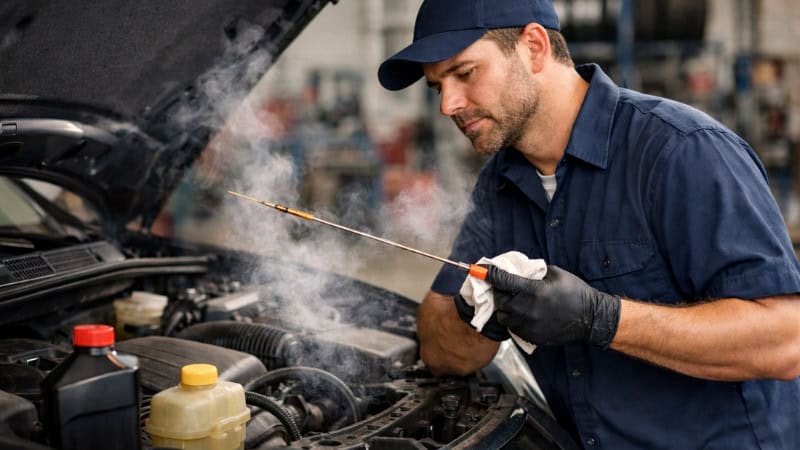
Checking Engine Oil When the Car Is Warm
You can check the oil when the engine is warm if you do it right. After driving, turn off the car and wait at least 5–10 minutes for the oil to settle. Checking too soon often shows a low level. Warm checks are helpful when traveling or during stops. Be consistent—use the same wait time each time for reliable results. Key takeaway: Wait a few minutes for more reliable warm checks, and be consistent in your method.
What Do US Mechanics Actually Recommend?
In the US, most mechanics recommend checking oil on a cold engine when possible for an accurate reading. Cold checks help prevent mistakes and overfilling. But sometimes traveling requires a warm check. Some cars—especially certain European or high-performance models—require warm checks as described in the owner’s manual. When unsure, cold checks are safest for most cars. Main point: For most cars, cold checks are best, but always follow your owner’s manual.
How to Check Your Car Oil Properly
- Park the car on level ground to avoid an inaccurate oil reading.
- Turn the engine off before checking the oil.
- If the engine is cold, you can check the oil right away.
- If the engine is warm, wait 5–10 minutes to let oil drain back into the pan.
- Open the hood and locate the oil dipstick (usually yellow or orange).
- Pull the dipstick out and wipe it clean with a rag or paper towel.
- Reinsert the dipstick fully, then pull it out again to read the level.
- Make sure the oil level is between the MIN and MAX marks.
- Check oil condition—healthy oil is smooth and amber to brown in color.
- Reinsert the dipstick securely and close the hood.
How Often Should You Check Your Engine Oil?
For most vehicles, checking engine oil once a month is a good habit. Older cars, high-mileage engines, or vehicles known to burn oil should be checked more often—sometimes weekly. If you drive long distances, tow loads, or sit in heavy traffic regularly, oil checks become even more important. Newer cars may go longer between oil changes, but that doesn’t mean they never lose oil. Even modern engines can consume oil over time. A quick dipstick check takes less than two minutes and can prevent serious engine damage. Mechanics always say: checking oil is cheaper than rebuilding engines.
Signs Your Oil Level Might Be Low
Sometimes the dipstick isn’t the first warning sign. A low oil level can cause engine ticking or knocking noises, especially at startup. You may notice the oil warning light flicker during turns or braking. A burning oil smell or blue exhaust smoke can also indicate oil consumption. In severe cases, engines may overheat or lose power. Don’t ignore these signs. If something feels off, check the oil immediately. Even a single time running low on oil can accelerate engine wear. Many engines fail not because oil wasn’t changed, but because oil wasn’t checked.
Hot vs Cold Oil Check
| Criteria | Cold Engine Check | Warm Engine Check |
|---|---|---|
| Engine condition | Engine off for several hours (ideally overnight) | Engine recently driven, then shut off |
| Oil position | All oil fully settled in the oil pan | Some oil still draining from engine |
| Accuracy | ⭐⭐⭐⭐⭐ Most accurate and consistent | ⭐⭐⭐ Acceptable if done correctly |
| Recommended wait time | No wait needed if fully cold | 5–10 minutes after shutdown |
| Best use case | Routine maintenance, monthly checks | Road trips, quick checks away from home |
| Risk of false reading | Very low | Medium if checked too soon |
| Mechanic preference | Preferred method in most US shops | Used only when cold check isn’t possible |
| Overfilling risk | Low | Higher if reading is misunderstood |
| Consistency | Very consistent results | Can vary depending on wait time |
| Owner’s manual compliance | Matches most manufacturer guidelines | Only recommended if manual specifies |
Common Oil-Checking Myths
One common myth is that hot oil always gives a more accurate reading—this is false unless the manufacturer specifies it. Another myth is that new cars don’t need oil checks; modern engines still consume oil. Some drivers believe darker oil means bad oil, but color alone isn’t always a problem—contamination and texture matter more. Finally, many think “a little extra oil won’t hurt.” Overfilling can cause foaming, oil pressure issues, and seal damage. Mechanics see this often. Accurate oil checks prevent all of these mistakes before they become expensive repairs.
FAQ
1. Should I check my car oil before or after driving?
You should check your car’s oil before driving, when the engine is cold. A cold engine allows all the oil to drain back into the oil pan, giving you the most accurate reading on the dipstick. Checking oil right after driving can show a lower level because oil is still circulating inside the engine. For daily or monthly checks at home, morning checks before starting the car are ideal and most consistent.
2. Can I check my engine oil right after turning the car off?
No, checking oil immediately after shutting off the engine is not recommended. When the engine is hot, oil is still spread throughout the engine and hasn’t settled in the oil pan yet. This can cause the dipstick to show a false low reading. If the engine is warm, wait at least 5 to 10 minutes before checking the oil so it can drain back properly.
3. Why does my oil level look higher when the engine is cold?
Oil looks higher on the dipstick when the engine is cold because all the oil has fully drained into the oil pan. When the engine is running, oil is pumped throughout the engine to lubricate moving parts. After the engine cools and sits, gravity pulls the oil back down. That’s why cold oil checks usually show a higher and more accurate level.
4. Is it bad to overfill engine oil?
Yes, overfilling engine oil can cause serious problems. Too much oil can create excess pressure inside the engine, leading to oil foaming, seal damage, and even oil leaks. In severe cases, it can reduce lubrication and cause engine wear. Many engines are damaged not from low oil, but from being overfilled after an incorrect oil check. Always keep oil within the marked range on the dipstick.
5. How long should I wait to check the oil after driving?
If you’ve been driving, wait 5 to 10 minutes after turning the engine off before checking the oil. This gives the oil enough time to drain back into the oil pan while it’s still warm. Waiting less than five minutes often results in a low reading. Waiting longer is fine, but consistency matters—use the same wait time each time for reliable readings.
6. Should I check the oil hot or cold in winter?
In winter, checking oil on a cold engine is still the best option. Cold temperatures don’t affect accuracy as long as the engine hasn’t been running. Oil will settle normally in the pan, even in freezing conditions. Avoid checking the oil right after starting the car in cold weather, since oil circulates quickly once the engine is running. Morning checks before starting are ideal in winter.
7. Do newer cars still need regular oil checks?
Yes, newer cars still need regular oil checks. Even modern engines can consume oil over time, especially turbocharged or high-mileage vehicles. Longer oil-change intervals don’t mean oil levels stay perfect. Many engines fail because drivers rely only on warning lights. Checking oil once a month helps catch slow oil loss early and prevents expensive engine damage down the road.
8. What does oil color tell me when checking the dipstick?
Oil color gives clues, but it’s not the whole story. Fresh oil is usually amber or light brown. Dark oil doesn’t always mean bad oil—it can simply mean it’s doing its job. However, gritty, milky, or burnt-smelling oil is a warning sign. Milky oil may indicate coolant contamination, while gritty oil suggests dirt or wear. Always consider texture and smell, not just color.
Final Verdict
For most drivers, the best and safest method is to check your engine oil when the engine is cold. A cold engine allows all the oil to fully drain back into the oil pan, giving you the most accurate and consistent reading on the dipstick. This is why most US mechanics recommend checking oil in the morning before driving. Checking oil on a warm engine is acceptable if needed, but only after waiting 5 to 10 minutes after shutting the engine off. Never check oil immediately after driving, as the reading can be misleading. When in doubt, always follow your owner’s manual, but for everyday maintenance, cold oil checks remain the gold standard.
