
Brand Background: Same Family, Different Purpose
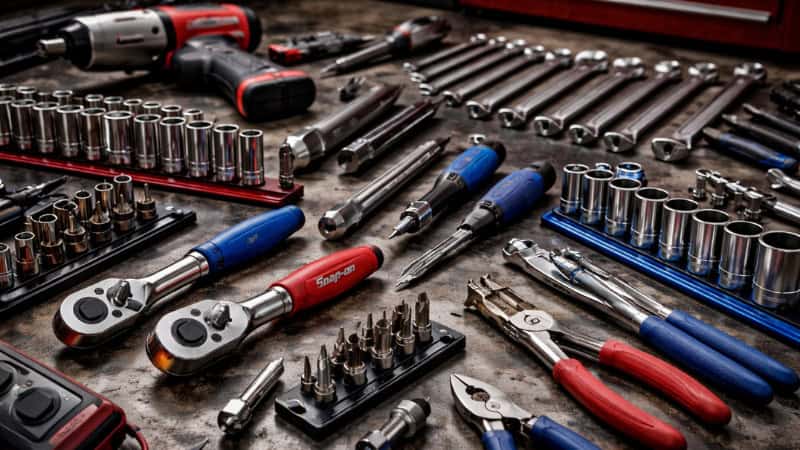
A lot of mechanics don’t realize this at first, but Snap-On and Blue-Point are not competitors—they’re part of the same family. Snap-On Incorporated owns Blue-Point, and that relationship explains most of the differences you see on the truck and on the invoice. Snap-On has always positioned itself as a premium, professional-grade brand aimed at full-time techs who depend on their tools to earn a living every single day. Blue-Point, on the other hand, was created to offer a more affordable option without completely stepping away from Snap-On’s quality standards.
In simple shop terms, Snap-On is built to be the flagship brand, while Blue-Point fills the gap for mechanics who want reliability without paying top dollar. This split lets Snap-On serve both seasoned pros and budget-conscious buyers under one roof.
Tool Quality & Build: Professional Grade vs Shop-Grade
This is where most mechanics really feel the difference between Snap-On and Blue-Point. Snap-On tools are engineered for constant, heavy use—day in, day out, no excuses. The steel quality, heat treatment, and machining tolerances are tighter, which shows up in how the tools feel in your hands. Ratchets have smoother action, sockets grip fasteners more precisely, and handles are designed to reduce fatigue during long jobs.
Blue-Point tools are solid, but they’re built more for general shop use rather than nonstop abuse. They’ll get the job done, but you may notice slightly thicker walls on sockets or less refined ratchet mechanisms. That doesn’t make them bad—just more practical than premium.
In real-world terms, Snap-On tools are designed to last decades under daily pressure, while Blue-Point focuses on dependable performance at a lower cost.
Manufacturing & Origin: USA vs Global Sourcing
For many U.S. mechanics, where a tool is made still matters—especially when you’re paying premium prices. Snap-On is well known for manufacturing a large portion of its hand tools in the United States, including ratchets, sockets, and wrenches. That domestic production helps maintain tight quality control and consistent performance, which is part of why Snap-On has such a strong reputation in professional shops.
Blue-Point, by contrast, relies much more on global sourcing. Many Blue-Point tools are manufactured in Taiwan and other overseas facilities that specialize in high-volume production. While this keeps prices lower, it also explains why the fit, finish, and feel can vary slightly compared to Snap-On.
From a practical standpoint, both brands meet professional standards, but Snap-On’s U.S.-based manufacturing gives it an edge in consistency and long-term durability.
Price Comparison: Is Snap-On Worth the Extra Cost?
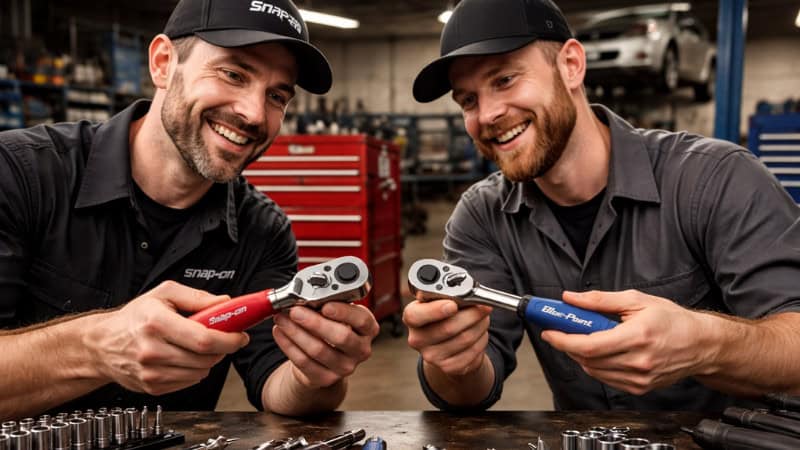
Price is usually the first thing mechanics notice when comparing Snap-On vs Blue-Point, and the gap can be significant. Snap-On tools are undeniably expensive, but that cost reflects premium materials, U.S.-based manufacturing, tighter tolerances, and long-term durability. For flat-rate techs, time is money, and tools that work flawlessly every day can pay for themselves by saving minutes on every job.
Blue-Point tools are far more affordable and often cost 30–50% less than comparable Snap-On pieces. That makes them attractive for apprentices, DIYers, or seasoned mechanics building secondary tool sets. You’re not paying for top-tier refinement—you’re paying for solid performance at a reasonable price.
In real shop terms, Snap-On is an investment in efficiency and longevity, while Blue-Point is about value and practicality without sacrificing reliability.
Warranty & Tool Truck Support
Warranty support is one of the biggest reasons mechanics stay loyal to the Snap-On ecosystem. Snap-On offers a lifetime warranty on most hand tools, and the real advantage is how that warranty is honored. When something breaks, your local Snap-On dealer usually replaces it right off the truck—no paperwork, no waiting, and no lost work time. That convenience matters when you’re on the clock.
Blue-Point also carries a lifetime warranty on many hand tools, but the process can feel a little less direct. Some replacements may need to be ordered instead of swapped instantly, depending on what the dealer has in stock. It’s still solid support, just not always as seamless as Snap-On.
For full-time professionals, Snap-On’s fast, no-hassle replacement system is a major advantage. Blue-Point remains dependable, but with slightly less priority service.
Tool Selection & Specialization
When it comes to range and specialization, Snap-On clearly has the deeper lineup. Snap-On offers an extensive selection of specialty tools designed for modern vehicles—think advanced ratchets, low-profile sockets, torque tools, diagnostic equipment, and manufacturer-specific service tools. These are the tools dealership and high-volume shop techs rely on when standard tools just won’t cut it.
Blue-Point focuses more on core hand tools and general shop equipment. You’ll find solid socket sets, wrenches, pliers, pry bars, and basic specialty tools, but the selection isn’t as deep or as vehicle-specific. That’s by design—Blue-Point is meant to cover everyday needs without the premium price tag.
In real-world terms, Snap-On is built for complex jobs and tight spaces on modern cars, while Blue-Point handles routine maintenance and general repairs efficiently.
Performance in Real Shop Conditions
This is where opinions in the shop get strong, because performance shows up after months and years of use—not on day one. Snap-On tools are built to take constant abuse. Ratchets maintain smooth action with low backdrag, even after years of daily use. Sockets grip fasteners tightly, reducing rounding, and handles stay comfortable during long, repetitive jobs.
Blue-Point tools perform well in normal shop conditions, but under heavy, nonstop use, small differences start to show. Ratchets may feel stiffer over time, and finishes can wear faster. That doesn’t mean they fail—it just means they’re not optimized for extreme daily workloads.
For technicians turning hours every day, Snap-On delivers consistent performance long-term. Blue-Point is reliable for routine work and mixed-use environments.
Who Should Buy Snap-On?
Snap-On tools make the most sense for mechanics who rely on their tools as their primary source of income. If you’re a full-time flat-rate technician, dealership mechanic, or high-volume shop pro, Snap-On’s durability, precision, and efficiency can directly impact how fast and comfortably you work. When a ratchet has smoother engagement or a socket fits just right in a tight engine bay, those small advantages add up over hundreds of jobs.
Snap-On is also ideal for technicians who plan to stay in the trade long-term. These tools are built to last decades, not just a few years, and the strong tool-truck support keeps downtime to a minimum. While the upfront cost is high, many experienced mechanics see Snap-On as an investment rather than an expense.
Who Should Buy Blue-Point?
Blue-Point is a smart choice for mechanics who want dependable tools without the premium price tag. Apprentices and entry-level techs often start with Blue-Point because it allows them to build a solid toolbox while keeping monthly tool-truck payments manageable. For many, it’s a practical way to get professional-grade tools without overextending financially early in their career.
Blue-Point also works well for DIYers and home-garage mechanics who want better quality than big-box store tools but don’t need top-tier refinement. Even experienced professionals use Blue-Point as backup tools or for jobs that don’t require their best gear. In real shop terms, Blue-Point delivers reliable performance for everyday work and mixed-use environments, making it a balanced option for value-focused buyers.
Snap-On vs Blue-Point: Side-by-Side Comparison
When you strip away brand loyalty and tool-truck hype, a direct comparison makes the differences between Snap-On and Blue-Point much clearer. Both are professional-level tools, but they’re designed for different types of users and workloads. Snap-On focuses on maximum performance, precision, and longevity for full-time technicians, while Blue-Point emphasizes solid reliability at a more affordable price point.
Below is a clear, mechanic-friendly comparison to help you decide which brand fits your needs.
- Price: Snap-On is premium priced; Blue-Point is typically 30–50% cheaper.
- Build quality: Snap-On offers tighter tolerances and finer finishes; Blue-Point is durable but less refined.
- Manufacturing: Snap-On has more USA-made tools; Blue-Point uses global sourcing.
- Warranty support: Snap-On usually provides instant truck replacement; Blue-Point may require ordering.
- Best use: Snap-On for daily, high-volume professional work; Blue-Point for apprentices, DIYers, and backup tools.
This comparison shows that neither brand is “better” across the board—it depends on how hard and how often you use your tools.
Frequently Asked Questions
FAQ 1. Is Blue-Point the same quality as Snap-On?
Blue-Point is good quality, but it’s not the same level as Snap-On. Snap-On tools are engineered for nonstop daily use with tighter tolerances, smoother mechanisms, and better long-term durability. Blue-Point tools are designed to be reliable and professional-grade, just without the premium refinement. In a busy shop, Snap-On tends to last longer under constant abuse, while Blue-Point holds up well for general and moderate use.
FAQ 2. Are Blue-Point tools made by Snap-On?
Yes, Blue-Point is owned by Snap-On Incorporated, but that doesn’t mean the tools are identical. Snap-On designs and manufactures many of its own tools, often in the USA. Blue-Point tools are typically sourced from global manufacturers, including Taiwan. Snap-On sets the standards, but Blue-Point is built to hit a lower price point while still meeting professional expectations.
FAQ 3. Why are Snap-On tools so much more expensive?
Snap-On tools cost more because of higher manufacturing standards, premium materials, tighter quality control, and strong dealer support. Many Snap-On hand tools are made in the USA, which increases costs but also consistency. You’re also paying for smooth operation, ergonomics, and instant tool-truck warranty service. For full-time mechanics, those advantages can save time and reduce fatigue, which offsets the higher upfront price.
FAQ 4. Do Blue-Point tools have a lifetime warranty?
Most Blue-Point hand tools do come with a lifetime warranty, similar to Snap-On. The difference is usually in how the warranty is handled. Snap-On dealers often replace broken tools immediately from the truck. With Blue-Point, replacements may sometimes need to be ordered. The warranty is solid, but the turnaround may not always be as fast as Snap-On’s.
FAQ 5. Which brand is better for apprentices?
For apprentices, Blue-Point is often the smarter starting point. It allows new mechanics to build a professional tool set without overwhelming debt from tool-truck payments. The tools are reliable, shop-ready, and backed by a warranty. Many apprentices start with Blue-Point and gradually upgrade to Snap-On for specific tools as their workload, income, and experience grow.
FAQ 6. Are Snap-On tools really worth it for daily work?
For full-time, flat-rate technicians, Snap-On tools are often worth the investment. The smoother ratchets, precise sockets, and better ergonomics can make daily work faster and more comfortable. Over years of use, Snap-On tools tend to hold up better under constant stress. If you’re turning hours every day, those small advantages can add up in productivity and reduced wear on your hands.
FAQ 7. Can you mix Snap-On and Blue-Point in the same toolbox?
Absolutely, and many mechanics do exactly that. It’s common to use Snap-On for critical, high-use tools like ratchets and specialty sockets, while using Blue-Point for less frequently used tools. This approach balances performance and cost. Mixing brands lets you invest where it matters most without overspending on tools that don’t see heavy daily use.
FAQ 8. Is Blue-Point better than big-box store tool brands?
In most cases, yes. Blue-Point generally offers better durability, fit, and warranty support than typical big-box store brands. While it may not match Snap-On’s premium feel, it’s still considered professional-grade. For DIYers and entry-level mechanics who want better quality than retail tools without paying Snap-On prices, Blue-Point is often a strong middle-ground option.
Conclusion
At the end of the day, the Snap-On vs Blue-Point debate isn’t about which brand is “better” overall—it’s about which one fits your work style, experience level, and budget. Snap-On stands out as a premium choice for full-time, high-volume mechanics who need maximum precision, durability, and fast warranty support. When tools are used continuously, smoother operation and long-term reliability can genuinely improve productivity and comfort.
Blue-Point, on the other hand, delivers solid, professional performance at a more realistic price point. It’s a practical option for apprentices, DIYers, and even experienced techs building backup or secondary tool sets. Many smart mechanics run both brands side by side, investing in Snap-On where it counts most and using Blue-Point everywhere else.
