
A spark plug may be tiny, but it’s crucial for engine performance. Its job is to ignite the air-fuel mix, so your car runs smoothly. If oil covers the spark plug, it can’t spark properly—leading to misfires, rough idling, and poor fuel efficiency. Oil here indicates a serious engine problem, such as a leaking gasket or worn piston rings. Ignoring it can mean major, costly damage.
Mechanics often find oily spark plugs during checkups or when a car won’t start. Fixing the issue early saves money on repairs.
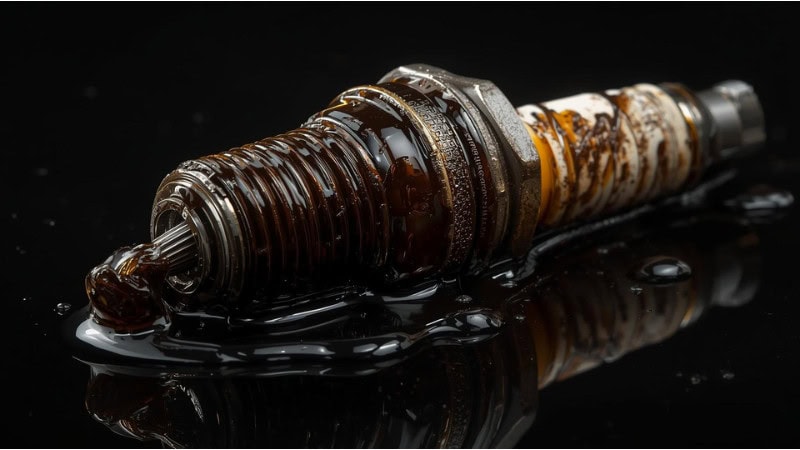
Signs Your Spark Plug is Covered in Oil
Spotting the symptoms early can help you avoid bigger headaches later. Look out for these common warning signs:
- Engine Misfires or Rough Idling: The engine may stutter, hesitate, or feel shaky—especially while idling (when the engine is running, but the car is stopped) or at low speeds.
- Difficulty Starting: Oil on the spark plug can make it tough for your car to start, since the spark can’t ignite the fuel properly.
- Worse Fuel Efficiency: If the spark plug isn’t firing correctly, the engine burns more fuel and your gas mileage goes down.
- Visual Clues: If you take out the spark plug and see black, shiny, oily gunk (thick, sticky substance) on it, even a little oil can cause trouble, so don’t ignore these symptoms.
Common Causes of Spark Plug Oil Contamination
Oil on your spark plugs usually signals a larger engine issue. A worn valve cover gasket (which seals oil inside the engine) often cracks, allowing oil to leak into spark plug wells (where spark plugs are installed). Worn piston rings may fail to seal, letting oil coat the plugs. Faulty valve seals (which keep oil from the cylinders) can let oil drip onto the plugs. In severe cases, a blown head gasket (the seal between the engine block and the cylinder head) can mix oil and fuel or allow oil to reach the plugs. Overfilling engine oil can also force excess oil into unwanted places, including the spark plugs.
How to Diagnose the Problem
To figure out why there’s oil on your spark plugs, you’ll need to do some detective work. First, remove the spark plugs and inspect them. If they’re oily, check the valve cover gasket (the seal on top of the engine) and spark plug wells (where the plugs are installed) for signs of leaks. You can also run a compression test—a test that measures pressure in the engine’s cylinders. If your engine has low compression, the piston rings (the rings around the pistons that keep oil out) might be worn, allowing oil to enter the combustion chamber. Look at the valve seals, too; if they’re cracked or brittle, oil can seep through. Watch your engine’s oil consumption—if you’re adding oil more often than usual, it could be getting into the spark plugs. If you clean or replace the plugs and they get oily again soon, there’s likely a leak or engine problem that needs fixing.
Step-by-Step Fixes
How you fix oily spark plugs depends on what’s causing the problem. Start by removing and inspecting the spark plugs. If they’re really coated in oil, it’s best to replace them. If there’s only a little oil, you might be able to clean them with a wire brush and spark plug cleaner.
Then, fix the part that’s letting oil in. If the valve cover gasket (the top seal on the engine) is leaking, you’ll need to replace it so oil stops dripping into the spark plug wells (the holes where the plugs sit). If the piston rings (metal rings on each piston) are worn out, the repair is more complex and usually best left to a professional mechanic. Valve seals (parts that keep oil from leaking into the cylinders) that are letting oil onto the plugs should also be replaced.
Check that your engine oil is not overfilled, as this can push oil into cylinders. After repairs, install clean or new spark plugs, start the engine, and monitor for recurring oil contamination.
Preventive Measures
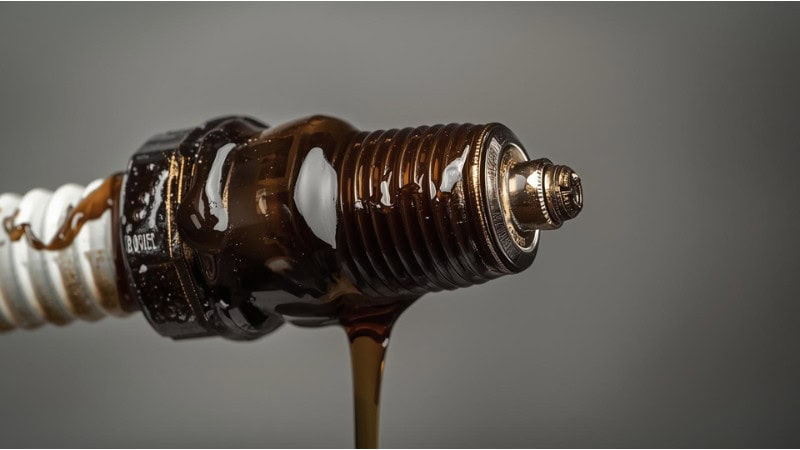
It’s much easier to prevent oil from getting on your spark plugs than it is to fix the damage later. Regular maintenance is the key. Check your valve cover gaskets and valve seals often. Replace them before they get too old or start to crack. Never overfill your engine oil. Extra oil can build up pressure and end up where it shouldn’t. Get into the habit of checking your spark plugs during oil changes. This way, you can catch problems early. Changing your oil on schedule also stops sludge from building up and causing leaks. By keeping up with these simple checks, you’ll help your spark plugs and engine last longer and avoid expensive repairs.
Potential Risks of Ignoring Oil-Covered Spark Plugs
If you ignore oil on your spark plugs, you risk serious engine trouble. You’ll soon notice misfires (engine skips), rough idling (shaky when stopped), and uneven performance—all of which strain other parts. Gas mileage drops because the engine burns fuel inefficiently. Persisting with oily plugs may damage the catalytic converter (an expensive emissions device) and cause lasting engine harm. Address the issue early to keep your car running smoothly and avoid costly repairs.
FAQs
Q1. Why does oil get on my spark plugs?
Usually, oil gets on spark plugs due to engine leaks or worn internal parts, such as valve cover gaskets, piston rings, valve seals, or a blown head gasket. Too much oil can also contribute, allowing it to reach the plug wells or engine. Early detection helps avoid misfires and maintain fuel economy. Regular inspection and maintenance keep oil away from spark plugs.
Q2. Can I drive with an oil-covered spark plug?
You may drive a short distance with an oil-covered spark plug, but this is not recommended. Oil on the plug disrupts engine performance, causing misfires, rough idling, and reduced fuel efficiency. Prolonged driving can damage the catalytic converter and other components. In emergencies, limited driving may be possible, but promptly fix the oil leak before driving further.
Q3. How often should I check my spark plugs for oil?
Check your spark plugs every 30,000 miles or during tune-ups. If your engine misfires, idles roughly, or consumes more oil, inspect the plugs right away. Early detection helps prevent engine damage. Regular checks maintain smooth engine performance.
Q4. Can cleaning the spark plug solve the issue permanently?
Cleaning an oily spark plug may temporarily improve performance, but it does not resolve the underlying issue. To keep plugs clean, fix the oil source—such as a leaking gasket, valve seal, or piston ring. Minor buildup can be cleaned, but heavily coated plugs should be replaced. Finding and repairing the cause will prevent further trouble.
Q5. How much does it cost to fix oil leaking onto spark plugs?
The cost to fix oil leaks onto spark plugs depends on what’s wrong. Swapping out a valve cover gasket usually runs $100–$300 (parts and labor). Replacing valve seals or piston rings is a bigger job, often costing $500–$1,500 or more. Cleaning or changing spark plugs is cheap—about $10–$20 each. If you ignore the problem, you could end up paying much more for engine or catalytic converter repairs. Fixing things early saves money. For an exact estimate, ask a trusted mechanic about your specific car.
Q6. Will my car start if the spark plugs are covered in oil?
If there is little oil, your car may start but may run rough or misfire. Heavily coated plugs may prevent starting altogether. Running the engine like this causes further harm over time. Replace or clean the plugs, and fix the oil leak for reliable operation.
Q7. Can overfilled engine oil cause spark plug oil contamination?
Overfilling your engine can create pressure and force oil into the spark plug wells or cylinders. This results in oily spark plugs, misfires, and poor engine performance. Keep oil within the recommended dipstick range and change it regularly to prevent such issues.
Q8. How can I prevent oil from getting on spark plugs in the future?
Stay on top of maintenance and address issues early. Replace worn valve cover gaskets and seals to prevent leaks. Check spark plugs regularly, maintain proper oil levels, and avoid overfilling. Promptly fix small leaks. These habits keep spark plugs clean and your engine healthy.
Conclusion
Oil on your spark plugs signals an engine problem demanding prompt action. Usually caused by leaky gaskets, worn piston rings, old valve seals, or excess oil, this issue—if ignored—can lead to misfires, poor gas mileage, and expensive repairs. The solution is to find and repair the source, install new plugs, and maintain regular checks. Attentive maintenance is the best way to keep your engine running smoothly.
