
Engine assembly lube is an essential product often overlooked—until that nerve-wracking first cold start on a newly built engine. In 2026, engines are built with tighter tolerances, run at higher RPMs, and use specialized lubricants to prevent premature wear. Regular engine oil isn’t enough during those critical first moments before oil pressure develops. Assembly lube safeguards bearings, camshafts, lifters, wrist pins, rocker arms, and valves during startup and the break-in period. Without it, metal surfaces can score, seize, or suffer catastrophic failure. That’s why professional mechanics and engine builders use assembly lube: it minimizes friction when it matters most, helping ensure longer engine life with fewer rebuild headaches.
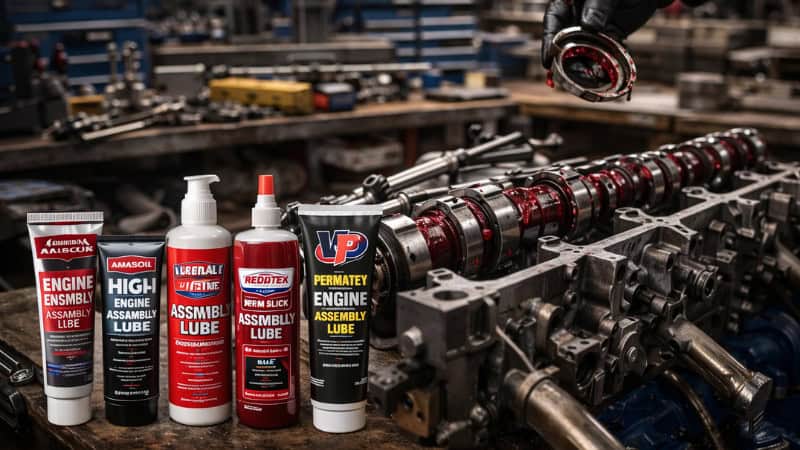
How We Picked These Engine Assembly Lubes
We selected these assembly lubes for real-world performance, mechanic input, and proven results. Our list features products trusted by professionals and DIYers for assembly and break-in protection. We prioritized adherence, anti-wear additives, compatibility, ease of use, and clean dissolving once the engine runs. Lubes with excess residue or clogging risk were excluded. Every pick is vetted for 2026 engine builds, whether a daily driver or a race machine.
Top Engine Assembly Lube
Detailed Reviews: Top 5 Best Engine Assembly Lubes
1. AMSOIL Engine Assembly Lube
AMSOIL Engine Assembly Lube is a favorite among mechanics for its protection, strong adhesion, and clean dissolving performance. It’s formulated to stick to metal surfaces for extended periods, keeping cam lobes, bearings, and lifters coated until oil pressure builds. Its robust anti-wear additives provide extra protection under heavy loads and dissolve completely in engine oil, eliminating the risk of clogging. Thanks to its reliability, it’s ideal for daily drivers, rebuilt engines, and performance builds needing consistent startup protection.
2. Lucas High Performance Assembly Lube
Lucas High Performance Assembly Lube is a go-to for street engine builders and those working with flat-tappet camshafts. Its semi-synthetic blend contains zinc and molybdenum for anti-wear protection where metal contact is most intense during the first revolutions. Builders appreciate how it clings to engine parts, even if the engine sits unused for weeks. Its user-friendly application and compatibility with all types of oil make it a dependable choice for a variety of builds, from small-block Chevys to high-performance V8s.
3. Red Line Synthetic Assembly Lube
Red Line’s synthetic assembly lube is purpose-built for high-load (high-pressure and force), high-stress engine builds where regular paste greases often fall short. Its liquid formula ensures it coats even the hardest-to-reach surfaces, while its strong film strength (ability to maintain a protective barrier) helps prevent dry starts (starting the engine without enough lubrication) in demanding performance engines. The lube also resists wiping away during assembly, which is especially helpful when working with intricate valvetrain parts (components that control the opening and closing of engine valves) or multi-valve setups (engines with more than two valves per cylinder). If your build is likely to see extreme pressure and high RPMs, this lube delivers the robust protection and confidence you need.
4. Permatex Ultra Slick Assembly Lube
Permatex Ultra Slick Assembly Lube is a budget-friendly, reliable option that meets OEM (original equipment manufacturer) specifications and works well for most general engine rebuilds. It sticks securely to metal surfaces, protecting bearings (supporting rotating engine parts), camshafts (controlling valve timing), lifters, and valves during the first few crucial startups. While it may not have the heavy-duty credentials of some specialty lubes, it still offers strong protection for standard rebuilds and daily-driven vehicles. Its easy availability and affordable price make it a favorite among DIY builders who want solid protection without overspending.
5. VP Engine Assembly Lube
VP Engine Assembly Lube offers excellent protection with a tacky paste formula (thick and sticky consistency) that stays put inside engines during long builds or storage. Packed with effective anti-wear additives (ingredients that reduce friction and wear), it helps prevent scuffing (surface wear), galling (metal transfer due to friction), and friction when you first start the engine. Its strong corrosion resistance (ability to prevent rust and chemical damage) makes it especially useful for engines that might sit for a while before being fired up, like long-term projects or crate motors (engines sold fully assembled, ready for installation). Once the engine is running, it blends easily with both synthetic and conventional oils. Thanks to this versatility, it’s a reliable choice for daily drivers and high-performance applications alike.
Why You Need Engine Assembly Lube
- Prevents dry start metal-to-metal contact when oil pressure is low.
- Protects critical components, including cams, bearings, lifters, and wrist pins.
- Reduces wear and galling during break-in.
- Adds corrosion protection if the engine sits before startup.
- Ensures longer engine life and fewer rebuild issues.
How to Apply Engine Assembly Lube Correctly
Applying assembly lube is straightforward but needs attention to detail. Use a thin, even coat on bearings, cam lobes, lifters, valve stems, and any other metal-on-metal surfaces that will move at first start. Too much lube can drain off and make a mess, while too little won’t protect. Use a brush or applicator for paste products and a spray or bottle for liquid lubes in hard-to-reach spots. After applying, rotate the engine by hand to spread the film before the first startup. Proper application ensures protection where it matters most — during that initial oil pressure buildup.
you may like : Engine Parts Name and Their Functions
Assembly Lube vs Engine Oil
Some builders ask if engine oil alone is enough. It’s not — oil drains off surfaces quickly before pressure builds, leaving vital parts unprotected. Assembly lube stays where you put it and holds until the engine is running under oil pressure. Pro mechanics often use both: assembly lube on critical surfaces at assembly and fresh oil for general lubrication. This combo provides the best protection against startup wear and extends engine life. Skipping assembly lube increases the risk of scoring and premature wear, especially in performance or high-stress engines.
you may like : How Often Should You Change Your Engine Air Filter?
Buyer’s Guide
Pick the assembly lube based on your engine’s purpose. Daily drivers (everyday cars) can use dependable, budget-friendly lubes, while performance and racing builds benefit from high film strength (ability to remain protective under stress) and heavy-duty additives. Flat-tappet cams (a type of camshaft with flat followers) require zinc-rich formulas, and engines that may sit for a while require products with strong adhesion (ability to stay in place) and corrosion resistance (preventing rust). Also consider application ease — paste lubes give control, while liquid styles reach tight spots. Matching lube properties to project needs ensures your build gets the protection it deserves.
FAQ
FAQ 1: Do modern engines really need assembly lube?
Yes, modern engines absolutely need assembly lube—arguably more than older ones. Today’s engines have tighter tolerances, lighter components, and higher valvetrain loads. During the first startup, oil pressure takes a few seconds to build, and that’s when most wear happens. Assembly lube stays in place and protects critical contact points like bearings, cams, and lifters during those seconds. Skipping it risks scuffing and premature wear, even on brand-new builds.
FAQ 2: Can I use regular engine oil instead of assembly lube?
Engine oil alone is not a substitute for assembly lube. Oil is designed to circulate under pressure, not cling to parts during dry starts. It drains off metal surfaces quickly, especially if the engine sits after assembly. Assembly lube is formulated to stick to components and maintain a protective film until oil pressure builds. Many professional mechanics use both assembly lube on critical wear points and oil on pistons and cylinder walls.
FAQ 3: Where exactly should assembly lube be applied?
Assembly lube should be applied to all metal-to-metal contact points that move during initial startup. This includes main bearings (support crankshaft rotation), rod bearings (connect rods to crankshaft), cam lobes (parts moving valves), lifters (parts transferring cam motion), distributor gears (gear that turns distributor), rocker arms (levers moving valves), valve tips (ends of valve stems), and timing components (parts synchronizing engine parts). It’s not typically used on cylinder walls (the inside surfaces of cylinders), which are better lubricated with clean engine oil. Apply a thin, even layer—enough to coat the surface without excess buildup that could drip or clog passages (channels for oil).
FAQ 4: Can too much assembly lube cause problems?
Yes, overusing assembly lube can cause issues. Excessive amounts may temporarily restrict oil flow, especially in tight oil passages (narrow channels where oil circulates) or small engines. While quality assembly lubes are designed to dissolve into engine oil, using more than necessary doesn’t add protection. The goal is coverage, not thickness. A thin, even layer is all that’s needed. Professional builders focus on proper placement rather than heavy application to avoid startup complications.
FAQ 5: Will assembly lube clog oil filters or galleries?
High-quality assembly lubes—special oils used during engine assembly to prevent metal parts from sticking or wearing out before regular oil circulation—are formulated to dissolve into engine oil at operating temperature. When used correctly, they will not clog oil filters (which remove contaminants from oil) or oil galleries (passages that allow oil flow). Problems typically occur only with cheap, outdated products or excessive overapplication. Trusted brands are tested to ensure safe oil flow after startup. This is why mechanics avoid grease-only products and stick with modern assembly lubes designed for today’s engines.
FAQ 6: Is assembly lube necessary for crate engines?
Most crate engines come pre-lubed, but that doesn’t mean additional assembly lube is a bad idea. Some internal parts may not be fully coated, especially if the engine has been sitting in storage. Adding assembly lube to exposed components, such as valve train parts, provides an extra layer of protection. Many professional installers still apply assembly lube during inspection or minor setup work to ensure safe initial startup and break-in.
FAQ 7: How long can an engine sit with assembly lube applied?
A properly applied assembly lube can protect engine components for weeks or even months, depending on the product. Paste-style lubes with strong tackiness are best for long build times or storage. They resist gravity and moisture better than oil alone. However, if an engine sits for an extended period in a humid environment, rotating it occasionally by hand is a good practice to maintain even lubrication coverage.
FAQ 8: Is assembly lube different for performance vs daily-driver engines?
Yes, the needs can differ. Daily-driver engines usually do well with general-purpose assembly lubes that dissolve quickly and protect during normal startup. Performance and racing engines often require higher film strength and stronger anti-wear additives due to higher loads and RPMs. Flat-tappet cam engines, in particular, need zinc-rich lubes. Choosing the right assembly lube should always match the engine’s intended use and stress level.
Final Verdict
For 2026, AMSOIL Engine Assembly Lube leads for overall balance of protection and reliability. Lucas High Performance reigns for street and flat-tappet engines; Red Line excels in high-load applications; Permatex impresses with value; and VP Assembly Lube offers excellent general protection and corrosion resistance. Choosing the right assembly lube ensures a smoother startup and longer engine life — something every mechanic and builder can appreciate this year.