
A torque wrench applies a specific force to a nut or bolt. It prevents over- or under-tightening. Correct torque on brakes, wheels, spark plugs, or engine parts protects components and prevents damage.
Most American mechanics use torque wrenches because modern car parts have tighter tolerances than those of older vehicles. Over-tightening a lug nut can stretch a stud or warp a rotor. Too little, and you risk wheel wobble or loss on the highway.
In modern auto repair, “feel tight enough” isn’t good enough—manufacturers provide precise torque values for critical fasteners. Using a torque wrench ensures repairs follow these specs and are done right.
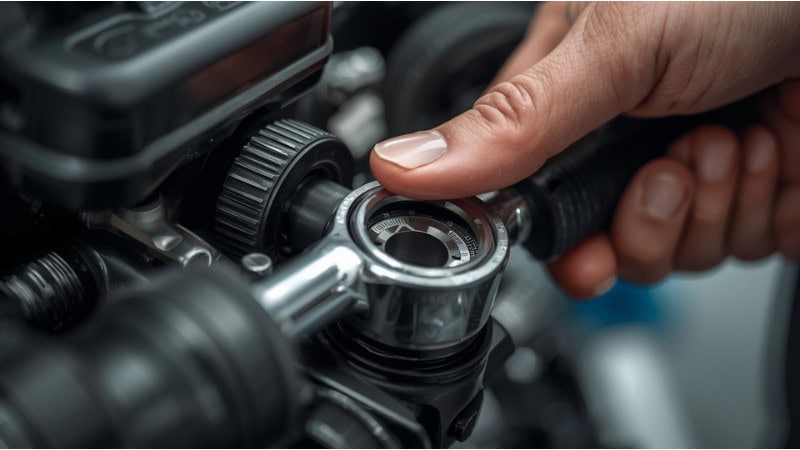
Why Torque Matters in Everyday Automotive Jobs
Torque keeps your vehicle together as designed. Tightening a bolt stretches it for clamping force, and the right balance prevents weak or loose joints.
For common US garage jobs—wheels, drain plugs, spark plugs, suspension parts—improper tightening can cause issues like warped rotors, snapped studs, rattles, or leaks. Proper torque prevents these problems.
With lighter metals and tighter tolerances, guessing torque by hand is unreliable. OEM specs exist because every bolt requires a precise value—accurate torque saves money, prevents comebacks, and keeps you safe.
Torque also matters because the car expands and contracts with changes in temperature. A bolt torqued correctly handles those changes without loosening. That’s why when mechanics say “tighten to spec,” they mean don’t improvise—follow the number.
Types of Torque Wrenches (and Which One to Use)
Torque wrenches come in different styles, and understanding how each works makes choosing easier. Most American garages use three main types: click, beam, and digital. A torque wrench is a tool that lets you set and apply a specific twisting force to a fastener.
The click-type torque wrench is the most common for U.S. auto work. In a click-type wrench, you set the desired torque on a scale; the wrench makes a distinct “click” when you reach that force, signaling to stop. Most mechanics keep 3/8-inch and 1/2-inch click wrenches for nearly every car job—from lug nuts to valve covers.
A beam-type wrench is older technology, but it stays accurate if used correctly. Beam wrenches have a long arm that bends under load, with a pointer lining up with a scale to show the torque applied. Unlike click-type, they don’t make a sound; they are harder to read in dim areas. Beam wrenches work well for light jobs or when you want a simple tool that rarely needs recalibration.
Digital torque wrenches use electronic readouts, buzzers, and lights to signal when the correct torque is reached. They are very accurate, making them suitable for engine work or small fasteners. These models have a digital display and require batteries that can fail, but the display is clear and easy to read.
Most U.S. mechanics recommend a click-type wrench for beginners or those working mainly on cars. It offers the best blend of value, accuracy, and user-friendliness.
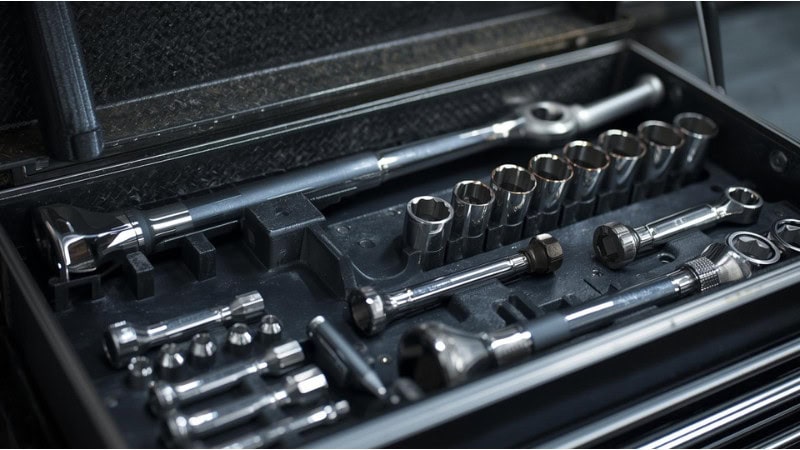
How to Read Torque Specifications
Torque specs are manufacturer guidelines based on material strength, bolt size, and role. Interpreting these values is as important as using the torque wrench. In the U.S., car torque values are usually in foot-pounds (ft-lb) or inch-pounds (in-lb). Mixing them up can strip threads or break bolts.
You’ll find most torque specs in a service manual, repair database, or under the hood. These tell you the exact force for lug nuts, spark plugs, and drain plugs. For example, 90 ft-lb for lug nuts means performance changes above or below that number. Too tight stretches a stud; too loose can let a wheel come off.
Each bolt’s torque is based on size and use, so guessing by feel isn’t dependable. Modern cars use lightweight metals, which don’t respond well to “good and tight.” Correct torque ensures proper clamping force without damage.
Before using your torque wrench, always confirm whether the number you’re following is listed in foot-pounds (ft-lb) or inch-pounds (in-lb). Inch-pounds are a smaller unit, typically used for delicate work like intake manifolds and internal engine components. Foot-pounds are used for larger jobs, such as suspension and wheels. Mixing these units—by setting a wrench on the wrong one—can easily damage parts.
Step-By-Step – How to Use a Torque Wrench Correctly
Using a torque wrench isn’t complicated, but doing it right sets professional work apart from guesswork. Ensure the fastener threads are smooth and the fastener seats properly. Dirt, rust, or cross-threading throws off your final torque, even if the wrench is set perfectly.
Set your torque wrench to the exact torque needed. On most click-type wrenches, unlock the handle, rotate to your target, and lock it. That lock prevents settings from changing. Once set, place the socket squarely, apply slow, steady pressure, and avoid jerking. A smooth pull ensures accuracy.
When you feel or hear the click, stop. Don’t add more force—extra torque defeats the tool’s purpose. If there is no click, continue with small, controlled movements until it does.
A torque wrench only measures force while tightening—not loosening. Never use it to loosen bolts. After use, always turn it to its lowest setting before storage. This practice preserves the internal spring and accuracy.
Using a Torque Wrench on Car Wheels (Practical Example)
Wheels are a clear example of why torque matters. When remounting a wheel, tighten each lug nut evenly to the exact spec required by your vehicle. This is usually 80 to 100 ft-lb for most U.S. vehicles, but always check your manual.
Thread lug nuts by hand until seated. This ensures the wheel is flush without cross-threading. Once flat, snug them lightly with a regular wrench, then use your torque wrench in the specified pattern, usually star or crisscross, to pull the wheel evenly and avoid warping or pinching.
Apply steady pressure until your wrench clicks for each lug. Move to the opposite lug and repeat. When finished, go around once more to confirm all are even. If one lug clicks too quickly, the second pass will balance the tension.
Many U.S. mechanics suggest re-torquing wheels after 50 to 100 miles, especially on aluminum rims. Heat, vibration, and settling may loosen fasteners. A quick check helps prevent vibration or rare wheel loss. This simple step separates smart maintenance from shortcuts.
Common Torque Wrench Mistakes to Avoid
Although a torque wrench prevents over- and under-tightening, it’s still easy to misuse. A common mistake is using it as a breaker bar. Torque wrenches are for final tightening only. Loosening stuck bolts can damage the tool and affect calibration.
Another mistake is pulling past the click. Once it clicks, stop. Extra force can stretch threads or crush surfaces. Clicking means stop—each time.
Problems also arise when people ignore measurement units. Mixing inch-pounds and foot-pounds leads to disaster, especially for small bolts. Torquing to the wrong value can snap a bolt before the wrench clicks, costing time and money.
Calibration means checking and adjusting your torque wrench for accuracy. Neglecting calibration can cause problems. Dropping a wrench or storing it at high settings reduces accuracy. Most mechanics reset to the lowest setting before storage and avoid rough handling.
Keep Dirt, rust, or oil changes from changing friction and affecting final torque. A torque wrench works only if bolts and surfaces are properly prepared.
Maintenance & Calibration Tips
A torque wrench is a precision instrument, and if you want it to stay accurate, you need to treat it like one. The biggest habit to develop is always returning the wrench to its lowest setting after you’re done using it. Leaving it loaded at a high torque value puts stress on the internal spring, and over time, that tension throws off accuracy. Dialing it back takes just a few seconds and can add years of reliable service.
Calibration matters, too. Even the best torque wrenches drift out of spec after months of use, especially in a busy shop environment. Most mechanics get their wrenches calibrated about once a year or after a significant drop or impact. If you notice inconsistent clicks or tightening results feel off, that’s your cue to have the wrench tested.
Storage is another overlooked part of maintenance. Torque wrenches don’t belong tossed in the bottom of a toolbox or rolling around a truck bed. Keep it in its case, away from moisture and extreme temperatures. Cold can stiffen grease inside the mechanism, and heat can weaken spring tension. Both will make your readings unreliable.
Cleaning also helps more than people think. Wipe the tool down after use, clean the grip, and keep the drive end lightly lubricated to prevent corrosion. Just don’t soak the wrench in oil or solvents, because that can seep inside and affect the mechanism.
Handled properly, a torque wrench will give you years of dead-on readings. Ignore the maintenance, and you’ll be back to guessing—and guessing risks damage, safety problems, and wasted money.
Safety Tips Every Mechanic Follows
Safety goes hand in hand with using a torque wrench correctly. Before you even set a torque number, make sure the fastener and the threads you’re working with are clean and in good condition. Rust, dirt, or damaged threads change the friction level, and that throws off your final reading. If a bolt feels crunchy or gritty going in, stop and clean it—forcing it through can ruin the threads and make accurate torque impossible.
Hand position matters too. Grip the torque wrench by its handle only. The handle area is calibrated to measure force correctly; grabbing it up the shaft or leaning on the head changes the leverage and skews the reading. Using steady, controlled motion is not just about convenience—it’s part of the measurement process. Jerky movement leads to false clicks, which can indicate loose or overstressed bolts.
Another rule American mechanics follow is never to use a torque wrench as a multipurpose wrench. It isn’t built for prying, striking, or loosening bolts. Doing that can damage the internal parts, and you might not even notice until the wrench starts giving off inaccurate readings.
Also, know the bolt grade and material you’re working with. For example, aluminum parts need different attention than steel because they crush more easily and don’t tolerate overtightening. Finally, protect yourself. Wear gloves and safety glasses. A snapped bolt under tension can whip back or send shards flying, and nobody wants metal in their hands or face.
How to Choose the Right Torque Wrench
Picking the right torque wrench depends on the type of work you plan to do, because not every wrench fits every job. The most common wrench sizes used in U.S. automotive work are 1/4-inch, 3/8-inch, and 1/2-inch drive. Each size covers a different torque range and job category. For example, a 1/4-inch drive wrench is designed for low-torque jobs—such as valve cover bolts, throttle body fasteners, and spark plugs. These tasks usually fall into inch-pound territory where precision matters a lot.
A 3/8-inch drive wrench is the go-to size for general automotive work. It covers mid-level torque jobs across the engine bay and chassis, giving you flexibility without being bulky or underpowered. Brake calipers, intake bolts, and transmission pan fasteners commonly fall into this range. If someone asked most U.S. mechanics which wrench to buy first, a 3/8-inch click-type wrench would be the recommendation almost every time.
The 1/2-inch drive wrench comes next. This one handles heavier jobs, such as lug nuts, suspension bolts, and engine mounts. It’s designed for higher torque ranges, and the longer handle helps you apply that strength without straining. If you work on wheels or undercarriage components, having a solid 1/2-inch wrench is just about mandatory.
When it comes to brand choices in the U.S., there’s everything from professional-grade Snap-On and Mac Tools to more budget-friendly options like Craftsman, Tekton, and GearWrench. The right answer depends on how often you’re using the wrench. For daily auto shop work, paying for quality is worth it. If you’re wrenching at home occasionally, mid-range tools get the job done without breaking the bank.
The key is matching the wrench to your torque needs, not just buying the biggest or fanciest tool on the shelf. A wrench that fits your work style, torque range, and comfort level will make the job safer, quicker, and far more accurate.
FAQ
Q1: Can I use a torque wrench to loosen bolts?
A torque wrench should never be used to loosen bolts because it’s built for precision tightening, not heavy twisting force. When loosening a stuck bolt, you often need sudden pressure or a jerking motion. That shock can bend the internal spring or damage the click mechanism, throwing off calibration. Even if you don’t break the wrench instantly, accuracy drops without you noticing. Then, the wrench may click early or late during tightening, putting parts at risk. If a bolt is frozen, use heat, a breaker bar, penetrating oil, or an impact gun—anything except your torque wrench. Protect the tool’s accuracy.
Q2: Should I lubricate threads before torquing?
Lubricating threads alters how torque is converted into clamping force. When a thread is dry, friction absorbs part of the torque. When lubricated, there’s less friction, so the fastener stretches more for the same number. That means the bolt may reach perfect torque on the wrench, but be overtightened in reality. Most U.S. automotive torque specs are written for dry threads unless stated otherwise. Exceptions exist—like spark plugs using anti-seize, or head bolts requiring oil—but those are always listed in manuals. If no instruction is listed, torque dry. Lubrication is helpful only when factory specifications demand it.
Q3: Why is my torque wrench not clicking?
If your torque wrench isn’t clicking, first check that the handle is properly set and locked. If the wrench is unlocked, vibration or handling may have shifted the setting. Also, remember the click is subtle—more of a feel than a loud snap—so beginners sometimes miss it. Pull slowly and steadily from the handle end; gripping more changes the leverage and prevents a proper click. If the wrench was dropped, stored at full tension, or used as a breaker bar, calibration might be off, leading to weak or no clicks. When accuracy feels questionable, have it professionally calibrated or serviced.
Q4: Is a digital torque wrench worth it?
Digital torque wrenches offer vibration alerts, audible tones, and bright screens, making them excellent for precise engine work or tight spaces. They reduce reading errors and give mechanics who dislike small-scale markings greater confidence, higher than click wrenches—and they require batteries. In cold garages, electronics can lag. For daily shop use or high-performance builds, digital pays off because accuracy is critical. But for home mechanics tightening wheels, suspension parts, and spark plugs, a click-type wrench performs just as well at a fraction of the price. The value depends on your workload.
Q5: Do torque wrenches wear out over time?
Yes, torque wrenches wear naturally because their internal spring relaxes with use and age. Storing the tool at high settings, dropping it, or using it to break loose bolts speeds up the process. As calibration drifts, the wrench may click too early or too late, giving a false reading that can damage fasteners or leave hardware under-tightened. Most mechanics calibrate wrenches yearly or after heavy use to keep readings honest. Storing the wrench in its case, backing it down to the lowest setting, and keeping it clean helps extend its lifespan. With care, a good wrench lasts for years.
Q6: How often should a torque wrench be calibrated?
Most U.S. mechanics calibrate their torque wrench about once per year, or roughly every 5,000 tightening cycles. Professional shops may calibrate more frequently because constant daily use can cause spring fatigue to set in quickly. If the wrench has been dropped, exposed to extreme heat or cold, or stored under tension, it should be checked sooner. Signs like inconsistent clicks, strange resistance, or uneven torque results also mean calibration may be drifting. Precise torque requires a precise tool, and calibration ensures the wrench continues to deliver accurate readings. Regular testing keeps your wrench trustworthy and prevents expensive repair mistakes. Should I buy first?
Q7: What size torque wrench should I buy first?
For most American car work, a 3/8-inch-drive click-style wrench is the best starter tool. It covers the widest torque range—from engine components to brakes—and fits easily into tight spaces. A 1/2-inch wrench is great for wheel lug nuts and suspension bolts, but it feels bulky for small-engine work. A 1/4-inch wrench is perfect for delicate inch-pound jobs, but doesn’t replace mid-range needs. A 3/8-inch wrench offers enough flexibility to handle everyday tasks without owning multiple sizes right away. Later, adding 1/4-inch and 1/2-inch wrenches completes the range for nearly every automotive repair. Why is it so important to be on wheels?
Q8: Why is the correct torque so important on wheels?
Wheel torque directly affects safety. If lug nuts are overtightened, wheel studs can stretch or snap, and brake rotors may warp, leading to vibration or braking problems. If lug nuts are too loose, the wheel may wobble or, in worst cases, detach from the hub while driving. Aluminum wheels, especially, need precise torque because the metal expands and contracts with temperature, changing the tension on the studs. Using a torque wrench ensures every nut is evenly tightened in a star pattern, reducing stress and keeping wheels perfectly centered. Proper torque protects tires, bearings, brakes, and ultimately your safety on the road.
Final Thoughts
Using a torque wrench isn’t just about following rules—it’s about doing the job right, every single time. In the automotive world, precision matters. Parts today are engineered to tight tolerances, and the difference between “tight enough” and “tight to spec” can decide whether a repair lasts for years or fails on the road. When you take the extra minute to torque a bolt correctly, you’re protecting your vehicle, your wallet, and your safety.
Owning a torque wrench gives you confidence. Whether you’re tightening lug nuts in the driveway, installing a spark plug, or bolting up suspension parts, you don’t have to guess anymore. You’ll know it’s right because the tool tells you it’s right. That peace of mind is what separates professional-standard work from backyard experiments.
The more you use a torque wrench, the more natural it becomes. You’ll start recognizing proper feel, respecting different torque values, and understanding why every bolt isn’t created equal. Stick to manufacturer specs, handle the wrench with care, and never rush through the click. In the long run, accuracy always wins—and that wrench becomes one of the most trusted tools in your box.
