
In metalworking, automotive repair, HVAC, and plumbing, understanding the differences between welding, brazing, and soldering is essential. Though sometimes confused, each method serves a unique purpose, and incorrect choices can lead to weak joints, leaks, or failures under stress. Welding provides strength, brazing allows precise bonding, and soldering is suited for electrical work and light connections. Each relies on distinct temperatures, filler materials, and techniques. For any mechanic or technician, choosing the right method ensures safety, lasting repairs, and reliability. This guide clearly explains their key differences to help you select the ideal approach with confidence.
Key Differences Among Welding, Brazing, and Soldering
- Welding joins metal by melting the base materials together, resulting in the strongest, most permanent connection.
- Brazing bonds metals with a filler metal but doesn’t melt the base materials, minimizing heat damage.
- Soldering uses low-temperature filler metal and is best for light-duty or electrical connections only.
- Welded joints handle heavy loads, vibration, and high stress.
- Brazed joints are strong and leak-resistant but not suitable for heavy structural use.
- Soldered joints are weak and can fail if exposed to heat, pressure, or vibration.
- Welding needs more skill and safety gear, while brazing and soldering are easier to set up.
- Choosing the right method improves durability, safety, and repair reliability.
What Is Welding?
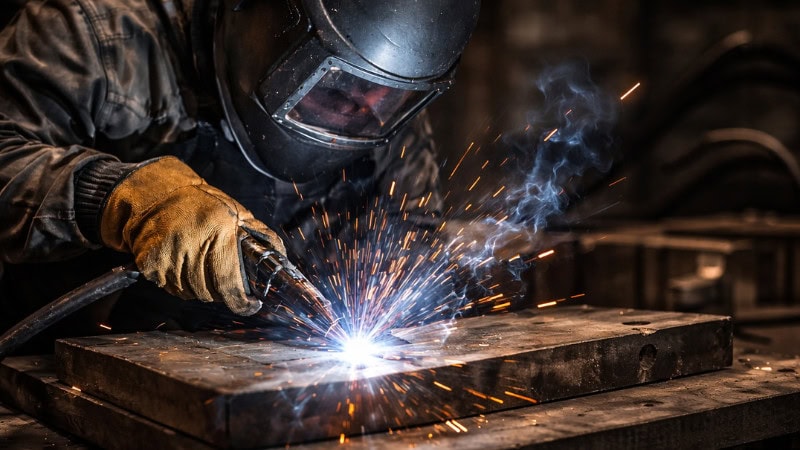
Welding joins metals by melting the base materials at the joint, fusing them into a single solid piece as they cool. This is accomplished with extremely high heat, often produced by an electric arc or a gas flame, and typically involves a filler metal that adds strength to the weld. Unlike brazing and soldering, welding requires the actual melting of the parts being joined, which results in the strongest and most permanent metal-to-metal connection. It’s most commonly used for metals like steel, stainless steel, and aluminum in structural components—such as frames, exhaust systems, and brackets—that must support weight or withstand vibration. For joints that demand durability under stress, welding is almost always the preferred method due to its robust metallurgical bond.
Types of Welding Used in Shops
There are several welding types with unique strengths. MIG welding is fast and user-friendly, making it popular in automotive shops. TIG welding provides precision, ideal for aluminum and stainless steel. Stick welding handles dirty metal well and is suitable for construction and repairs. All types melt base metals to fuse them. Safety gear is essential. Welding requires practice but yields joints that withstand harsh conditions.
What Is Brazing?
Brazing is a metal joining process that uses lower heat than welding; the base metals do not melt. Instead, a separate filler metal, with a melting point above 450°C but below that of the base materials, is heated until it melts and flows into the joint by capillary action, bonding the base metals at their surfaces. Brazing is ideal for thin or heat-sensitive metals and for joining dissimilar metals, such as copper to steel, because it doesn’t alter the underlying metal’s structure. In HVAC and refrigeration, brazing is preferred for sealing refrigerant lines, creating joints that resist leaks but are not designed for heavy structural loads.

Brazing Materials and Applications
Brazing uses filler metals like brass or silver alloys. Common in HVAC, fuel lines, plumbing, and light mechanical work, it preserves metal shape and strength. With proper prep, joints are smooth and corrosion-resistant. While not as strong as welding, brazing is great for leakproof seals in copper tubing or thin metal.
What Is Soldering?
Soldering is a joining process that operates at low temperatures, typically below 450°C, making it ideal for electrical applications and light-duty metal connections. Unlike welding and brazing, soldering does not melt the base metals. Instead, it uses a soft filler metal, often tin-based, that melts easily and forms a bond between the metal surfaces without altering their structure. Because soldered joints lack significant strength and cannot resist high temperatures, pressure, or mechanical stress, soldering is best used for copper wires, terminals, circuit boards, and minor plumbing or car wiring repairs. The process is straightforward with basic tools, but inadequate soldering can produce weak joints prone to failure under load or vibration.

Soldering Materials and Typical Uses
Modern soldering uses lead-free, tin-based alloys. Flux cleans the metal for solder adhesion. Soldering is preferred for electronics, electrical repair, and low-pressure plumbing due to electrical conductivity. Solder joints can crack from stress or vibration; avoid them for structural, fuel, or pressurized systems. Soldering is valued for electrical connections—not mechanical strength.
Welding vs. Brazing vs. Soldering
Strength Comparison
Welding is the strongest, followed by brazing and soldering. Welded joints are usually as strong as the base metal. Brazed joints are suitable for pressure systems but not for structures. Soldered joints are weaker and can be damaged by heat or vibration. In automotive and industrial work, match the method to job strength needs. Avoid welding thin materials to prevent warping.
When to Use Each Method
Use welding for frames, brackets, exhausts, and stressed parts. Choose brazing for HVAC lines, fuel systems, and thin or dissimilar metals that require heat control. Soldering is used in electrical, electronic, and low-pressure plumbing applications. Using the right method saves time, reduces rework, and ensures safety. Knowing when to avoid a method is equally important.
FAQ
FAQ 1: Which method produces the strongest metal joint?
Welding produces the strongest metal joint because it melts and fuses the base metals into a single solid structure. A properly executed weld can be as strong as, or stronger than, the original metal. Brazing provides moderate strength suitable for pressure systems but not structural loads. Soldering produces the weakest joints and should be used only for electrical connections or low-stress applications where strength is not required.
FAQ 2: Can brazing be used instead of welding?
Brazing cannot replace welding for structural or load-bearing applications. While brazing creates strong, clean joints, it does not provide the mechanical strength required for frames, brackets, or heavy-vibration environments. Brazing is best used for thin metals, sealed systems, and dissimilar materials. If the joint must support weight or endure stress, welding is the safer and more reliable choice.
FAQ 3: Why is brazing preferred in HVAC and refrigeration work?
Brazing is preferred in HVAC and refrigeration because it creates leak-proof joints without overheating or warping copper tubing. Welding temperatures are too high for thin pipes, and soldering cannot withstand refrigerant pressure and operating temperatures. Brazed joints offer excellent strength, corrosion resistance, and durability, making them ideal for refrigerant lines, gas flow systems, and long-term performance in HVAC installations.
FAQ 4: Is soldering suitable for automotive repairs?
Soldering is generally limited to automotive electrical repairs, such as wiring connections and circuit repairs. It is not suitable for mechanical components, fuel lines, or exhaust systems because soldered joints are weak and sensitive to heat and vibration. In most automotive applications, welding or brazing is required to ensure safety, durability, and resistance to operating stresses found in vehicles.
FAQ 5: Do brazing and soldering melt the base metal?
No, brazing and soldering do not melt the base metals when performed correctly. Only the filler metal melts and flows into the joint. This allows the base material to maintain its original structure and strength. Welding, on the other hand, melts the base metals completely, creating a fused joint. This difference is why brazing and soldering operate at much lower temperatures than welding.
FAQ 6: Which method requires the highest skill and safety precautions?
Welding requires the highest level of skill and the most safety precautions due to extreme heat, electric arcs, and molten metal. Proper protective equipment and training are essential. Brazing requires moderate skill and good heat control to avoid weak joints. Soldering is the easiest method to learn and requires minimal equipment, but correct technique is still important for reliable electrical connections.
FAQ 7: How do I choose the correct joining method for my project?
Choosing the correct method depends on strength requirements, heat tolerance, and application. Use welding for structural or load-bearing joints, brazing for thin metals or sealed pressure systems, and soldering for electrical or light-duty connections. Selecting the right process ensures safety, long-term reliability, and professional-quality results while preventing costly failures or rework.
Final Verdict
The key difference between welding, brazing, and soldering is in how the metals are joined and the strength of the resulting joint. Welding melts and fuses metal for the greatest strength. Brazing bonds metal using a filler, keeping the base materials intact. Soldering connects metals at low heat, making it best for electrical or light-duty tasks. Picking the right method isn’t just a matter of preference—it’s about ensuring reliable results. Whether you’re repairing a car, installing HVAC lines, or fixing electrical wiring, using the correct joining process means your work will last and perform as it should.
