
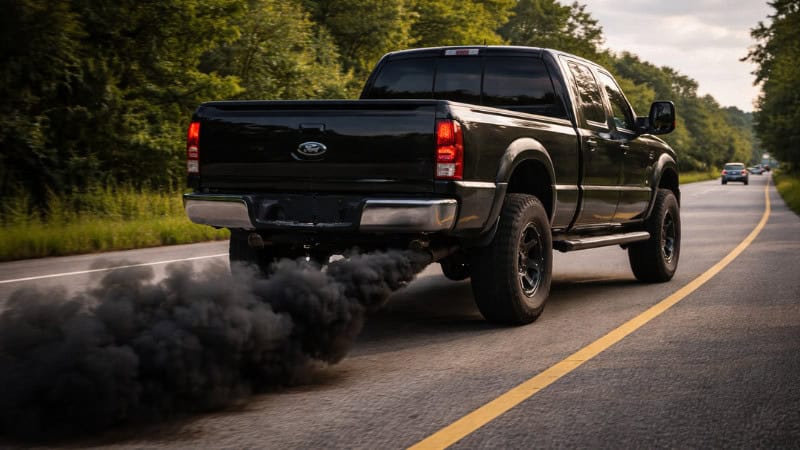
If you see black smoke coming from your tailpipe, your engine is signaling that something is off. Black exhaust smoke usually means your engine is burning too much fuel and not enough air. That imbalance leads to incomplete combustion and the formation of soot. Modern vehicles have been designed to burn fuel cleanly, so thick black smoke is not normal. As a mechanic, I can tell you this is one of the most common drivability complaints in US shops. The good news is that most causes are diagnosable and fixable if you don’t ignore them.
What Does Black Exhaust Smoke Mean?
Black smoke is a classic sign of a rich air-fuel mixture. Your engine needs the right balance of air and gasoline (or diesel) to run efficiently. When too much fuel enters the combustion chamber and there isn’t enough oxygen to burn it completely, the leftover fuel exits through the exhaust as black soot. On gasoline engines, this usually signals a sensor or fuel system issue. On diesel engines, you might notice a brief puff under heavy throttle, which can be normal. But steady, thick smoke while cruising or idling points to a mechanical or electronic problem that needs attention before it damages other components.
1. Clogged or Dirty Air Filter
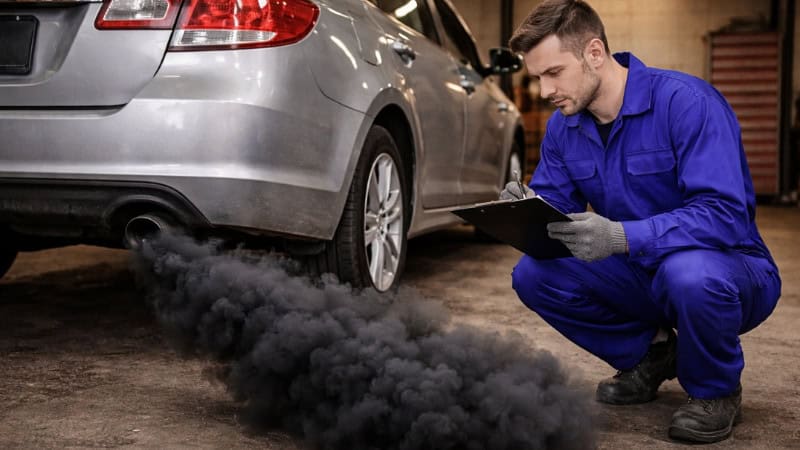
A dirty air filter is one of the simplest and most overlooked causes of black smoke. When the filter gets clogged with dirt and debris, it restricts airflow into the engine. Less air means the system delivers fuel that can’t fully burn. That leads to a rich condition and visible soot. You might also notice sluggish acceleration and worse fuel mileage. In most cases, replacing the air filter solves the issue immediately. It’s inexpensive and quick, often done in minutes. I always recommend checking this first because it’s cheap insurance and a common root cause, especially on vehicles without regular maintenance.
3. Faulty Fuel Injectors
Fuel injectors deliver a precise spray of fuel into the combustion chamber. If an injector sticks open or leaks, it can dump excess fuel into the cylinder. That extra fuel doesn’t burn completely, resulting in black smoke. You may also notice rough idling, hesitation, fuel smell, or misfire codes. In US repair shops, we test injector balance and fuel trims to confirm the issue. Sometimes cleaning helps, but often replacement is needed. Ignoring a bad injector can damage the catalytic converter over time. If you see smoke and notice drivability problems together, injectors are high on the suspect list.
4. Bad Mass Air Flow (MAF) Sensor
The Mass Air Flow sensor measures the air entering your engine. The computer uses that data to determine how much fuel to inject. If the MAF sensor sends incorrect readings, the engine may add too much fuel, resulting in a rich mixture and black smoke. Dirt, oil residue from aftermarket air filters, or internal sensor failure are common causes. You might notice poor acceleration, stalling, or a check engine light. In many cases, cleaning the sensor with proper MAF cleaner restores normal operation. If cleaning doesn’t work, replacement is usually simple and can prevent long-term issues with fuel economy and emissions.
5. Malfunctioning Oxygen Sensor
Oxygen sensors monitor the amount of unburned oxygen in the exhaust stream. The engine control module uses this information to fine-tune the air-fuel mixture. If an O2 sensor fails or responds slowly, the system may inject too much fuel. That leads to black smoke and poor fuel economy. A faulty oxygen sensor often triggers a check engine light and may store lean or rich mixture codes. Replacing a bad sensor restores proper fuel control. In my experience, older vehicles with high mileage are more likely to develop O2 sensor issues, especially if maintenance has been inconsistent.
6. Fuel Pressure Regulator Failure
The fuel pressure regulator keeps the fuel pressure within a specific range. If it fails and allows the pressure to get too high, the injectors may deliver more fuel than your engine needs. This extra fuel causes incomplete combustion and black smoke. You may also have trouble starting, notice a rough idle, or experience poor throttle response. Mechanics use a gauge to check fuel pressure and confirm the issue. A failing regulator can sometimes cause fuel to leak into the vacuum line, which is a definite warning sign. Replacing the regulator usually solves the problem and helps restore proper engine function and fuel efficiency.
7. Turbocharger Problems
Turbocharged engines, especially diesels, depend on boost pressure to mix air and fuel effectively. If the turbocharger can’t produce enough boost due to worn bearings, damaged blades, or leaks, the engine might inject fuel as if the airflow is still high. This mismatch creates black smoke during acceleration. You may hear a whining sound, feel a loss of power, or notice a check engine light. In diesel trucks, turbo problems are a common cause of heavy soot when towing. Turbo repairs can be costly, so it’s important to catch faults early. Letting turbo problems go can lead to further engine damage and much bigger repair bills.
you may also like: Blue Smoke from Exhaust: Causes, Diagnosis, and How to Fix It
8. EGR Valve Issues
The Exhaust Gas Recirculation (EGR) system sends some exhaust gases back into the intake to lower combustion temperatures and cut emissions. If the EGR valve gets stuck open or closed, it can disrupt airflow and compromise combustion. This often causes excessive soot and black smoke, especially at idle or low speeds. You might also notice rough running or hesitation. Carbon buildup is a common problem, especially in diesel engines. Sometimes a good cleaning fixes it, but severe cases may require replacing the valve. Keeping the EGR system in good condition is necessary to meet emissions standards and keep your engine running efficiently.
Why Diesel Engines Produce Black Smoke More Often
Diesel engines function differently from gasoline engines. They inject fuel into highly compressed air rather than mixing it beforehand. Under heavy load or rapid acceleration, a brief puff of black smoke can be normal. However, constant thick smoke indicates overfueling or air restriction. Problems with the turbocharger, injectors, EGR system, or Diesel Particulate Filter may all contribute. Modified or tuned diesel trucks are especially prone to excess soot. In the United States, removing emissions equipment is illegal and can result in fines. A properly functioning diesel engine should run clean even under tough conditions.
Is It Safe to Drive with Black Smoke?
Driving with black smoke for a short distance to reach a repair shop is usually fine, but it’s not something you want to ignore. A rich fuel mixture can foul spark plugs, damage oxygen sensors, and clog the catalytic converter. Over time, that leads to expensive repairs. If the vehicle is misfiring, losing significant power, or showing flashing warning lights, it’s better to have it towed. Continuing to drive aggressively while the engine is running rich only increases the risk. Addressing the issue early almost always saves money and prevents secondary component failures.
How to Diagnose Black Smoke
Start with the basics before replacing parts. Here’s the general approach used in US repair shops:
- Inspect and replace the air filter if it is dirty.
- Scan the vehicle with OBD-II scanner for trouble codes.
- Check fuel trim data for rich condition.
- Inspect and clean the MAF sensor.
- Test fuel pressure with a gauge.
- Perform injector balance test.
- Check turbo boost levels (diesel engines).
- Inspect EGR operation.
- Verify oxygen sensor performance.
Accurate diagnosis prevents unnecessary parts replacement. Replacing parts without testing often wastes time and money.
How Much Does It Cost to Fix Black Smoke from Exhaust?
Repair costs vary depending on the cause and vehicle type. Labor rates in the US typically range from $90 to $150 per hour, depending on region and shop type.
Getting a proper diagnosis first ensures you only pay for what’s actually broken.
How to Prevent Black Exhaust Smoke
Prevention comes down to maintenance and smart driving habits:
- Replace the air filter every 12,000–15,000 miles.
- Use quality fuel from reputable stations.
- Fix the check engine light immediately.
- Avoid cheap performance tuners.
- Service diesel emissions systems regularly
- Follow the manufacturer’s maintenance schedule.
- Clean the MAF sensor during routine service.
Being ahead of small issues prevents bigger and more expensive problems. Periodic inspections keep the fuel system and air intake efficient.
Black Smoke vs Blue Smoke vs White Smoke
Not all exhaust smoke means the same thing:
- Black Smoke: Too much fuel, rich air-fuel mixture, fuel system, or airflow issue
- Blue Smoke: Engine burning oil, possible worn piston rings or valve seals
- White Smoke: Coolant entering the combustion chamber or condensation on a cold start
Correctly identifying the color helps narrow down the root cause quickly. Each type of smoke points to a different system in the engine.
FAQ
1. Can black smoke damage my engine?
Yes, it can if you ignore it for too long. Black smoke means your engine is running rich, which causes excess fuel to wash down cylinder walls and dilute engine oil. Over time, that reduces lubrication and increases internal wear. It can also foul spark plugs, clog oxygen sensors, and damage the catalytic converter. The longer the issue continues, the more expensive the repairs become. Fixing the root cause early protects both performance and long-term engine durability.
2. Does black smoke always mean the engine is running rich?
In most cases, yes. Black smoke typically indicates too much fuel and not enough air in the combustion process. However, the reason behind that rich condition can vary. It might be a faulty sensor, a leaking injector, a clogged air filter, a turbo issue, or a fuel pressure problem. The smoke itself is a symptom, not the actual failure. Proper diagnostics are necessary to determine the cause of the fuel imbalance and correct it accurately.
3. Why does my truck blow black smoke when accelerating?
A brief puff of black smoke during hard acceleration, especially in diesel trucks, can be normal. At high throttle, more fuel is injected to produce more power. If airflow lags slightly behind fuel delivery, you may see temporary soot. However, continuous thick smoke during normal driving suggests a problem. Common causes include injector issues, turbo boost leaks, or air restriction. If the smoke is excessive or the power feels reduced, it should be inspected.
4. Will black smoke cause me to fail emissions testing?
Yes, very likely. Black smoke indicates incomplete combustion and higher-than-normal hydrocarbon and particulate emissions. In states that require emissions inspections, visible smoke alone can result in failure. Additionally, if the underlying issue triggers a check engine light, the vehicle will automatically fail most inspections. Repairing the problem not merely improves performance but also confirms compliance with federal and state environmental regulations.
5. Can a bad turbo cause black smoke?
Absolutely. A turbocharger increases airflow into the engine. If it fails to provide a proper boost due to worn components, leaks, or mechanical damage, the engine may still inject fuel, expecting a higher air volume. That imbalance results in excess fuel burning inefficiently and producing black smoke. You may also notice whining noises, reduced power, or slow acceleration. Turbo problems should be addressed quickly to avoid more serious engine damage.
6. Is black smoke more common in diesel engines?
Yes, diesel engines are more prone to producing black smoke, especially under heavy load. Diesels operate differently from gasoline engines and rely on high compression rather than spark ignition. A small puff under acceleration can be normal. However, steady smoke usually signals injector wear, turbo issues, EGR malfunction, or Diesel Particulate Filter problems. A properly maintained diesel engine should not produce continuous visible smoke during regular driving conditions.
7. Can low-quality fuel cause black smoke?
Poor-quality fuel can contribute to black smoke, particularly if it contains contaminants or burns inefficiently. Lower-grade fuel may lead to carbon buildup on injectors and intake components, affecting spray patterns and combustion efficiency. Over time, that may create a rich condition and visible soot. While fuel alone is rarely the sole cause, consistently using top-grade fuel from reputable stations helps maintain cleaner combustion and a better overall engine condition.
8. Should I stop driving immediately if I see black smoke?
It depends on severity. If the smoke is light and the vehicle runs normally, you can usually drive carefully to a repair shop. However, if the engine is misfiring, losing significant power, or the check engine light is flashing, you should stop driving and consider towing. Severe driving conditions can quickly damage the catalytic converter. Addressing the issue early prevents additional repairs and keeps the vehicle safe to operate.
Final Thoughts
Black smoke from your exhaust is your engine’s way of showing a fuel imbalance. Whether it’s a simple clogged air filter or a more serious injector or turbo issue, diagnosing it early saves money and prevents long-term damage. Most of the time, the fix is simple once you find the root cause. If you see steady black smoke, don’t ignore it. Get it checked, run proper diagnostics, and handle it before it turns into a bigger repair bill. Engines are built to run clean. When they don’t, there’s always a reason.
Read More:
