
Fresh brake fluid should be clear or very light amber. Most mechanics compare it to light cooking oil or pale honey. A new bottle’s fluid should appear transparent, clean, and free of cloudiness or debris.
That clear color shows the fluid hasn’t absorbed moisture (water from the air) or been exposed to high heat, both of which preserve its high boiling point (the temperature at which the fluid begins to turn into vapor) and optimal braking performance.
If the fluid in your reservoir isn’t clean and light, it’s aging. Color change is usually the first sign of mechanical issues during brake inspection.
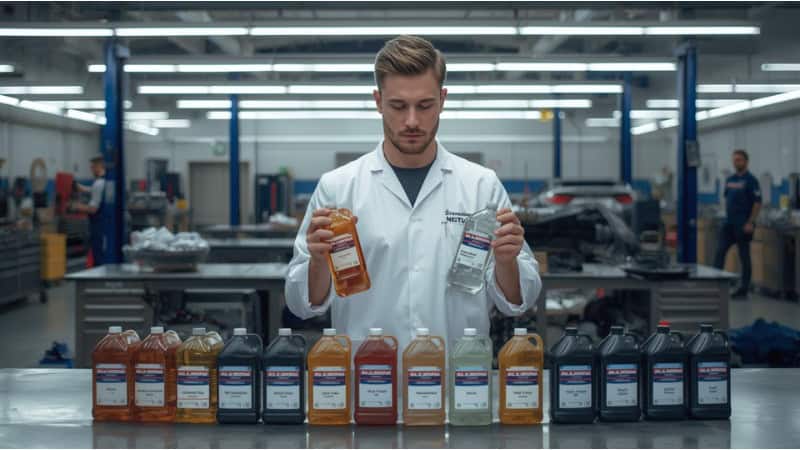
Brake Fluid Color by Type
In U.S. shops, fluid color doesn’t reliably reveal the DOT (Department of Transportation) type. Both DOT 3 and DOT 4 are usually clear or light amber when new. DOT 4 can sometimes be slightly darker due to heat-resistant additives.
DOT 5 is silicone-based and often purple or violet, helping prevent accidental mixing with glycol-based fluids. DOT 5.1, though similarly named, is also glycol-based and usually appears clear or light amber like DOT 4. DOT 3, DOT 4, and DOT 5.1 are glycol-based; only DOT 5 is silicone-based.
Mechanics check the label and specifications—not just color—when identifying brake fluid. Color shows condition, not type.
What Does Dark Brake Fluid Mean?
When brake fluid turns from light amber to brown or dark brown, it’s a clear sign of age and contamination. In U.S. shops, dark fluid means it has absorbed moisture. As water content increases, the boiling point drops, which can cause brake fade during hard stops or on the highway.
Heat cycles also play a major role. Every time you brake, the fluid is exposed to high temperatures. Over thousands of miles, that heat breaks down the additives (chemicals added to the fluid to improve its properties), causing it to darken. Tiny particles from rubber hoses and seals also mix in, accelerating the color change.
Dark brake fluid doesn’t mean immediate failure, but it does mean less effectiveness. Most mechanics recommend flushing once it turns brown—don’t wait for black.
Milky or Cloudy Brake Fluid: What’s Going On?
Milky or cloudy brake fluid is a major warning for mechanics. This usually means excess water in the fluid—more than it should ever absorb. Water separates out, making the fluid foggy or creamy.
This occurs in vehicles that sit unused, see high humidity, or undergo temperature swings. In cold climates, internal condensation can worsen it. Once fluid turns cloudy, corrosion may form inside brake lines, calipers, and the master cylinder.
At this point, your brakes can quickly lose performance. The pedal may feel soft, and modern ABS systems are especially sensitive to poor fluid. If your brake fluid looks milky, don’t wait—get it flushed immediately.
you may like: DOT 3 vs DOT 4 vs DOT 5 Brake Fluid: Key Differences Explained
Black Brake Fluid: Is It Dangerous?
Yes—black brake fluid is dangerous. In U.S. repair shops, it means the fluid is overdue for service. Black fluid is not just old; it has broken down from heat, chemicals, and rubber debris from your brake system.
At this stage, moisture is usually high, lowering the boiling point. Under heavy braking, moisture can boil, causing vapor and a sudden soft or sinking pedal—a main cause of brake fade during highway stops or towing.
Black fluid speeds corrosion and damage to calipers, ABS valves, and the master cylinder. Most mechanics don’t just flush here—they also inspect for system damage.
Can Brake Fluid Be Green, Blue, or Purple?
Yes, brake fluid can appear green, blue, or purple, but in most U.S. shops, this usually raises questions. These colors are commonly found in aftermarket or racing brake fluids. Manufacturers sometimes add dyes to make the fluid easier to track during flushing or to help distinguish it from standard fluids.
Purple brake fluid is linked with DOT 5 silicone-based fluid dyed to prevent mixing with DOT 3 or DOT 4. Blue or green fluids are typically high-performance DOT 4 or DOT 4 racing varieties, but these colors don’t alone mean improved braking.
Color additives don’t improve braking. The important factors are boiling point and compatibility. Many mechanics avoid dyed fluids in daily drivers because they can confuse inspections without providing real-world benefits.
How to Check Brake Fluid Color Correctly
Checking brake fluid color is simple, but it is often done wrong. In U.S. shops, mechanics inspect the fluid through the reservoir (the see-through plastic container holding brake fluid) without opening it unless needed. The reservoir’s plastic is designed to show condition without letting in moisture. If fluid looks dark or cloudy, that’s useful information.
For a closer check, many mechanics use the white towel test: place a drop of brake fluid on a clean white towel. Fresh fluid spreads evenly and looks light amber. Old fluid appears brown, dark, or uneven, indicating contamination or aging.
Never shake the reservoir, and don’t leave the cap open longer than needed. Brake fluid absorbs moisture fast, and careless checking can actually make the problem worse.
When Should Brake Fluid Be Changed Based on Color?
Mechanics don’t wait for brake fluid to turn black. Color change is an early warning—plan a flush when it goes from clear to brown.
Most manufacturers recommend changing brake fluid every 2 to 3 years, but color can prompt earlier replacement. Vehicles driven in heavy traffic, hot climates, or high humidity tend to darken fluid faster. Short trips also accelerate moisture buildup because the system never fully heats up.
If the fluid looks cloudy or very dark, it shouldn’t be delayed. At that point, braking performance and ABS reliability are already compromised. Professional mechanics use color alongside time and mileage to decide the right service interval.
Does Brake Fluid Color Affect Brake Performance?
Brake fluid color is closely tied to brake performance, even though many drivers don’t realize it. In U.S. shops, dark or cloudy fluid often explains complaints like a soft brake pedal or reduced stopping confidence. As brake fluid darkens, it usually means moisture content has increased, and additives have broken down.
Moisture lowers the boiling point of a fluid. Under hard braking, especially at highway speeds or in stop-and-go traffic, that moisture can heat up and create vapor. Vapor compresses, unlike liquid, which leads to a spongy pedal and longer stopping distances. This effect is known as brake fade.
Modern ABS (Anti-lock Braking System) components are especially sensitive to fluid conditions. Contaminated fluid can interfere with precise pressure control, reducing overall braking efficiency and safety.
Brake Fluid Color vs. Other Car Fluids
Brake fluid is often mistaken for other fluids, especially by DIYers. In U.S. shops, this confusion causes costly mistakes. Fresh brake fluid is clear to light amber, power steering fluid is usually amber or reddish, and feels oilier. Transmission fluid is typically bright red or pink when clean.
Engine oil starts out amber but quickly turns dark brown or black, much thicker than brake fluid. Coolant comes in bold colors like green, orange, or pink and has a sweet smell, nothing like brake fluid.
The key difference is texture. Brake fluid feels thin and slightly slippery, not oily. Mixing it with other fluids can quickly damage seals and brake components.
Common Myths About Brake Fluid Color
A common myth in U.S. garages is that dark brake fluid is normal and harmless. While all brake fluid darkens with age, brown or black fluid has lost its protective qualities. Waiting until brakes feel bad is too late.
Another common myth is that clear fluid is always good. Brake fluid can look clean but still contain enough moisture to lower its boiling point. That’s why professional mechanics don’t rely on color alone. There’s also the belief that all brake fluids look the same. In reality, silicone-based DOT 5 is dyed and behaves very differently.
Color tells part of the story, but ignoring it completely is what leads to expensive brake system repairs.
What Professional Mechanics Look For
While color is a useful clue, professional U.S. mechanics never rely on it alone. They first check the moisture content with an electronic brake fluid tester or test strips. Even clean-looking fluid can contain too much water.
Mechanics note fluid smell and texture. Burnt odors indicate overheating; gritty or thin fluid suggests seal wear. They check for rust around bleeder screws and inside reservoirs, which can signal internal corrosion.
On modern vehicles, ABS (Anti-lock Braking System) components are closely monitored. Contaminated fluid can damage expensive ABS valves and pumps. That’s why shops often recommend preventive flushing (completely replacing the fluid) before problems show up.
Is It Safe to Drive With Dark Brake Fluid?
Driving with dark brake fluid isn’t immediately dangerous in every case, but U.S. mechanics consider it a risk that grows over time. Slightly darkened fluid may still work during normal commuting, but it has a reduced safety margin. Under hard braking, towing, or emergency stops, performance can drop without warning.
As moisture builds up, the chances of brake fade increase. That’s when the brake pedal feels soft or sinks farther than normal. In extreme cases, stopping distances increase noticeably. Dark fluid also accelerates internal corrosion, which can lead to sticking calipers or master cylinder failure later.
Short-term driving is possible, but it’s not smart. Most professionals advise scheduling a brake fluid flush as soon as darkening is noticed, not waiting for symptoms.
DIY Brake Fluid Flush vs. Professional Service
A brake fluid flush can be a DIY job, but U.S. mechanics are clear—it’s not for everyone. On older vehicles without ABS, a basic gravity or manual bleed can work if done carefully. You need the correct DOT fluid, clean tools, and strict attention to keeping air out of the system.
On modern vehicles, professional service is usually the safer choice. ABS-equipped systems often require a scan tool to cycle valves properly during a flush. Skipping this step can leave contaminated fluid trapped inside the ABS unit, defeating the purpose of the service.
Another risk with DIY flushing is introducing moisture or dirt. One mistake can lead to a soft pedal or expensive repairs. For daily drivers, most mechanics recommend professional flushing for reliability and peace of mind.
FAQ
FAQ 1. What color should brake fluid normally be?
Brake fluid should normally be clear to light amber when it’s fresh and in good condition. In U.S. repair shops, mechanics often compare it to light honey or pale cooking oil. This color indicates the fluid hasn’t absorbed much moisture and hasn’t been overheated. If the fluid is still transparent and light-colored, it’s usually doing its job properly. Any noticeable darkening means the fluid is aging and should be monitored or serviced soon.
FAQ 2. Is dark brake fluid always bad?
Dark brake fluid is not immediately catastrophic, but it is a warning sign. As brake fluid darkens, it usually means moisture, heat, and internal wear particles have contaminated it. This reduces the fluid’s boiling point and overall effectiveness. While the brakes may still work in normal driving, the safety margin is reduced. Most U.S. mechanics recommend flushing once the fluid turns brown, rather than waiting for performance problems to appear.
FAQ 3. Can brake fluid look clean but still be bad?
Yes, brake fluid can look clean and still be bad. Brake fluid absorbs moisture evenly, so it doesn’t always turn dark right away. Even clear-looking fluid can have enough water content to lower its boiling point. That’s why professional shops often use moisture testers instead of relying on color alone. Visual inspection is helpful, but it doesn’t tell the whole story about brake fluid condition or safety.
FAQ 4. What does cloudy or milky brake fluid mean?
Cloudy or milky brake fluid usually means excessive water contamination. This happens when moisture separates rather than remaining evenly mixed. It’s a serious issue because water causes internal corrosion and inconsistent braking performance. In U.S. shops, milky fluid is treated as an urgent problem. A full brake fluid flush is recommended immediately, and components may need inspection to ensure no internal damage has already started.
FAQ 5. Why does brake fluid turn black?
Brake fluid turns black after long-term heat exposure and chemical breakdown. Over time, rubber hoses and seals shed tiny particles that mix into the fluid. Additives inside the fluid also degrade due to repeated heat cycles. Black fluid usually means the fluid is far past its service life. At this stage, U.S. mechanics often inspect the brake system closely, since black fluid can accelerate corrosion and component failure.
FAQ 6. Does brake fluid color affect ABS systems?
Yes, brake fluid color often reflects conditions that affect ABS systems. Dark or contaminated fluid can interfere with the precise pressure control required by ABS valves and pumps. Modern ABS units are sensitive and expensive to repair. U.S. mechanics frequently recommend timely brake fluid flushing specifically to protect ABS components. Clean fluid helps ensure smooth ABS operation, consistent pedal feel, and proper braking response during emergency stops.
FAQ 7. How often should brake fluid be changed in the U.S.?
Most U.S. manufacturers recommend changing brake fluid every 2 to 3 years, regardless of mileage. Color can justify doing it sooner. Vehicles driven in heavy traffic, hot weather, or humid conditions tend to darken fluid faster. Mechanics use time, mileage, and fluid appearance together to make a decision. Waiting until the fluid turns black is considered poor maintenance and increases the risk of costly brake repairs.
FAQ 8. Can I just top off dark brake fluid instead of flushing?
Topping off dark brake fluid is not a real fix. Adding new fluid only dilutes the old, contaminated fluid and doesn’t remove moisture or debris already in the system. U.S. mechanics rarely recommend topping off unless the fluid is already clean and just slightly low. If the fluid is dark or cloudy, a full flush is the proper solution to restore braking performance and protect brake components.
Conclusion
From a U.S. mechanic’s perspective, brake fluid color is one of the simplest early warning signs your vehicle gives you. Healthy brake fluid should stay clear to light amber. Once it turns brown, cloudy, or black, it’s no longer at peak performance—even if the brakes still feel “okay.” Color changes usually mean moisture buildup, heat damage, or internal wear, all of which reduce braking safety.
The key takeaway is not to wait for symptoms. Brakes don’t fail loudly; they fail quietly and suddenly. Regular brake fluid flushing every few years protects calipers, master cylinders, and expensive ABS systems. Clean fluid equals consistent pedal feel, reliable stopping power, and long-term brake system health.
