
White smoke from your exhaust can be normal or a sign of serious engine damage. The difference depends on thickness, duration, and engine behavior. Light vapor that disappears after the engine warms up is usually harmless condensation burning off in the exhaust. Thick smoke that persists while driving often indicates coolant entering the combustion chamber and burning with the fuel. Burning coolant creates dense white smoke and sometimes a sweet smell. Ignoring this can result in overheating, oil contamination, and long-term engine damage. The sooner you find the cause, the cheaper the repair usually is.
When White Smoke Is Normal
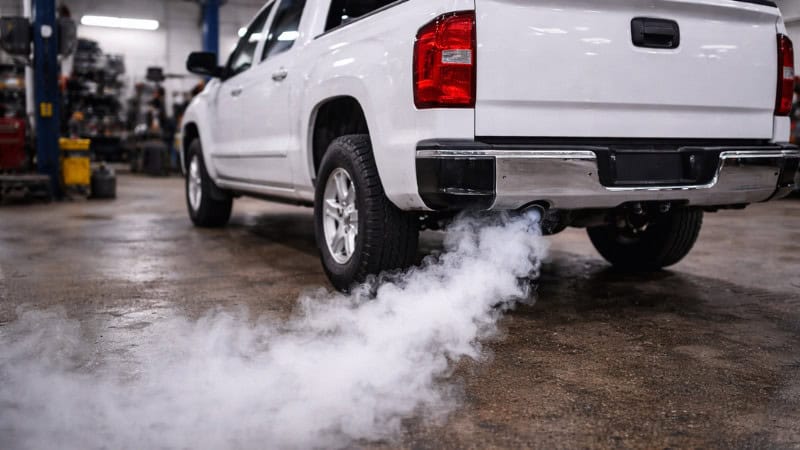
Understanding when white smoke is normal helps prevent unnecessary concerns. On cold mornings, engines produce condensation inside the exhaust. As the pipes heat up, this moisture turns into visible steam. This is common in winter or humid climates. The smoke appears thin and light, almost like vapor, and should disappear within a few minutes of driving. The engine operates smoothly, coolant levels stay stable, and there are no unusual smells. In this case, no repair is needed. Problems begin when the smoke does not go away, becomes thicker, or is accompanied by overheating or coolant loss.
Blown Head Gasket
Moving beyond normal operation, a blown head gasket is the most common serious cause of white smoke from the exhaust. The head gasket seals the engine block and cylinder head, preventing coolant and combustion products from mixing. When the seal fails, coolant leaks into the cylinders and burns during combustion. This causes persistent white smoke from the tailpipe. Drivers may notice overheating, unexplained coolant loss, rough idle, or milky oil on the dipstick. This repair is labor-intensive because the engine top must be disassembled. In the United States, head gasket replacement usually ranges from $1,200 to $2,500, depending on engine design and labor rates.
Cracked Cylinder Head or Engine Block
If the problem is not the head gasket, another potential source of white smoke is a cracked cylinder head or engine block. Severe overheating can warp or crack engine components. Aluminum cylinder heads are particularly vulnerable to heat damage. When a crack develops, coolant can seep directly into combustion chambers or oil passages. The symptoms closely resemble a blown head gasket, including thick white smoke and coolant loss. In more extreme cases, you may also experience misfires or loss of compression. If the engine block itself is cracked, repair becomes significantly more expensive. Many vehicles require engine replacement rather than repair. Costs vary widely but can exceed several thousand dollars. Early diagnosis is critical to prevent further damage.
Intake Manifold Gasket Failure
Another gasket to consider is the intake manifold gasket. Some engines circulate coolant through passages in the intake manifold. If the intake gasket fails, coolant can leak into the intake ports and enter the cylinders. This causes white smoke similar to a head gasket failure, but it is usually less severe. The engine may not overheat right away, which can mislead drivers into thinking the problem is minor. Over time, coolant loss continues, and engine performance suffers. Intake gasket repairs are much more affordable than internal engine repairs. Labor time varies by engine layout, but this repair is usually much less expensive than replacing cylinder heads or engines.
Diesel Engine Causes
For diesel engines, causes can differ from those of gasoline engines. White smoke in diesel engines does not always mean coolant is burning. It can also indicate unburned fuel. During cold starts, diesel engines rely on glow plugs to help ignite fuel properly. If glow plugs fail, the engine may produce white smoke until it warms up. Faulty injectors can also cause improper fuel atomization, producing incomplete combustion and visible white exhaust. Timing issues or low compression may also add. Diagnosis for diesel engines requires a slightly different approach than gasoline engines. Testing injector performance and glow plug function is usually the first step before assuming internal engine damage.
you may like: Blue Smoke from Exhaust: Causes, Diagnosis, and How to Fix It
How a Mechanic Diagnoses White Smoke
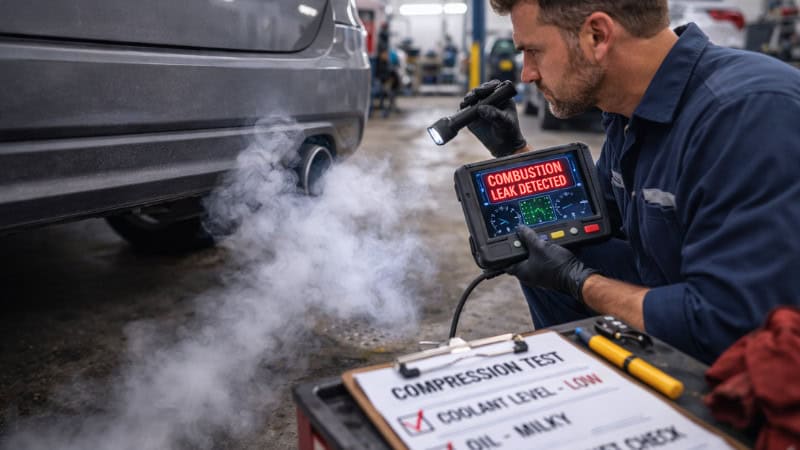
To identify the exact cause of white smoke, mechanics use a systematic approach. Proper diagnosis prevents unnecessary repairs. When a vehicle arrives with concerns about white smoke, inspection follows a structured process. Coolant level is checked first to see if the engine is consuming fluid internally. The oil is examined for signs of contamination. A cooling system pressure test helps identify leaks that are not visible. Combustion leak testing can verify whether exhaust gases are entering the cooling system. If needed, compression testing checks the integrity of the cylinder sealing. These steps isolate whether the issue involves a gasket, a cracked component, or an external cooling problem. Guesswork wastes money. Testing provides certainty before major repairs begin.
Repair Cost Analysis
Repair costs depend on vehicle make, engine size, labor rates, and damage severity. Turbocharged or performance engines often cost more to repair.
Can You Keep Driving?
Driving with white smoke depends on the cause. If the smoke is light and disappears quickly after startup, it is generally safe to keep driving. If the smoke is thick and persistent, and accompanied by coolant loss or overheating, continued driving risks severe engine damage. Coolant entering the cylinders can dilute oil and reduce lubrication. In extreme cases, hydro-lock may occur, bending internal engine components. Once that happens, repair costs rise dramatically. When in doubt, schedule a diagnostic inspection. Stopping early often prevents the problem from becoming much more expensive.
Prevention Tips
Most serious white smoke issues start with neglect of the cooling system. Maintaining proper coolant levels and replacing coolant at the manufacturer’s intervals helps prevent overheating. Address small leaks immediately instead of postponing repairs. Monitor your temperature gauge during long drives or heavy towing. Change engine oil consistently to protect internal seals and components. Diesel engines need proper maintenance of glow plugs and injectors for clean combustion. Engines rarely fail without warning. Paying attention to early signs and staying on schedule greatly reduces the chance of internal coolant leaks and major engine repairs.
Key Warning Signs to Watch For
If you notice any of the following along with white smoke, schedule service immediately:
- Persistent thick white smoke after warm-up
- Sweet smell from the exhaust
- Unexplained coolant loss
- Engine overheating
- Milky or frothy oil
- Rough idle or misfires
These signs often mean coolant is entering the combustion chamber. Early intervention can prevent complete engine failure.
FAQ
1. Why is my car blowing white smoke from the exhaust?
White smoke usually means coolant is entering the combustion chamber and burning with fuel. This frequently occurs due to a blown head gasket, a cracked cylinder head, or an intake manifold gasket failure. If the smoke is thin and disappears after a few minutes, it’s likely condensation and completely normal. However, thick, continuous white smoke—especially with coolant loss or overheating—requires immediate inspection to prevent serious engine damage.
2. Is white smoke from the exhaust always a blown head gasket?
No, white smoke does not automatically mean a blown head gasket. While it is one of the most common causes, other issues can produce similar symptoms. Intake manifold gasket leaks, cracked cylinder heads, diesel injector problems, or faulty glow plugs can also create white exhaust smoke. Proper diagnosis using pressure testing and combustion leak detection is necessary before replacing major engine components.
3. Can I drive my car if it’s producing white smoke?
It depends on the type of smoke. If it’s light vapor that disappears once the engine warms up, driving is generally safe. If the smoke is thick and persistent, especially with overheating or coolant loss, driving can cause severe engine damage. Continued operation may result in hydro-lock, warped components, or complete engine failure. In those cases, it’s safer to stop and schedule a diagnostic inspection immediately.
4. How much does it cost to fix white smoke from the exhaust?
Repair costs vary: minor intake gasket repairs may be a few hundred dollars; head gasket replacements usually range from $1,200 to $2,500; replacing a cracked engine block may cost several thousand dollars. Early diagnosis helps avoid higher bills.
5. Why does my car smoke white only during startup?
White smoke during startup is often caused by condensation in the exhaust system, especially in cold or humid weather. This type of smoke is thin and disappears quickly as the engine warms. However, if the smoke lingers for more than a few minutes or recurs, it may indicate minor coolant seepage or valve-related issues. Monitoring coolant levels helps determine whether the coolant is normal vapor or an emerging problem.
6. What does white smoke with a sweet smell mean?
A sweet smell from white exhaust smoke usually indicates burning coolant. Engine coolant contains ethylene glycol, which produces a distinct sweet odor when burned. This commonly points to a head gasket failure, cracked cylinder head, or internal coolant leak. If you notice both thick white smoke and a sweet smell, avoid prolonged driving and have the cooling system pressure-tested immediately.
7. Is white smoke worse than blue or black smoke?
Each smoke color indicates a different issue. White smoke typically means coolant burning, blue smoke signals oil consumption, and black smoke indicates excess fuel. Of the three, coolant-related problems can quickly escalate and are often overlooked because they frequently involve internal sealing failures. While none should be ignored, persistent white smoke combined with overheating is usually the most urgent situation.
8. Can low coolant cause white smoke?
Yes, low coolant can be both a symptom and a cause. If coolant levels drop due to internal leaks, the engine may burn coolant, producing white smoke. In some cases, low coolant levels can lead to overheating, which may cause gasket or head damage over time. If you repeatedly need to add coolant without visible external leaks, internal combustion leakage should be professionally tested.
Conclusion
White smoke from the exhaust is not something to ignore, but it is not always a worst-case scenario either. Thin vapor that disappears after warm-up is usually harmless condensation. Thick, persistent white smoke—especially with coolant loss, overheating, or a sweet smell- frequently indicates internal engine trouble that needs attention quickly. The difference between a manageable repair and a full engine replacement usually comes down to timing. Early diagnosis saves money and prevents further damage. If you are unsure, have the cooling system and combustion chambers tested professionally. A proper inspection provides clear answers and helps you fix the problem before it becomes far more expensive.
See Also:
