
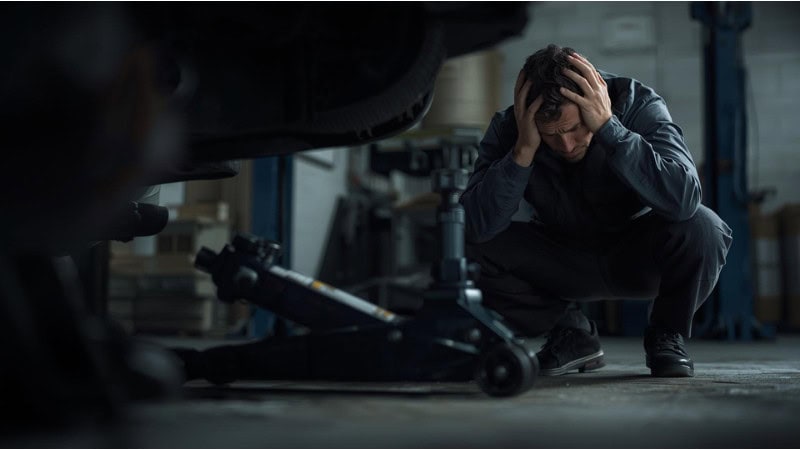
A floor jack that will not hold pressure is a common and significant safety issue, whether at home or in a professional shop. After lifting a vehicle, the jack may sink gradually or suddenly, creating a dangerous situation. Hydraulic floor jacks are designed to lift, not hold, so pressure loss puts both you and your vehicle at risk.
The good news? Most floor jack pressure problems are mechanical, predictable, and fixable. Often, the solution is simple—like adding fluid, bleeding trapped air, or cleaning a valve. Sometimes, you’ll need to rebuild a seal. This guide covers tried-and-true fixes that mechanics really use—not just theories or guesswork.
How a Hydraulic Floor Jack Actually Works
A hydraulic floor jack operates on the principle that liquid, such as hydraulic oil (a special fluid that transfers force), cannot be compressed. When you pump the jack’s handle, it moves a small piston (a metal cylinder that moves inside a tube), which pushes hydraulic oil into a sealed section called a cylinder. The oil then presses against a larger piston, known as the lifting ram (a strong metal rod that lifts the vehicle). This design multiplies your effort, enabling you to lift a 4,000-pound car with relatively little physical force.
Inside the jack, check valves (small one-way valves) control oil flow: one lets oil in as you pump, and the other prevents backflow. Proper sealing (tight closures that prevent leakage) keeps pressure. If seals (rings or gaskets that block leakage) wear, dirt clogs a valve, oil gets low, or air enters, pressure escapes—and the jack sinks. Understanding these functions helps with effective repairs.
you may like: Floor Jack Safety Guide
Common Signs Your Floor Jack Is Losing Pressure
Floor jacks rarely fail without warning. Most pressure issues develop gradually, and early detection allows for timely repairs before safety is compromised. The most common sign is a jack that lifts properly but slowly sinks after pumping stops, indicating internal pressure loss.
Another sign: your jack doesn’t lift as easily as it used to, especially with heavier vehicles. The handle might feel soft or spongy, and you may have to pump it more to get the car up. Sometimes you’ll spot hydraulic oil leaking under the jack or around the ram—this usually means a seal has failed. If the release valve feels loose or won’t stay tight, that’s a warning too. All of these clues point to pressure loss and can help you identify what needs repair.
you may like: How to Bleed a Floor Jack Correctly and Safely
Safety First: What to Do Before You Start Repairs
Prioritize safety before beginning any repairs. If your floor jack is not holding pressure, do not rely on it to support a vehicle. Always lower the car completely or use appropriate jack stands before starting repairs. This is an essential safety rule in any garage.
Wear eye protection and gloves, especially when dealing with hydraulic oil, which can spray when fittings are loosened. Clean your jack before taking it apart—dirt is the enemy of hydraulics, and even a little can cause more problems. Work on a flat, stable surface. Keep rags and a drain pan handy. A few minutes spent prepping safely can prevent injuries and keep your jack in good shape.
Most Common Reasons a Floor Jack Won’t Hold Pressure
Tools & Supplies You’ll Need
Having the correct tools simplifies floor jack repair. Specialized equipment is not required; basic preparation is sufficient. Most repairs use standard hand tools, such as a wrench and socket set for bolts and fittings, and flathead and Phillips screwdrivers for caps and valve screws.
Use the correct hydraulic jack oil, as using the wrong type can damage seals or reduce performance. Do not use brake fluid or other oils unless specified by the manufacturer. Prepare a drain pan and clean rags to manage spills. If you suspect faulty seals, obtain a rebuild kit that matches your jack’s model. Brake cleaner or degreaser is useful for cleaning parts before reassembly.
Step-by-Step: How to Repair a Floor Jack That Won’t Hold Pressure
Step-1 Verify the obvious
- Make sure the release valve is fully closed (turn clockwise snug—don’t gorilla-tight).
- Check the jack is on level concrete and the load isn’t exceeding the rating.
- Inspect the handle yoke/pump linkage: if it’s loose or stripped, it can “feel” like a hydraulic failure.
Step-2 Check fluid level
- Lower the jack all the way down.
- Remove the fill plug (usually rubber plug or screw plug).
- Fluid should be near the bottom of the fill hole.
- If low, top off with hydraulic jack oil (not brake fluid).
If the jack was low, go straight to Step 3.
Step-3 Bleed air out of the system
- With the fill plug still out, open the release valve (counterclockwise).
- Pump the handle 10–20 slow strokes.
- Close the release valve.
- Pump the jack up a bit, then open valve and lower it.
- Repeat once more if needed.
- Top off fluid again and reinstall the fill plug.
Test: Lift a vehicle corner and see if it still sinks. If it sinks, continue.
Step-4 Look for external leaks
Check for wet oil around:
- The lifting ram (chrome piston area / wiper seal)
- The pump piston area
- The fill plug
- The release valve screw
- Any visible plugs/caps.
If you see active leaking, you’re likely headed to a seal repair (Step 7).
Step-5 Clean/seat the release valve
- Fully lower the jack.
- Remove the handle and access the release valve (varies by model).
- Back the release valve out carefully.
- Spray brake cleaner on the valve tip and seat area.
- Inspect the tip for nicks, burrs, debris.
- Reinstall snugly, then bleed again (Step 3).
If the jack still won’t hold, the problem is usually internal bypass.
Step-6 Check for internal bypass
Signs:
- Jack lifts fine empty, but sinks under load
- No visible leaks
- Bleeding doesn’t help
This points to:
- Worn piston seals
- Check valve not sealing (dirt or damaged ball/spring)
Proceed to rebuild.
Step-7 Rebuild the jack
What you’ll do: drain fluid, open the cylinder/pump section, replace seals/O-rings, clean valves.
General rebuild flow:
- Lower jack fully and drain hydraulic oil into a pan.
- Remove the cover plate and locate the pump assembly and ram/cylinder.
- Pull the pump piston and/or ram components per your model design.
- Replace seals using a model-matched seal kit.
- Clean all parts: especially check valve ports with brake cleaner.
- Lightly oil new seals with fresh jack oil before installing.
- Reassemble carefully—don’t pinch O-rings.
Pro tip: Take photos as you disassemble. Most rebuild mistakes are “one part flipped” or “ball/spring placed wrong.”
Step-8 Refill + bleed + load test
- Refill with hydraulic jack oil to the correct level.
- Bleed air (Step 3).
- Load test safely: lift a corner and set it on jack stands.
- With the load still on the jack (stands supporting the vehicle), check if the jack holds height for 2–5 minutes.
Step-9 If it still fails: replace or retire it
Replace the jack if you have:
- A pitted/rusted ram
- A cracked cylinder or bent frame
- No available seal kit / poor-quality casting
- Persistent pressure loss even after rebuild (internal damage)

When a Floor Jack Is Not Worth Repairing
Not all floor jacks are worth repairing. If the hydraulic cylinder is cracked or the frame bent, replacing seals won’t restore safety, and the jack should be removed from service by any professional shop.
If the lift ram is severely rusted or pitted, new seals will not restore pressure on a damaged piston. Inexpensive, off-brand jacks are often not worth rebuilding due to limited parts availability or poor quality. If a rebuild kit costs nearly as much as a new, higher-quality jack, replacement is recommended. A floor jack is a safety tool; if it cannot be trusted, it should be retired.
you may also like: 3 Common Types of Jacks for Automotive Use
Preventing Pressure Loss in the Future
After repairing your floor jack, proper maintenance is essential to ensure continued performance. Most pressure problems result from neglect rather than design flaws. Always store the jack fully lowered to protect the ram and reduce stress on the seals. This practice is standard in professional shops and extends the jack’s lifespan.
Regularly check the hydraulic fluid level, especially with frequent use. Wipe down the jack before storage to prevent dirt from entering seals and valves. Do not leave a vehicle supported on the jack for extended periods; always use jack stands after lifting. Annually, operate the jack through its full range and inspect for leaks. These practices help prevent pressure problems and ensure the jack is ready for use.
FAQ
1. Can I use brake fluid in a hydraulic floor jack?
No. Don’t use brake fluid in a hydraulic floor jack unless the manufacturer says it’s okay. Brake fluid absorbs moisture from the air, which can cause rust and damage seals over time. Most floor jacks use mineral-based hydraulic jack oil. The wrong fluid leads to pressure loss, damaged seals, and poor lifting performance.
2. Why does my floor jack lift without a load but sink under a vehicle?
This typically indicates leaking internal seals. Without a load, weak seals may hold some pressure, but under weight, oil escapes past the worn seals and the jack slowly sinks. Air in the system can also cause this issue; if bleeding does not resolve it, seal replacement is likely necessary.
3. How long should a hydraulic floor jack last?
A quality hydraulic floor jack can last 10 to 20 years with proper care. Regularly check the fluid, keep the jack clean, and avoid leaving vehicles supported for extended periods. In professional shops, jacks with basic annual maintenance often outlast inexpensive models. Neglect, contamination, and incorrect fluid use significantly reduce a jack’s lifespan.
4. How do I know if my floor jack needs new seals?
If your jack slowly sinks under load, leaks oil around the ram, or does not hold pressure after bleeding the system, the seals are likely worn. Oil leaks are a clear indicator, but internal seal failure can occur without visible leaks. If fluid levels are correct and no air is present, yet pressure is still lost, faulty seals are the probable cause.
5. Are floor jack seal kits brand-specific?
Yes, most seal kits are specific to the brand and model of your jack. Size, material, and design vary between manufacturers. Using an incorrect kit can cause leaks or immediate failure. Major brands typically offer rebuild kits, while off-brand jacks often do not. Always select a kit that matches your exact jack model.
6. Is it safe to keep using a floor jack that slowly loses pressure?
No, it is not safe. Floor jacks are designed for lifting, not holding, a load. A jack that loses pressure can fail unexpectedly, risking serious injury or vehicle damage. Address pressure issues immediately and always use jack stands for support. Any professional shop would remove a sinking jack from service at once.
Final Thoughts
A floor jack that will not hold pressure is a serious warning, not just an inconvenience. Pressure loss is a significant safety concern in both home garages and professional shops. Fortunately, most hydraulic jack problems are predictable and repairable. Low fluid levels, trapped air, dirty valves, and worn seals are the most common causes of failure, and addressing these issues typically restores proper function.
Proper repair is essential: use the right oil, maintain cleanliness, and address problems promptly. Replace the jack if structural damage or severe wear is present. A reliable floor jack is critical for safety—if it cannot be trusted, remove it from service.
