
If you’re wondering about the symptoms of a blown head gasket, your engine is probably giving you trouble. As a mechanic who has handled this issue countless times, I can say with confidence: a blown head gasket is not something to ignore. It rarely fails without warning. Your car will send you signals, but most drivers don’t notice them until the damage is costly. In this guide, I’ll explain the real-world symptoms we see in the shop, how to confirm the problem, what causes it, and what you can expect to pay for repairs in the U.S.
What Does a Head Gasket Actually Do?
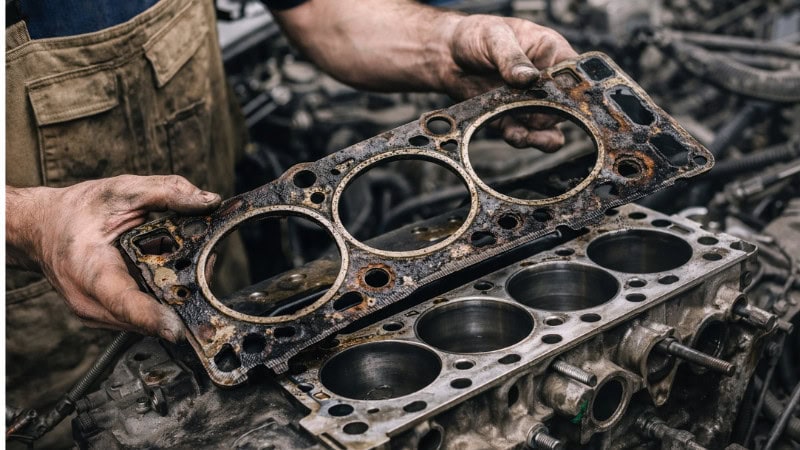
The head gasket sits between the engine block and the cylinder head. Its job is simple but important: it keeps combustion pressure, engine oil, and coolant separate. If the gasket fails, these systems can mix. Combustion gases may leak into the cooling system, coolant can enter the cylinders, and oil may mix with coolant. These problems can get worse quickly. Because the head gasket controls several systems, its failure can cause symptoms that seem unrelated at first, like overheating, white smoke, rough running, coolant loss, or milky oil. All of these trace back to the head gasket.
1. Engine Overheating
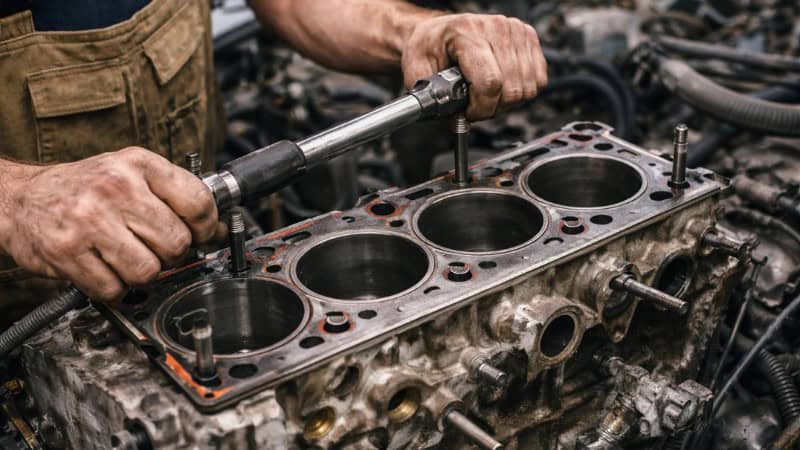
Overheating is the most common sign of a blown head gasket we see in the shop. If your temperature gauge keeps going higher than normal or jumps up suddenly, don’t ignore it. When the gasket fails, combustion gases can get into the cooling system. This creates air pockets and excess pressure, preventing coolant from flowing as it should. The engine then gets too hot. Some customers notice overheating only on the highway or when idling. Either way, if your car keeps overheating, it’s a warning sign. Driving a hot engine can warp the cylinder head, making repairs much more expensive.
2. White Smoke from the Exhaust
Thick white smoke coming out of the tailpipe is another classic sign. Not the light vapor you see on cold mornings. I’m talking about heavy white smoke that lingers and smells slightly sweet. That sweet smell is burning coolant. When the head gasket fails, coolant can leak into the combustion chamber and burn with the air-fuel mixture. The result is visible white exhaust smoke. In severe cases, it appears as a cloud trailing the car. If you see consistent white smoke after the engine is fully warm, it’s time for a proper inspection. This symptom rarely resolves on its own and usually gets worse.
3. Milky Oil (Coolant Mixing with Oil)
One of the simplest checks is to look under the oil cap. If you notice a thick, milky substance that resembles chocolate milk, it’s a sign that coolant is mixing with oil. You might also spot this on your dipstick. This mixing happens when the head gasket fails between an oil passage and a coolant passage. When oil is contaminated with coolant, it can’t lubricate the engine properly. Bearings, camshafts, and other internal components begin to wear out quickly. Driving in this condition can ruin an engine fast. If you see milky oil, get it checked immediately. Internal damage can escalate quickly.
4. Coolant Loss with No Visible Leak
If you keep adding coolant but never see a leak under your car, that’s a warning sign. A blown head gasket can cause coolant to leak into the engine rather than onto the ground. Coolant might go into the cylinders or mix with oil. Many people think it’s just a small radiator leak, but the coolant keeps disappearing. Over time, the engine runs low on coolant and overheats, leading to more serious problems. If you can’t find an external leak, get a pressure test and consider a combustion gas test. Hidden leaks are often caused by a bad head gasket.
5. Rough Idle and Engine Misfire
If the head gasket fails between two cylinders or between a cylinder and a coolant passage, the engine loses compression. This can cause rough idling, shaking, or misfires. You might feel the engine stumble at stoplights or hesitate when you speed up. The check engine light often comes on with misfire codes. This happens because the air-fuel mix isn’t being compressed properly. Sometimes, coolant in a cylinder can foul the spark plugs, worsening the misfire. Many people replace plugs and coils first, but the problem returns. If you have misfires along with overheating or coolant loss, the head gasket is likely the cause.
6. Bubbles in Radiator or Coolant Reservoir
This is one of the more obvious signs. If combustion gases leak past the head gasket into the cooling system, you’ll see bubbles in the radiator or overflow tank. With the engine running and warmed up, you might notice steady bubbling in the coolant reservoir. That’s not normal. The cooling system shouldn’t have combustion gases. In the shop, we use a block test kit to check for exhaust gases in the coolant. If the test fluid changes color, it means there’s contamination. Seeing bubbles along with overheating almost always means the head gasket has failed.
7. Loss of Engine Power
A blown head gasket can significantly weaken your engine. When compression is lost, the engine produces less power. Drivers often notice slow acceleration, poor throttle response, or worse gas mileage. If the gasket fails between cylinders, the power loss can be even greater. In extreme cases, the engine may struggle to keep up at highway speeds. This symptom alone doesn’t always mean a blown head gasket, but if you also have overheating or white smoke, it’s a strong clue. If your engine feels weak and there’s no clear fuel or ignition problem, check compression.
How to Confirm a Blown Head Gasket
Diagnosing this properly requires testing, not guessing. Here are common confirmation methods:
- Compression Test: Checks pressure in each cylinder. Low readings indicate sealing issues.
- Leak-Down Test: Pressurizes cylinders to locate where compression escapes.
- Block Test (Combustion Gas Test): Detects exhaust gases in coolant.
- Cooling System Pressure Test: Finds internal or external coolant leaks.
Some people can perform basic tests themselves, but an accurate diagnosis usually requires professional tools. Since replacing a head gasket is labor-intensive and expensive, it’s important to confirm the problem before taking the engine apart.
What Causes a Head Gasket to Blow?
Head gaskets usually fail because something else went wrong first. The main cause is overheating. When engines get too hot, metal parts expand and can warp the cylinder head, breaking the gasket’s seal. Other causes include poor installation, age, engine knocking, or neglect of the cooling system. Low coolant, clogged radiators, or a bad thermostat can all lead to overheating. Modern engines are less forgiving because they have tighter tolerances. Regular maintenance helps prevent problems. Most blown head gaskets could have been avoided if overheating had been fixed right away.
you may like: How to Clean Aluminum Engine Parts & Remove Oxidation
Can You Drive with a Blown Head Gasket?
Technically, you can drive with a blown head gasket, but you shouldn’t. Doing so risks serious engine damage. Ongoing overheating can warp or crack the cylinder head. Coolant in the oil can ruin bearings. In the worst cases, coolant in a cylinder can cause hydrolock and bend connecting rods. A repair that might have cost a few thousand dollars can turn into the need for a whole new engine. Some people try to keep driving even with minor symptoms, but the longer you wait, the worse it gets. As a mechanic, I recommend fixing it early to save money and avoid major damage.
you may like: How Often Should You Change Your Engine Air Filter?
Blown Head Gasket Repair Cost in the U.S.
Replacing a head gasket takes a lot of labor. Most of the cost comes from the work, not the parts. In the U.S., typical repair costs include:
| Engine Type | Average Repair Cost (US) |
|---|---|
| 4-Cylinder Engine | $1,200 – $2,000 |
| V6 Engine | $1,500 – $2,500 |
| V8 Engine | $2,000 – $3,500+ |
Costs depend on your vehicle, engine type, and local labor rates. If the cylinder head needs machining or replacement, the price goes up. Always compare the repair cost to your car’s value before deciding.
FAQ
1. How long can you drive with a blown head gasket?
You might be able to drive a short distance with a blown head gasket, but it’s risky. It can quickly cause overheating, coolant mixing with oil, and serious engine damage. Some cars run for days with mild symptoms, but others can fail suddenly. The longer you drive, the more likely you’ll warp the cylinder head or damage bearings. As a mechanic, I suggest limiting driving and getting a diagnosis as soon as you notice symptoms. Waiting makes repairs more expensive.
2. Will a blown head gasket throw a check engine light?
Yes, a blown head gasket often triggers the check engine light. It can cause misfires or odd readings from the coolant temperature or oxygen sensors. The most common codes are misfire codes (P0300 series). But a check engine light by itself doesn’t prove the head gasket is bad. You need proper tests, like a compression or block test, to be sure. The light just means something isn’t working right.
3. Can a blown head gasket fix itself?
No, a blown head gasket will not fix itself. Once the seal is broken, it only gets worse over time. Heat and pressure keep worsening the damage. Temporary sealers might slow symptoms, but they aren’t real fixes. A proper repair means removing the cylinder head and replacing the gasket. Ignoring the problem just leads to more engine damage.
4. What does a blown head gasket sound like?
A blown head gasket usually doesn’t make a special noise by itself. You might hear rough idling, sputtering, or misfires. Sometimes, compression leaking between cylinders makes the engine sound uneven. If coolant gets into a cylinder, you may hear a short knock when starting. Most of the time, mechanics rely on visual symptoms and tests, not just sounds.
5. Is white smoke always a blown head gasket?
Not always. Light white vapor on cold mornings is just normal condensation. But thick white smoke that keeps coming after the engine is warm often means coolant is burning in the engine. Sometimes, intake manifold gasket leaks can also cause this on certain engines. If you see steady heavy white smoke and you’re losing coolant, it’s likely a head gasket problem and should be checked soon.
6. How much does it cost to replace a blown head gasket?
In the U.S., replacing a blown head gasket usually costs between $1,200 and $3,500, depending on your engine and vehicle. Four-cylinder engines are cheaper than V6 or V8 engines because they take less work. If the cylinder head needs machining, it costs more. Labor is the biggest part of the price, so costs vary by shop. Always ask for a detailed estimate before agreeing to repairs.
7. What happens if coolant mixes with oil?
When coolant mixes with oil, the oil can’t protect the engine parts anymore. Bearings, camshafts, and the crankshaft need clean oil to keep metal parts from rubbing together. Dirty oil loses its thickness and can’t protect as well. If you keep driving like this, bearings can fail, and the engine can seize. If you see milky oil, stop driving and fix the problem right away to avoid major engine damage.
8. Can overheating alone cause a blown head gasket?
Yes, overheating is the most common cause. When engine temperatures exceed safe limits, metal components expand unevenly. This can warp the cylinder head and compromise the gasket seal. Even a single severe overheating event can trigger failure. Prevent overheating with proper coolant maintenance and quick attention to temperature warnings. This is the best defense against head gasket problems.
Final Thoughts
When customers ask about the symptoms of a blown head gasket, I always tell them the same thing: your car will give you warnings. Overheating, white smoke, coolant loss, milky oil, and rough running aren’t random problems. They’re all connected. Catching these signs early can help you avoid major engine damage. If you ignore them, you could be facing costly repairs. If you suspect a head gasket issue, get a proper diagnosis before replacing parts at random. Accurate testing saves money. Engines are expensive, but smart maintenance and quick action can make all the difference.
see more: